A single roommate connection from Tallahassee is now a live wire in a Miami courtroom, forcing Washington to confront how easily “helpful meetings” can look like foreign influence.
Quick Take
- Former Florida congressman David Rivera faces federal charges tied to alleged secret lobbying for Venezuela and related money flows.
- Secretary of State Marco Rubio appears as a government witness, describing 2017 interactions that prosecutors say Rivera leveraged for access.
- Prosecutors argue a $50 million Citgo/PDVSA contract functioned as cover; Rivera argues his work was legitimate and aimed against Maduro.
- The case spotlights FARA’s bright line: Americans can advocate, but foreign-directed political work must be disclosed.
A Miami Trial That Turns Private Access Into Public Evidence
Federal prosecutors opened trial on March 23, 2026, in Miami with a story built for modern politics: a former congressman, a foreign regime under pressure, and a web of meetings that prosecutors say were sold as influence. David Rivera, once a Miami-area Republican in Congress, now must answer accusations of money laundering and failing to register under the Foreign Agents Registration Act for work allegedly benefiting Venezuela’s Nicolás Maduro government.
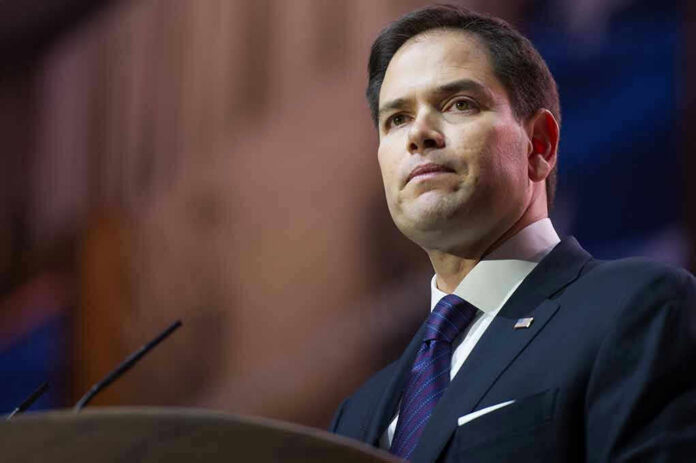
Marco Rubio’s role makes the case impossible to ignore. Rivera and Rubio once shared a home in Tallahassee before their careers diverged—Rivera out of office, Rubio climbing into national power and now serving as Secretary of State. Prosecutors call Rubio as a government witness about 2017 meetings and messages that Rivera allegedly orchestrated and then used as proof he could open doors. Rivera denies any secret lobbying scheme.
The $50 Million Contract Question: Real Consulting or Political Cover?
The government’s core theory centers on a $50 million contract linked to PDVSA, Venezuela’s state oil company, and Citgo, its U.S. subsidiary. Prosecutors contend the contract operated as camouflage for political influence work aimed at U.S. policy, with payments and routing that allegedly benefited a network tied to Venezuelan interests. Rivera’s defense pushes back with a familiar argument in lobbying cases: Citgo’s U.S. footprint, they say, makes the work domestic consulting, not foreign-agent activity.
That dispute matters because FARA isn’t supposed to be a partisan weapon; it’s a disclosure law. The conservative, common-sense standard should be simple: Americans can advocate for any policy position, but if a foreign principal directs or funds political activity, the public deserves transparency. The “everyone lobbies” excuse collapses when money, direction, and hidden principals line up. If Rivera’s work served Caracas while presenting as corporate consulting, a jury can treat that as deception, not paperwork error.
2017: The Meetings That Prosecutors Say Were the Product
Prosecutors focus heavily on July 2017, when Rivera allegedly arranged a meeting at his Washington-area home that included Rubio and Venezuelan media figure Raúl Gorrín, described as a conduit to the Maduro side. Rivera allegedly texted Rubio with advice ahead of a Trump meeting days later, and the government says Rivera pitched these touchpoints as valuable deliverables—access that could move policy. In this framing, the “service” wasn’t a memo; it was proximity to decision-makers.
Rivera’s defense posture paints a different picture: anti-Maduro intent, “peace” efforts, and positioning around sanctions and energy politics. Adults who have watched Washington for decades recognize the rhetorical move: wrap a paid engagement in national-interest language and hope the jury equates motive with legality. The court will likely drill down on who directed the activity, who paid, and what Rivera promised. FARA turns lofty talk into a blunt evidentiary question: whose agenda was he advancing?
Encrypted Chats, Code Words, and the Old Problem of Plausible Deniability
Reports describe encrypted communications and code words—an old tradecraft habit dressed in new technology. Prosecutors cite a group chat with references like Maduro as a “bus driver,” and money discussed as “melons,” alongside other colorful phrasing that suggests participants expected scrutiny. Code words don’t prove a crime by themselves, but jurors tend to treat them as a signal: people who think they’re doing normal business don’t usually talk like smugglers.
The money trail, not the slang, will likely do the heavy lifting. Prosecutors allege substantial payments flowed under the contract—well below the $50 million headline number but still large enough to demand real deliverables. Civil allegations that little legitimate work occurred sharpen the question: if the output was thin, what exactly was being purchased? Conservative readers who value clean government should want a tight standard here: results or receipts, not influence sold behind closed doors.
Susie Wiles, Pete Sessions, and the Periphery That Still Matters
The case keeps pulling recognizable names into its orbit. Former Rep. Pete Sessions appears in the timeline, including a later trip to Caracas tied to contacts Rivera and Gorrín allegedly facilitated. Defense efforts to subpoena White House Chief of Staff Susie Wiles were blocked, according to reporting, adding another layer of intrigue without establishing wrongdoing by her. No public filing in this reporting asserts charges against Rubio or Wiles; the trial targets Rivera and an associate.
That distinction matters. American conservatism should resist guilt by association while demanding accountability for actions. Washington runs on introductions; not every introduction equals corruption. Prosecutors still must prove Rivera knowingly acted as an unregistered agent and laundered funds, not merely that he knew famous people. Rubio’s testimony becomes pivotal because it can clarify whether Rivera portrayed himself as a backchannel operator, whether Rubio perceived a legitimate policy outreach, and whether Rivera used those interactions to justify payment.
Why This Trial Lands Hard in Miami and Doesn’t Stay There
Miami’s Cuban exile community carries a long memory of authoritarianism and a hair-trigger skepticism toward Maduro’s regime. That background makes the alleged idea of a Republican-connected operator quietly assisting Caracas politically explosive. Nationally, the trial arrives in an era when voters already assume influence peddling is routine. The danger is cynicism: if people decide all sides do it, they stop caring about disclosure altogether. FARA’s purpose is to keep citizens informed, not to stage morality plays.
Rubio to testify in trial of former roommate accused of secretly lobbying for Venezuela https://t.co/4bxQ44yEHg
— The Morning Call (@mcall) March 23, 2026
The sober takeaway is that foreign influence often enters through familiar American weaknesses: ego, access, and money marketed as “consulting.” If prosecutors prove their case, the message should be straightforward—register, disclose, and let the public judge. If Rivera proves his defense, the lesson still stands: policymakers must treat “private diplomacy” offers with caution, because today’s casual meeting can become tomorrow’s exhibit in court.
Sources:
Rubio to Testify in Trial of Former Roommate Accused of Secretly Lobbying for Venezuela
Trump allies Rubio and Wiles ensnared in Venezuela lobbying scandal
Former ally of Rubio in Florida facing charges of acting as unregistered foreign agent for Venezuela
Rubio to testify in trial of former roommate accused of secretly lobbying for Venezuela
The Miami Trial Exposing Foreign Influence In Trumpland