A federal lawmaker was crushed between cars outside her office, and police say they will allege the act was targeted.
Story Snapshot
- Police charged a 43-year-old man with serious offenses, including intentionally causing serious injury.
- Authorities activated a joint counter-terrorism team while stating the motive remains unknown.
- Officers say they will allege the incident was targeted and found a knife in the vehicle.
- The case spotlights the line between intentional violence and terrorism under Australian law.
What police say happened and why it matters
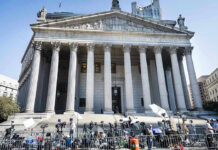
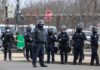
Victoria Police say a vehicle hit Independent Member of Parliament Helen Haines outside her Wangaratta office, pinning her between cars and causing life-threatening injuries. Officers arrested a 43-year-old man at the scene after bystanders intervened. The early police account frames a clear question: was this a crash or an attack? Investigators stated they would examine intent and will allege the act was targeted. That stance shaped the charges and drew in federal agencies.
Charges filed by Victoria Police include dangerous driving causing serious injury, intentionally causing serious injury, and causing harm to a Commonwealth public official. The last charge reflects Haines’s role as a federal officeholder, signaling this is not being treated as a routine traffic case. Police and reporters also noted a knife was found in the vehicle, an element that raises the stakes and supports deeper inquiry into planning and purpose. The accused has appeared in court; the case remains at the investigation stage.
Why counter-terrorism teams were activated
Prime Minister Anthony Albanese confirmed that the Australian Federal Police, Victoria Police, and the Australian Security Intelligence Organisation were coordinating, with the Joint Counter-Terrorism Team activated to assess motive and risk. Officials stated the motive remains unknown. That activation signals urgency, not a legal conclusion. Counter-terrorism teams often step in early to check for threats, links, or ideology. They can later step back if facts show a personal dispute or other non-ideological intent.
Victoria Police said they will allege the act was targeted, and federal leaders echoed that the investigation includes that possibility. This provides a lawful basis to explore whether the attack aimed to intimidate or influence government. Australian law draws a hard line: to qualify as terrorism, prosecutors must show serious harm plus intent to advance a political, religious, or ideological cause, and to coerce government or intimidate the public. The public should separate “intentional injury” from “terrorist act.” They overlap only when motive meets the statute.
What the defense raised and what remains unknown
The accused’s lawyer told the court his client suffers from idiopathic transverse myelitis, a neurological condition, and from concussion. He voiced concerns about his client’s mental health even though there is no diagnosis on record, and asked for medical assessment. Authorities have said they had no specific prior intelligence indicating a plan to attack Haines. Police have not publicly resolved whether the act was political, personal, or unrelated to ideology. The court process will test these claims against evidence.
Flowers and heartfelt messages are piling up outside Helen Haines’ electoral office in Wangaratta, as the community rallies around the independent MP following Monday’s alleged attack.
Locals have gathered to show their support, with hundreds attending vigils to pray for her… pic.twitter.com/t06NxJ5QiN
— 10 News Melbourne (@10NewsMelb) October 21, 2026
The path to clarity runs through forensics and records. Vehicle data, dashcams, and local cameras can show speed, steering, and whether the driver paused or pressed forward. Witness statements can capture words, threats, or selection of the victim at the scene. Digital traces on phones and computers can reveal searches, messages, or notes that point to motive. For prosecutors, the knife and vehicle are key exhibits. Chain-of-custody and lab results can confirm handling and potential preparation.
What common sense says about risk, rhetoric, and restraint
Public leaders must name the facts without leaping past them. Calling in national agencies was prudent given the victim and the violent method. It does not prove terrorism on its own. The charges show police see intentional harm as plausible. That deserves weight. At the same time, a terrorism label requires evidence of an ideological aim to influence government or scare the public, not just targeted violence against an officeholder. Policy should follow proof, not headlines.
Sources:
youtube.com, theconversation.com, abc.net.au, smh.com.au, aapnews.aap.com.au, 7news.com.au, sbs.com.au, apnews.com, news.com.au, inslm.gov.au
© truthandliberty.com 2026. All rights reserved.