After cost-of-living protests turned violent in Milan, Italy moved to expand police powers, including holding minors for hours without proof of a crime.
Story Snapshot
- Violence in Milan led to injuries, looting, and dozens of detentions during protests.
- Prime Minister Giorgia Meloni backed police and condemned “hooligans” exploiting demonstrations.
- A new Security Decree stiffened penalties and boosted police authority, passing the Senate 109–69.
- A proposal would allow police to hold under-18s up to 12 hours based on perceived danger.
What Triggered Italy’s Crackdown
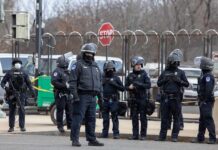
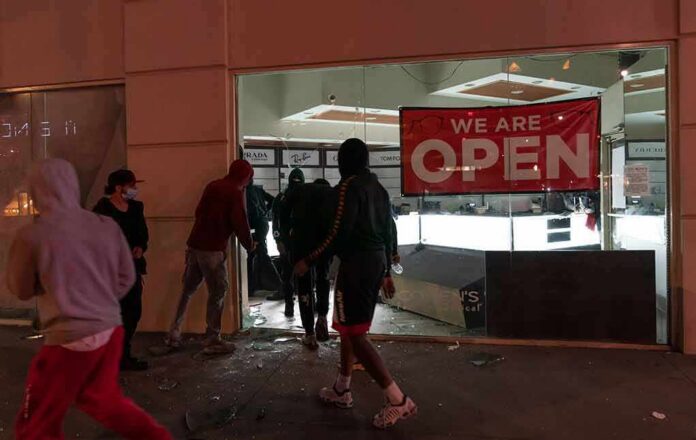
Associated Press reported that rioters in central Milan looted stores, set fires, and clashed with police during cost-of-living protests. Authorities cleared Piazza del Duomo and the nearby Galleria, detained about 50 people, and reported injured officers. The New York Times said 14 officers were hurt across protests, including one hit by a cobblestone. These details set the stage for a fast government response aimed at restoring order in major Italian cities.
Prime Minister Giorgia Meloni drew a line between peaceful protest and violence. She said protesting is a right, but “setting our cities ablaze is not,” and denounced groups she called hooligans who use protests to sow chaos and attack police. The message matched video scenes of tear gas and water cannons used to push back black-clad youths throwing bottles and fireworks. The government framed the unrest as a threat to public safety rather than a free-speech dispute.
What the Security Decree Changes
Politico reported that the Security Decree became law after Senate approval, 109–69, following earlier passage in the lower house. The measure raises penalties for property damage and disruptive sit-ins, expands police powers, and offers up to €10,000 for legal fees to officers probed for on-duty conduct. Supporters say this helps deter vandalism and backs rank-and-file police. Critics call it a broad crackdown that risks chilling peaceful protest without fixing deeper economic pain.
Reuters detailed a separate proposal to widen preventive tools, including a rule letting police detain minors at stations for up to 12 hours if evidence suggests they pose a danger, even without proof of a crime. Officials argue the change targets organized groups and protects the public. The measure raises due-process concerns because many detainees were reportedly young people, and the plan relies on risk judgments rather than completed offenses.
Numbers That Do Not Line Up Neatly
Detention and injury counts differ across outlets. Associated Press cited roughly 50 detainees in Milan, while other coverage reported higher totals in broader time frames and locations. The New York Times cited 14 injured officers during the unrest, while other reports listed fewer in specific clashes. These gaps likely reflect different definitions and windows. The record does not yet show whether the tougher policies reduced later unrest or improved safety.
Both right and left can see their worries here. People want safe streets and respect for police facing bricks and fire. People also want government power checked, clear rules for minors, and real action on prices, wages, and rents. The reporting confirms violence and a legal response. It does not prove that new powers are necessary, proportionate, or effective over time. Better data on arrests, charges, and outcomes would help the public judge results.
Why This Matters Beyond Italy
Democracies often tighten security after violent protests. Quick crackdowns can stop looting today but also reshape how peaceful crowds are policed tomorrow. Italy’s steps echo a wider trend toward preventive control of demonstrations, with bigger fines and faster police actions. The key test will be precision and oversight. Measured tools can target real threats. Vague rules can sweep in bystanders and minors, and fuel mistrust that lingers long after the smoke clears.
Furious Giorgia Meloni deploys 500 troops to defend Milan from violent rioter carnage https://t.co/UG71q9sBRl pic.twitter.com/wnWavLg14A
— SASSYCHICK (@KT07500539) October 20, 2026
For readers in the United States, the lesson is familiar. Governments that fail to deliver on basics—fair prices, good jobs, safe streets—risk swings between disorder and force. When leaders lean on tougher laws, they should also publish clear data: what happened, who was arrested, how cases ended, and whether violence fell. That kind of proof builds trust across the aisle and keeps power focused on criminals, not on citizens using their voice within the law.
Sources:
youtube.com, bbc.com, dw.com, reuters.com, internazionale.it, apnews.com
© truthandliberty.com 2026. All rights reserved.