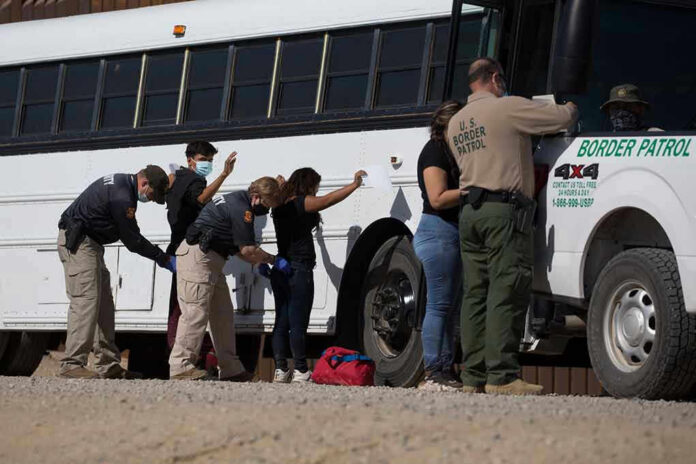
A secure border, record drug seizures, and cartels on the run are proving what tough enforcement can do when Washington finally takes the crisis seriously.
Story Snapshot
- Trump’s second-term border crackdown let agents shift from migrant chaos to record drug seizures.
- Cartels are hit from every angle: terrorist designations, tariffs, and massive funding for enforcement.
- Most fentanyl still moves through official crossings, so Trump poured resources into ports of entry.
- Record seizures are a win, but experts warn numbers alone do not mean the trafficking threat is gone.
How Trump Turned a Border Crisis Into a Drug Interdiction Machine
When President Trump returned to the White House, the first mission was to stop the flood at the southern border so agents could finally hunt the drugs poisoning American towns. Customs and Border Protection officers in San Diego now say that as illegal crossings dropped to a “trickle,” they could refocus on narcotics, leading to what they describe as record drug seizures with the border “more secure than ever.”[3] For many readers, that is the payoff conservatives demanded for years of chaos.
Agents on the ground credit these gains to tough border policies that replaced the old catch-and-release culture with clear lines and real consequences. Officers told reporters their success in both drug seizures and fewer illegal immigrants “stems from the Trump administration’s tough border policies,” which boosted morale by backing front-line agents instead of tying their hands.[3] With support from the top, they shifted manpower from processing migrants to inspecting vehicles, cargo, and suspicious traffic for cartel loads.
The Policies Behind Record Seizures and a Financial Squeeze on Cartels
The Trump team did not just talk tough; it rewired federal strategy to link border security and drug interdiction. The White House’s National Drug Control Strategy pairs prevention and treatment with a clear mandate to “interdict the flow of drugs across our physical borders,” backed by a National Interdiction Command and Control Plan that coordinates agencies to disrupt traffickers before drugs hit U.S. streets.[6] That means more cooperation with foreign partners, better technology, and a constant push to adapt to cartel tactics.
At the same time, Trump signed executive actions putting legal and financial heat directly on the cartels. He designated major cartels as terrorist organizations and labeled fentanyl a weapon of mass destruction, giving federal agencies stronger tools to target networks, money, and suppliers.[3] The One Big Beautiful Bill Act poured about 170 billion dollars into border security and immigration enforcement, followed by another 70 billion dollars to fund Immigration and Customs Enforcement and the Border Patrol, giving officers the manpower, scanners, and intelligence they long said they lacked.[3]
Ports of Entry: Where the Cartels Really Move Their Poison
Conservatives have long argued that a real border strategy must focus on where the drugs actually cross, not just where cameras see migrants on foot. Government and independent analysts agree that larger quantities of cocaine, methamphetamine, heroin, and fentanyl are seized at legal ports of entry than between them, where agents patrol the open desert.[11] That reality lines up with Trump’s push to harden those official crossings with more inspections, technology, and targeted screening to catch cartel loads hidden in cars and trucks.
Over the past decade, data show the vast majority of fentanyl seized at the southern border was taken at ports of entry or vehicle checkpoints, not from migrants walking through the brush.[12] Analysts found that more than 92 percent of fentanyl seizures between 2018 and 2024 occurred at those locations, and that roughly four in five people caught smuggling fentanyl there were United States citizens, not illegal border crossers.[2][12] For Trump’s team, that evidence justified pouring resources into ports of entry, even as they kept closing loopholes that encouraged illegal crossings elsewhere.
Record Numbers, Changing Drug Trends, and What Seizures Really Mean
Supporters point to massive seizure totals as proof that the Trump crackdown is choking off supply. In 2025, the first year of his second term, drug seizures topped about 583,000 pounds, slightly higher than the previous year, even as illegal immigration fell and agents shifted focus to narcotics.[3] Homeland Security leaders now tour vaults holding hundreds of thousands of pounds of confiscated drugs and call them billions of potential lethal doses kept off American streets, underscoring the scale of the fight.[5]
Experts, though, caution that seizure totals are a blunt tool and can reflect many things at once. Analysts note that border drug numbers mix enforcement success with changes in trafficking routes and drugs of choice; seizures of heavy drugs like marijuana are down, while far more potent fentanyl has surged in recent years.[7][10] Some research warns that while seizures rose in some years, overall pounds at the border have trended down, and less than a small fraction of cocaine flowing through ports of entry is ever caught, reminding us that cartels adapt fast.[10][12]
Why This Matters for Families, Communities, and the Constitution
For conservative families watching overdose deaths climb for years while Washington argued over slogans, the Trump approach offers something rare: action that treats border security as a life-or-death issue, not a talking point. The administration’s strategy pairs a secure border, tougher sentencing for traffickers, and a direct assault on cartel finances, while keeping the focus on stopping deadly drugs before they reach American neighborhoods.[6] That lines up with core values of law, order, and the duty of government to protect its citizens.
At the same time, the numbers and outside studies are a reminder that no policy is a silver bullet and that vigilance matters more than spin. Record seizures show what is possible when the border is no longer a revolving door and agents have the backing to do their jobs. But they also warn that cartels will keep probing for weak spots, from ports of entry to the mail system, if future leaders return to open-border thinking and handcuff the very officers now delivering results.
Sources:
[2] Web – Imposing Duties to Address the Flow of Illicit Drugs Across Our …
[3] Web – US Citizens—Not Migrants—Smuggle the Majority of Fentanyl Into …
[5] Web – Migrant Drug Seizures by Border Patrol Incredibly Rare, Data Shows
[6] Web – How much fentanyl is seized at US borders each month? – USAFacts
[7] Web – Weekly U.S.-Mexico Border Update: Drug seizure data, Pope Leo …
[10] Web – Weekly U.S.-Mexico Border Update: April dip in migration, drug …
[11] Web – [PDF] 1 Illicit Fentanyl and Drug Smuggling at the U.S.-Mexico Border
[12] Web – Illicit Drug Flows and Seizures in the United States – Every CRS …
© truthandliberty.com 2026. All rights reserved.