A Spanish city just passed a face-covering ban with fines up to €750, reviving a clash between civic rules and religious freedom that courts have struck down before.
Story Snapshot
- Lleida’s city council approved a face-covering ban in public spaces on a 16–11 vote.
- The ordinance targets any garment that hides the face and lists exceptions for worship and festivities.
- Fines range from €400 to €750 for violations under the new civic rule.
- A 2013 Supreme Court ruling voided a prior Lleida veil ban, setting up likely legal tests now.
What Lleida Actually Passed
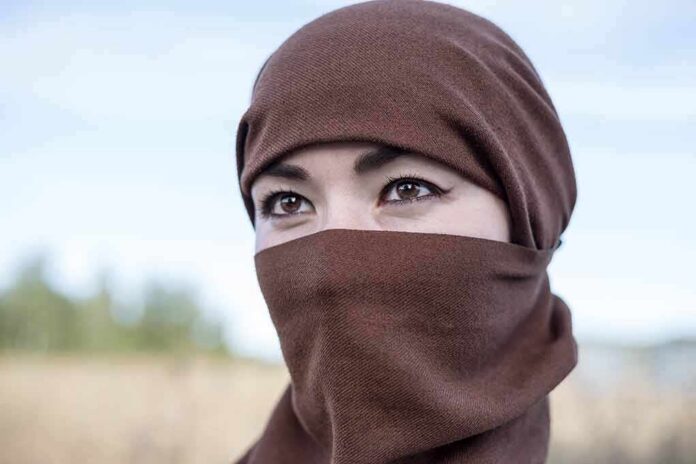
Lleida’s city council approved a new civics ordinance that bans any clothing that fully hides the face in public spaces. The measure passed 16–11 with support from Socialist Party of Catalonia–Units, Together for Catalonia, and Vox, while the People’s Party, Republican Left of Catalonia, and Comú de Lleida opposed it. Article language cited in reports focuses on covering the face, not naming any religion or garment. City leaders framed the rule around social interaction in a free and democratic society.
The text includes exceptions. Reports say the ban does not apply inside places of worship, during customary festivities where face coverings are part of tradition, or in cases tied to a fundamental right. The ordinance also specifies penalties. Outlets describe fines between €400 and €750 for breaking the rule, signaling an enforceable policy rather than a symbolic statement. Officials described the goal as civics and women’s rights more than strict security, a choice that shapes the debate over purpose and impact.
Why This Vote Matters Beyond One City
This move reopens a legal and social fight Spain has seen before. In 2013, Spain’s Supreme Court struck down Lleida’s earlier full-veil restriction, concluding a local council could not limit religious freedom through a municipal bylaw and that such limits would require national law. That history means this new ordinance will likely face court scrutiny again. Reports do not include a detailed new legal memo explaining how the city tailored the text to overcome past objections, which leaves open key questions.
Across Europe, some courts have accepted “living together” or identifiability rules when enacted at the national level, but municipal bans often face tougher tests on authority and proportionality. The general wording here aims at identifiability in public, a common administrative concern. Yet broad exceptions for worship and festivities could weaken a pure safety claim, and the lack of published enforcement guidance may raise fears of selective application against a small minority of women.
Politics, Rights, and Enforcement Risks
The cross-party backing in Lleida is striking. Support from Socialists and Together for Catalonia alongside Vox gives the measure political weight, but it also fuels a narrative of elites making rules from above without clear local incident data in view. Opponents from Republican Left of Catalonia and Comú de Lleida called the approach punitive, while the People’s Party argued the wording does not truly ban burqa or niqab but regulates them, pointing to the exceptions.
Spanish city introduces ban on burqa, niqab in public
The Spanish city of Lleida has approved a ban on full-face coverings in most public spaces, a measure targeting garments including the Muslim burqa and niqab.
The city parliament voted 16-11 on Friday to amend a municipal… pic.twitter.com/OGtuEOS1U0
— Rifnote (@viarifnote) September 25, 2026
Community groups have challenged similar policies in the past. The Watanni Association previously called a related ordinance an abuse of power and pursued court action to defend the liberties of Muslim women. If enforcement leads to visible incidents on the street, the images could spread fast and harden views on both sides. Citizens frustrated by government overreach may see another top-down rule with unclear benefits. Others worried about social cohesion may view identifiability as a basic standard in shared public life.
Sources:
insiderpaper.com, rtve.es, lavanguardia.com, russpain.com, efe.com, larazon.es, que.es, elnacional.cat, ground.news
© truthandliberty.com 2026. All rights reserved.