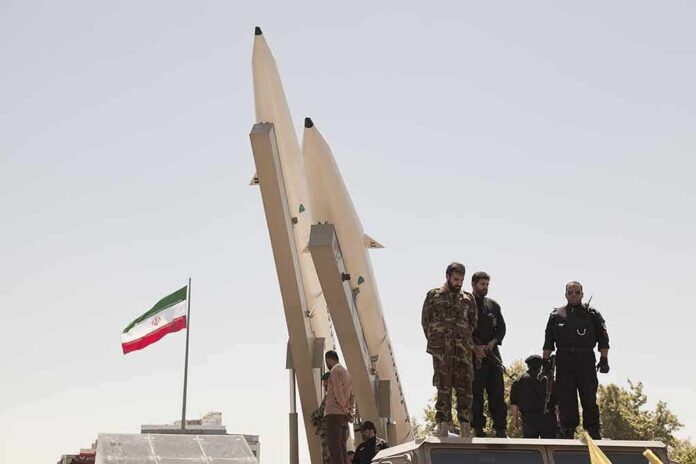
Iran’s president told the United Nations he will reopen the Strait of Hormuz in seven days if Washington eases pressure, even as he says he cannot trust the United States.
Story Snapshot
- Pezeshkian tied reopening the Strait of Hormuz to the United States easing military and economic pressure.
- He said Iran is ready for talks but will not accept “the language of force”.
- Iran’s offer includes a seven-day window to restore shipping if conditions are met.
- Ongoing sanctions and deep mistrust make a quick deal hard to reach.
Iran’s Conditional Offer on the Strait of Hormuz
Iranian President Masoud Pezeshkian linked a fast reopening of the Strait of Hormuz to clear steps by the United States. He said Iran can restore shipping within seven days if Washington eases military pressure and lifts what Tehran calls a blockade on its ports. He placed this idea at the center of talks in New York and in public remarks. The plan aims to cut the war’s risk to global trade while opening space for further talks on broader issues.
CBS reported that Iran’s foreign minister sent a proposal through mediators with the same seven-day goal. If the United States accepts the conditions, Iran says talks on ending the war and possibly the nuclear program would follow. Pezeshkian said, “the process will begin from the very day they accept it,” stressing written commitments as the basis for trust. He framed the step as a test of good faith, not a surrender or pause without terms.
Diplomacy Open, But “No Surrender” Message Stays Firm
At the United Nations, Pezeshkian said Iran remains open to talks but will not bow to threats. He accused President Trump of a “bullying mentality” after sharp U.S. warnings, while repeating that Iran seeks diplomacy to end the conflict. He pushed back on what he described as coercion and said Iran rejects any deal made under force. Yet he also said both sides should keep channels open to avoid a wider war and reduce harm to civilians.
Reuters reported that Iran highlighted shipping access and port restrictions as core issues in the talks. Pezeshkian argued it is unfair for others to benefit from Hormuz while Iran’s own access to shipping is blocked. He cast the strait as a shared artery that cannot be used to squeeze one side. Iranian officials said they were reviewing a U.S. response to peace ideas that prioritize lifting the naval pressure and restoring normal shipping lanes.
Mistrust, Sanctions, and the Hard Road to a Deal
Pezeshkian told CBS there is an “atmosphere of distrust,” and that trust is hard while new pressure continues. He said any path forward must rest on clear, written steps from both sides. He added that both should “abide by what we have written down,” pointing to the need for verifiable moves before deeper talks can work. This message blends a willingness to talk with a warning that promises alone will not fix the core dispute.
9 PM Top-of-the-Hour News
US and Iranian negotiators in New York are in talks about a phased path to ending the war.
It would involve Tehran reopening the Strait of Hormuz as well as Washington lifting an economic blockade of Iran.
Iran wants economic relief while the U.S. wants… pic.twitter.com/hsz8FUY3bm— Worldwide News Network (@WorldwideNNX) September 25, 2026
Negotiators also face new and ongoing sanctions actions that signal the fight is not cooling. Reports describe United States measures that targeted a network moving Iranian oil, part of a push against what officials call a “shadow fleet”. Tehran told Washington through a Qatari mediator that any agreement must end U.S. “acts of aggression,” stop the war, and address frozen assets. These preconditions, and parallel sanctions pressure, raise the bar for near-term progress.
Why This Matters for Americans
The Strait of Hormuz is a vital oil and gas route, so any closure or risk there hits energy prices fast. Families and small businesses here feel that as higher costs at the pump, on heating, and across supply chains. Pezeshkian’s seven-day reopening offer is a real test of whether both sides can trade steps to cut risk to global shipping while they argue over bigger issues. If it fails, more price shocks and a longer war become more likely.
People across the political spectrum see a familiar pattern. Leaders trade threats while talks crawl, and regular people pay the bill through higher prices and fresh instability. Pezeshkian’s message mixes defiance with a clear, time-bound proposal, but it hinges on trust that both sides admit is weak. The path forward is simple to state but hard to do: verifiable, written steps, taken in sequence, that reopen the strait, reduce pressure, and give diplomacy a chance.
Sources:
cbsnews.com, reuters.com, cnbc.com, tbsnews.net
© truthandliberty.com 2026. All rights reserved.