China’s leader publicly pressed the United States and Iran to stop fighting and start talking, as their conflict enters its ninth month with no clear end in sight.
Quick Take
- Xinhua reported President Xi Jinping urged the United States and Iran to return to negotiations “as soon as possible.”
- The call came as Xi visited Washington for a summit with President Trump touching on trade, Taiwan, and the Iran war.
- China has repeated similar appeals for months while refusing to act as a formal ceasefire guarantor.
- Beijing’s push ties directly to its own economic stakes in keeping the Strait of Hormuz open for oil shipments.
State Media Carries Direct Appeal From Xi
Xinhua, China’s official state news agency, published a flash report on September 25 with a clear headline: Xi urged the United States and Iran to get back to solving their problems through negotiation right away. China Daily ran the same statement within hours, showing Beijing’s government wanted this message spread as widely and quickly as possible across its state media network.
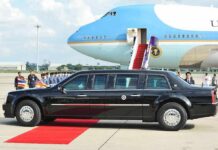
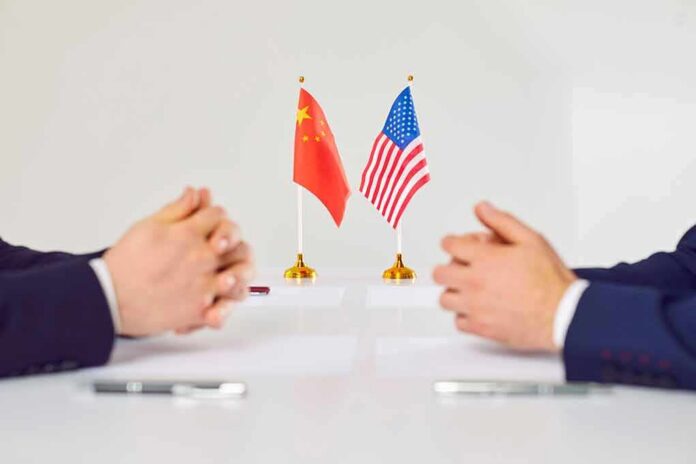
The statement landed while Xi was in the United States for a high-stakes summit with President Trump. Their talks covered trade, artificial intelligence, Taiwan, and China’s relationship with Iran, according to reporting on the visit. Trump even broke with protocol by greeting Xi at the airport, signaling how much both leaders wanted the meeting to go smoothly.
Months of Warnings From Beijing
This is not China’s first time asking both sides to cool down. Nine days earlier, Foreign Minister Wang Yi told his Iranian counterpart in Beijing that China wanted Iran and the United States to “remain rational, exercise restraint” and return to the interim peace deal both countries signed back in June. Wang also pushed for a return to the Islamabad Memorandum of Understanding, an earlier framework both sides had agreed to before fighting resumed.
Back in April, Xi criticized a U.S. blockade of Iranian ports and called for a diplomatic fix during meetings with foreign leaders in Beijing. That pattern has repeated itself roughly every few weeks since the war began, with China consistently choosing public pressure over any binding commitment to enforce a truce.
Beijing Avoids A Formal Peacemaker Role
Despite months of statements, China has not agreed to serve as a guarantor of any ceasefire, even though Iran reportedly asked it to. Instead, Beijing has pushed Pakistan to mediate directly between Washington and Tehran, a job Islamabad has taken on with China’s encouragement. This lets China appear responsible on the world stage without tying itself to enforcing any deal that might fall apart.
Why does this matter to Beijing? The Strait of Hormuz carries a massive share of the world’s oil, and Chinese-owned tankers have already been hit near the waterway during the conflict. China has openly said a blockade there hurts everyone’s interests, not just Iran’s, which explains why its calls for talks keep coming even without a mediator title attached.
Trade And Taiwan Enter The Picture
Behind closed doors, the diplomacy appears more complicated than the public statements suggest. Reports before Xi’s Washington trip indicated China offered to lean harder on Iran in exchange for U.S. concessions on arms sales to Taiwan, showing the Iran talks may be linked to entirely separate disputes between Washington and Beijing.
🚨 BREAKING: Xi Jinping urges the US and Iran to return to negotiations and revive the Islamabad Memorandum to end the war and reach a comprehensive deal, including on nuclear issues. The push came during White House talks with Trump.…
— Dino Vibes Daily (@DinoLeadingNews) September 24, 2026
The two countries did find at least one point of agreement earlier this year, with senior officials from both sides confirming that no country should be allowed to charge shipping tolls in the Strait of Hormuz. That rare moment of alignment suggests economic self-interest, more than any shared political vision, is what has kept the two powers talking about Iran at all.
What Comes Next
For now, Xi’s latest appeal adds to a long list of similar statements without producing a breakthrough. The war between the United States and Iran continues, Hormuz shipping remains a flashpoint, and China keeps its options open by calling for peace while avoiding the risks that come with actually brokering it. Whether the Washington summit changes that calculation remains to be seen.
Sources:
insiderpaper.com, globaltimes.cn, chinadaily.com.cn, en.yenisafak.com, reuters.com
© truthandliberty.com 2026. All rights reserved.