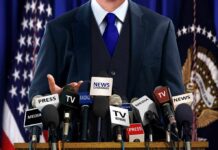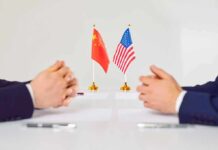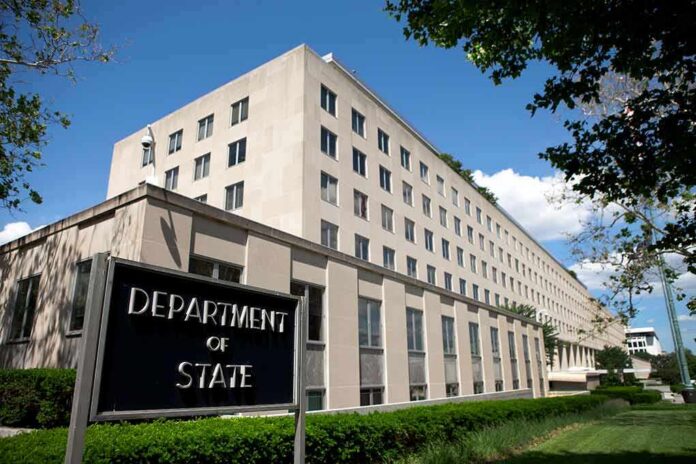
For the second year in a row, the United States denied Mahmoud Abbas a visa to attend the United Nations, and the General Assembly let him speak by video instead.
Story Snapshot
- The State Department extended visa sanctions on Palestinian officials, citing standing U.S. law and conduct that “undermines” peace.
- Reuters reported the move continues a ban first applied last year.
- The United Nations approved a workaround letting Abbas address leaders by prerecorded video again.
- Palestinian officials and Amnesty International called the decision punitive and unlawful.
What Washington Decided and Why It Says It Did
The State Department said it will extend visa sanctions that deny entry to members of the Palestine Liberation Organization and Palestinian Authority officials. The department said the action follows failures to reform and activities that harm chances for peace, and it cited standing U.S. law to justify the step. News reports said U.S. officials linked the policy to Palestinian moves to “internationalize” the conflict, such as pressing cases against Israel at world courts.
Reuters reported the ban kept Palestinian President Mahmoud Abbas from coming to New York for United Nations week, continuing a policy first applied last year. The move fits a pattern where the United States uses its role as host to control access by foreign delegations while saying it follows U.S. law. Supporters argue it pressures leaders they see as blocking peace. Critics argue it blurs legal duty with politics and limits open debate at a global forum.
How the United Nations Adapted to Keep the Speech
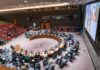
The United Nations General Assembly voted to allow Abbas to address the gathering by video for the second straight year after the visa denial. Delegates used this workaround to preserve Palestine’s speaking slot despite the travel block. Last year’s version was described as a temporary fix, not a precedent. Yet repetition is now shaping practice: when the host bars entry, members can still hear the message. That avoids a blackout but leaves the core dispute unresolved.
The workaround also shifts the spotlight. Instead of a live appearance with meetings on the sidelines, a prerecorded speech narrows impact. Leaders often use the week for private talks and public signaling. A video limits that reach. It also lets Washington maintain the sanction while reducing diplomatic blowback inside the hall. The cost is transparency. The public still cannot see the detailed record behind the ban, which stays within State Department files.
Why Both Sides Say Principles Are at Stake
Palestinian officials called the decision an unjustified measure that harms efforts to rebuild trust and work toward a two-state solution. Amnesty International said the ban aims to punish Palestine for seeking justice at the International Criminal Court and International Court of Justice. Abbas called the denial unlawful and punitive, and said it violates the United States’ duties as the United Nations host nation, a claim that many diplomats echoed in softer terms.
U.S. officials say the action follows standing law and reflects Palestinian failures to meet past promises tied to peace efforts. They argue that pressing cases at global tribunals undermines direct talks. That rationale is clear as policy, but the public record lacks a case-specific legal memo, a hearing, or an individualized finding released for scrutiny. That opacity feeds a view shared by many across U.S. politics: powerful offices make big choices with little daylight, and regular people rarely see the proof.
What This Means Beyond One Speech
Repeat use of visa sanctions at the United Nations risks becoming an informal tool of leverage. If Washington keeps citing law while withholding the detailed basis, allies may nod while critics harden. If the United Nations keeps using video workarounds, leaders still speak, but the host-country dispute goes unresolved. Both paths can erode trust in rules everyone claims to honor. That cycle echoes a wider worry at home: government power grows opaque while accountability grows thin.
Sources:
military.com, nytimes.com, theguardian.com, dw.com, washingtonpost.com, haaretz.com
© truthandliberty.com 2026. All rights reserved.