France deployed nearly 3,000 officers, armored vehicles, and drones as thousands marched against the National Rally congress in Orléans.
Story Highlights
- Thousands rallied in Orléans against the National Rally as police mounted a large security operation.
- Authorities estimated about 11,000 marchers by midday; organizers claimed 26,000.
- Dozens of unions, parties, and associations backed the protest with anti-racist, anti-fascist messages.
- Police used heavy security tools; local services and transport faced limits amid tensions.
Mass Protest Targets National Rally Congress
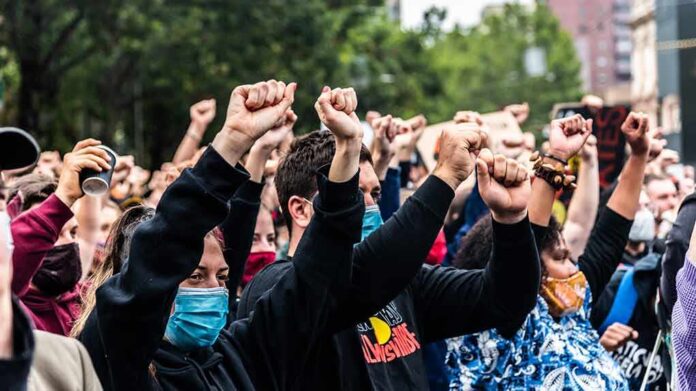
Reporters in Orléans said thousands marched near the National Rally congress, calling the party dangerous for democracy. The prefecture counted about 11,000 participants by midday, while organizers claimed 26,000, underscoring a clear dispute over turnout. Protesters carried signs with anti-racist and anti-fascist slogans, and the march was framed by media and organizers as a stand against the party of Marine Le Pen and its platform.
Union leaders, student groups, and civil-society organizations joined the call. Coverage said roughly 50 parties, unions, and associations urged people to rally against what they labeled racism, fascism, and imperialism. Amnesty International was cited among nongovernmental groups present. The wide coalition showed that opposition reached beyond activist circles. It pulled in varied networks that focus on labor rights, student concerns, and civil liberties, giving the event scale and visibility in a regional hub city.
Security Measures Reshape the City for a Day
Authorities deployed nearly 3,000 police and gendarmes, with armored vehicles, helicopters, and drones patrolling the area. Businesses boarded up windows, and local officials suspended some public transport as a precaution. These steps signaled that leaders treated the day as a major public-order risk, not a routine march. Such strong measures often change how protests feel on the ground, and they can chill everyday activity for residents and shop owners nearby.
Police actions around France led to arrests during the broader weekend of protests tied to the unrest. News reports cited more than one hundred arrests nationwide as demonstrations flared in several cities. In Orléans, reporters described tense scenes but also periods of orderly marching. One outlet noted the Orléans action ended peacefully in early afternoon, even as other cities saw confrontations, showing uneven conditions across regions. These contrasts often shape headlines more than the policy issues that sparked the marches.
Why This Standoff Matters Beyond Orléans
The Orléans protest fits a longer fight over where to draw the line in democratic politics. Analysts say the National Rally has tried to look more mainstream while keeping hard lines on immigration, national identity, and security. That strategy, sometimes called de-demonization, helps the party grow even as critics still view it as extreme. The push and pull between normalization and boundary-setting helps explain why anti-fascist language appears so often in French street politics.
The split over crowd size highlights another fault line: who speaks for “the people.” The prefecture’s estimate and the organizers’ larger claim feed rival stories about momentum and legitimacy. For many on both the left and right, the larger picture is familiar. Institutions look strained. Costs are high. Leaders seem distant. When governments lean on heavy security while citizens flood streets, it signals a system struggling to deliver and to be heard, a warning light democracies ignore at their risk.
Sources:
facebook.com, france24.com, cnn.com, euronews.com, letemps.ch, tribuneindia.com
© truthandliberty.com 2026. All rights reserved.