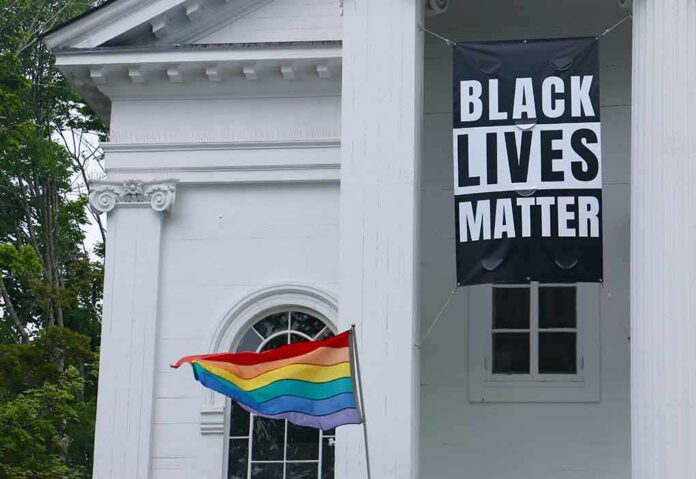
An Alberta human-rights tribunal is weighing whether a political flyer about a rainbow crosswalk crossed the legal line into hate expression under provincial law.
Story Highlights
- A complaint over a flyer opposing a rainbow crosswalk advanced to a full tribunal hearing in Alberta.
- Alberta law bans public statements likely to expose protected groups to hatred or contempt.
- The woman says her flyer urged civic action and warned parents, not hate against anyone.
- No final ruling has been released, and the full flyer text and exhibits are not public.
What Triggered the Case
Alberta’s human-rights director sent a complaint about a flyer to a formal tribunal hearing in late 2025, moving it past intake and screening. The flyer opposed a proposed rainbow crosswalk in the Town of Westlock. The proceeding centers on whether its words were likely to expose people to hatred or contempt based on sexual orientation, gender identity, or gender expression, which are protected grounds under Alberta law. Reports say the hearing spanned multiple days with several witnesses scheduled to testify.
At the hearing, counsel for the woman who wrote the flyer argued that it was political speech. They said the flyer urged residents to contact local leaders, share the notice, and attend a council meeting. They also said it did not call for violence or use slurs. The woman testified that her goal was to warn parents and oppose a political symbol on public property, not to target people for who they are.
The Legal Test Alberta Uses
The Alberta Human Rights Act bars any public statement or sign that is likely to expose a person or class to hatred or contempt because of protected grounds. That covers publications, notices, signs, symbols, and other representations. The Alberta Human Rights Commission explains that this can include publicly handing out a flyer with hateful comments about a group. The Commission says it looks at whether a reasonable person would see the message as detestation or vilification, not mere disagreement.
Canadian courts have upheld narrow limits on hate expression while protecting sharp criticism and debate. In a leading case about flyers, the Supreme Court of Canada said laws can restrict messages that stir extreme feelings of disgust and condemnation toward a group. But they cannot ban speech that only insults, mocks, or hurts feelings. The focus is on effect and context as seen by a reasonable person, not on the speaker’s claimed motive.
What We Know—and What We Do Not
News and advocacy outlets summarize parts of the flyer that raised alarms. They describe claims about a “transgender agenda,” harm to children, and warnings about medical transition. The woman’s legal team says the flyer did not urge discrimination and aimed to rally civic involvement. The public record available today does not include the full flyer text as an official exhibit, the complete complaint, or a written tribunal ruling, which limits independent review of the exact wording and reach.
Because a decision has not been posted, the legal outcome remains open. Referral to a hearing does not prove liability. It shows the case met the threshold for full review. Reports note that the tribunal heard from the complainant and planned testimony from medical professionals. That could shape how the tribunal reads the flyer’s claims and their likely impact on a protected group. Until reasons are released, the strength of each side’s evidence is not clear.
Why This Fight Resonates Beyond One Town
Across North America, people worry that the powerful can label speech they do not like as “hate,” while others fear that harsh claims about minorities can fuel real harm. Alberta’s rule aims to draw a line between fierce policy debate and messages that drive a community to despise a group. That line is hard to police in practice. It asks decision-makers to predict likely effects, which can feel subjective to the public.
Today, Benita Pedersen’s Alberta Human Rights Tribunal hearing resumes over a complaint about a flyer she distributed opposing a rainbow crosswalk in Westlock.
Free expression needs defending. Live in Alberta, BC, Saskatchewan, or Manitoba?
Take action: sign our campaign… pic.twitter.com/XKKMDYWAvw
— Justice Centre for Constitutional Freedoms (@JCCFCanada) October 14, 2026
For conservatives, this case connects to fears about censorship, viewpoint bias, and the state punishing dissent. For liberals, it connects to fears that public campaigns can dehumanize vulnerable groups and risk threats or violence. For many citizens in the middle, the deeper frustration is institutional: long, costly legal fights often decide what people can say, while urgent daily problems go unsolved. That gap feeds distrust in systems that should serve everyone, not the few.
What to Watch Next
Watch for the tribunal’s written decision. Key points will include how it applies the “likely to expose to hatred or contempt” test, how it weighs expert testimony, and whether it reads the flyer as attacking a symbol or a group of people. Also watch for any constitutional challenge that could send the case to court. A clear, narrow ruling could steady the line between tough speech and unlawful hate. A vague one could deepen the chill—and the divide.
Sources:
albertahumanrights.ab.ca, en.wikipedia.org, aclrc.com, cbc.ca, jccf.ca, junonews.com
© truthandliberty.com 2026. All rights reserved.