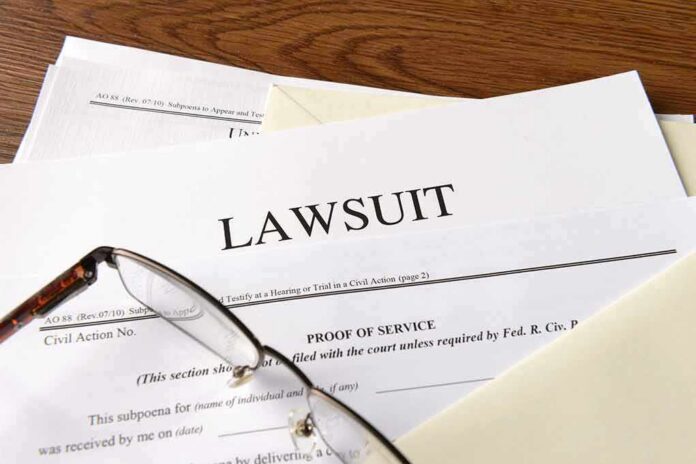
A Republican donor just turned a high-profile scandal into a courtroom fight that could test how far powerful people can go when they call their critics liars and blackmailers.
Story Snapshot
- Eric Deters sued Kimberly Guilfoyle and two of her lawyers for defamation in Kentucky state court.
- The case centers on disputed texts about a $100,000 payment and whether Deters faked messages or blackmailed Guilfoyle.
- Major outlets reported the messages and denials; a federal watchdog is reviewing related allegations.
- The fight highlights how political scandals often become reputation battles with high legal hurdles.
What Was Filed, Where, and Why It Matters
The Hill reported that on October 15, 2026, Eric Deters filed a defamation lawsuit in Kenton Circuit Court against Kimberly Guilfoyle and attorneys Jesse Binnall and David M. Schwartz. The complaint also claims false-light invasion of privacy and breach of contract, and it seeks damages and a jury trial. Filing in court moves a media brawl into sworn discovery. That shift can force emails, messages, and devices into view, and it can punish false claims through legal sanctions.
Deters says the defendants defamed him when they described his messages as fake and labeled him a “notorious blackmailer.” Reports document that Guilfoyle’s side denied his account, challenged the message authenticity, and reframed the money issue as unpaid fees for past work. A single word can decide a defamation case. If the “blackmailer” label is false and stated as a fact, it can be actionable. If it is opinion or rhetoric in a protected context, it may not be.
The Disputed Messages at the Heart of the Case
Deters provided a file of texts and Signal messages to reporters. Coverage described lines that appeared to ask him to wire money, including one message about sending funds to a credit card so “it won’t show up anywhere”. The Hill cited a July 3, 2025 Signal message saying, “Honey please I need you to get this done for me today”. None of that proves the messages are real. Guilfoyle’s team says the texts are not authenticated and are fabricated.
Multiple outlets, including CBS News, ABC News, CNN, and NBC News, reported on Deters’s claims, Guilfoyle’s denials, and the fallout. That wide coverage confirms the dispute exists in public view, which matters for “publication” in defamation law. NBC News also reported that a State Department watchdog is reviewing related allegations tied to the $100,000 issue, which could surface records that overlap with this civil case.
Two Overlapping Fights: Access Allegations vs. Defamation
This controversy blends two different questions. First, did Guilfoyle seek $100,000 and link it to political access or favors? Second, did she and her lawyers defame Deters by calling his evidence fake and branding him a blackmailer? These are not the same. Proving one does not automatically settle the other. Courts will look at what was said, by whom, to whom, in what context, and whether the speaker knew it was false or recklessly ignored the truth.
Because both sides are public figures in a national political storm, the law likely requires proof of “actual malice.” That means Deters must show the defendants knew their statements were false or acted with reckless disregard for truth. That is a high bar. It exists to protect sharp debate about public matters, even when the words sting. But it does not protect lies told as facts about a person’s crimes.
What Each Side Must Prove Next
Deters will try to authenticate the full message history, not just screenshots. That could include original phones, Signal exports, carrier and device records, and a forensic examiner’s report. He will also need to tie each challenged statement to a specific person, date, audience, and medium, and then show real harm that followed. If the record shows the “blackmailer” claim was false and spread widely, damages rise.
🚨JUST IN🚨
Eric Deters has filed a defamation lawsuit against Kimberly Guilfoyle after she disputed his claim that she asked him to pay off her $100,000 AMEX bill in exchange for political favors.
SOURCE: CBS
— Breanna Morello (@BreannaMorello) October 15, 2026
Guilfoyle and her lawyers will push that their statements were true, protected opinion, or made in a context with legal privilege. They also argue the dispute was about unpaid fees, not access-for-money, and that the texts were not authenticated. If a forensic review shows gaps, edits, or spoofing, that undercuts Deters. If not, the credibility fight sharpens. Either way, the case should yield concrete records that move this beyond press releases.
Why People Across the Spectrum Care
Many Americans see the same pattern: powerful figures trade on access while regular people pay rising prices and get excuses. This case hits that nerve. Conservatives see a story about influence and loyalty. Liberals see one about money and special treatment. Both see elites calling an accuser a liar and a criminal to shut him down. A courtroom, with evidence under oath, is the one place that can cut through spin and force facts onto the record.
Sources:
cbsnews.com, cincinnati.com, cnn.com, abcnews.com, courier-journal.com, yahoo.com, thehill.com
© truthandliberty.com 2026. All rights reserved.