When homicide work migrates from bloodstains to hard drives, the center of gravity shifts: what matters first is not a body on the floor but a corpus of images, timestamps, and device provenance that can show life, violence, and—sometimes—death. Philadelphia’s Chew Avenue investigation is a case study in that pivot, and its stakes are stark.
At a Glance
- Police and the FBI recovered a massive digital archive—exceeding one million images and videos—linked to a Philadelphia home on West Chew Avenue.
- Investigators say they have identified 58 people in the recovered media and believe five women connected to the property are deceased, based on the content of the files.
- The probe began after a June arrest of Eugene Horsch, which led to searches uncovering weapons, drugs, chemicals, and a marijuana grow—grounding an expansive forensic review of digital material.
- The investigation remains active and ongoing; law enforcement continues to analyze the digital trove and pursue leads tied to at least seven women with connections to the house.
What investigators recovered and why it matters
Authorities say the Chew Avenue search surfaced a trove of more than one million digital files—photos and videos spanning years—alongside weapons, drugs, and chemicals. From that corpus, investigators have identified 58 people; the digital material has also driven a grim conclusion: police believe five of the women connected to the house are deceased based on what appears on camera and the sequences it establishes over time. In briefings and updates, police have described the review of these files as active and methodical, with teams working through the archive in phases as additional warrants are executed and scenes reprocessed.
The archive is not incidental. In modern major-case work, digital evidence—video files, phone dumps, cloud backups—anchors timelines and corroborates or refutes accounts. RAND’s assessment of U.S. practice is blunt: digital artifacts now routinely place people and events in time and space, but their breadth and sensitivity demand technical care to be forensically reliable. In Philadelphia, that dynamic is fully on display—investigators are building their case from what the cameras captured and the devices preserved.
How the case started: an arrest that opened a door
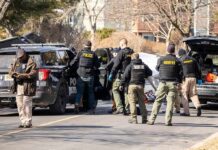
The investigative aperture widened on June 19, when a law-enforcement encounter in Philadelphia’s Independence Mall area led to the arrest of Eugene Horsch and, subsequently, a search of the Olney property he occupied. Reporting on the arrest describes a woman with identification tied to a missing person and the recovery of weapons, drugs, and false credentials, which, in turn, supported search warrants at the Chew Avenue address. Inside, police say they found a 9mm firearm, ammunition, a marijuana grow operation, chemicals, and digital media in vast quantities—evidence that shifted the case from a discrete arrest into a combined local–federal inquiry focused on missing women and potential homicides.
From those searches emerged the working set of facts now publicly described by multiple outlets citing police and FBI briefings: 58 identified individuals in the media, at least seven women linked to the property, and five women whom investigators believe are deceased based on the recovered imagery. Two of those women—Maribel Fresses and Gabrielle Amarando—were specifically named by police as appearing dead in video evidence, though their bodies have not been recovered.
What “digital-first” homicide inference looks like
When investigators say a woman “appears deceased” on film, they are invoking a clinical but consequential judgment rooted in observed physiology and context: the cessation of movement and respiration, visible ligature application, the sequence from struggling to flaccidity, and, in some files, the appearance of postural and ocular changes consistent with death. Those judgments are not made lightly, and in digital-era homicide work they sit alongside device metadata (file creation times, camera models), scene-matching to known locations in the home, and corroborating artifacts such as messages and access logs. The literature on homicide investigations in the digital age underscores both the power and the complexity of this approach: digital artifacts can be decisive, but they require disciplined collection, validation, and interpretation to withstand scrutiny.
That discipline is visible in Philadelphia’s cadence. Officials have repeatedly emphasized the sheer volume of data and the structured nature of the review. The archive is being parsed; investigators continue to match the imagery to known individuals and to the physical environment, and to align what they see on screen with items and residues recovered in place.
The scope: seven women linked, five believed dead, 58 identified on camera
Police updates across late summer into early fall converged on a core set of numbers. From the digital files, 58 people have been identified; at least seven women have been tied to the property; and five women connected to that house are believed to be deceased based on video evidence. At a press update, investigators publicly named two of those women—Maribel Fresses and Gabrielle Amarando—as appearing dead on recovered video, while stressing that bodies had not been found and the search continues. These figures, while fluid as reviews proceed, sketch the scale: a single address, a multiyear archive, dozens of identified individuals, and an inner circle of women whose on-camera fates drive the highest-priority lines of inquiry.
Philadelphia Police have characterized the case as active and ongoing and have noted the recovery and review of a substantial volume of digital evidence from the property. That is not bureaucratic boilerplate; in practice, it signals continued device examinations, comparative scene work, and cross-referencing with missing-person files and family contacts.
Philadelphia Councilman Anthony Phillips says a large-scale search of the Philadelphia "House of Horrors," at the center of an investigation, could keep police in the neighborhood for an extended period. Phillips said police will be returning to the property to conduct an… pic.twitter.com/BWTMH4CDgE
— NewsNation (@NewsNation) September 26, 2026
Physical searches and chemical questions
Beyond the files, searches of the house documented weapons, drugs, chemicals, and a marijuana cultivation setup—finds that both established probable cause for expanded searches and raised investigative questions about the basement’s purpose. Multiple reports describe investigators removing numerous containers of a viscous, sludge-like substance for laboratory analysis, a step consistent with probing whether chemical processes were used to destroy biological evidence. That kind of testing—aimed at detecting human tissue remnants or byproducts of alkaline digestion—can take time and often requires specialized labs.
In any major-case scene with suspected chemical alteration, forensic teams move deliberately: they inventory containers, preserve residues, and submit samples for targeted assays and DNA extraction protocols designed for degraded material. Results from such work, if probative, will be integrated with the digital timeline to test hypotheses about what happened and when.
How investigators use the archive to build a timeline
Applied correctly, digital forensics constructs a lattice: file system timestamps, camera EXIF data, and platform logs are layered with visual scene cues—paint colors, fixtures, window orientations—to place an event in a room on a particular day. When the same individual appears across sequences—alive in one set, unresponsive in another—the timeline furnishes the investigative backbone. Research and practice alike show this is now common in complex violent-crime inquiries; digital evidence is the second most predominant category of information leveraged by investigators, behind interviews, in large-scale analyses of investigative tasks.
Philadelphia’s case reflects precisely that pattern. The archive provides the episodes; the house provides the stage; and the investigative aim is to tie identities, scenes, and times together robustly. As police have indicated, this work is ongoing and substantial; volume alone ensures that definitive answers will arrive in phases rather than all at once.
Where the case goes from here
Several tracks are apparent. First, continued digital review to exhaustion—indexing, face matching, and contextual linkage of episodes to identified individuals. Second, lab analyses of seized chemicals and residues to confirm or refute the presence of human biological material. Third, traditional missing-person work: canvasses, re-interviews, recovery of third-party video, and database checks for travel, transactions, and communications that might update status or anchor movements for those seen in the archive.
Expect, too, additional warrant-driven collection—cloud backups, account histories, and communications metadata—that can corroborate device-level timelines with service-provider records. This is standard in digital-era homicide and missing-person cases; used properly, it closes gaps and converts inference into evidentiary sequence. Philadelphia authorities have already framed the effort accordingly, and nothing in the public record contests the core factual spine of what they have reported.
Sources:
nbcphiladelphia.com, nbcnewyork.com, 6abc.com, inquirer.com, cbsnews.com, academic.oup.com
© truthandliberty.com 2026. All rights reserved.