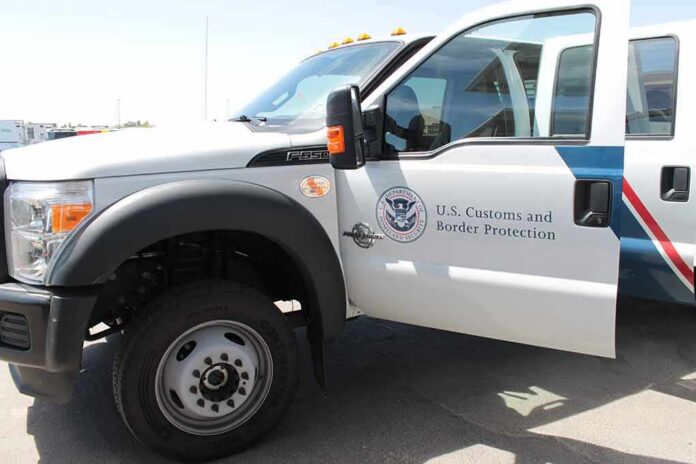
Border officers say a canine team found about 450 pounds of cocaine hidden under a tractor-trailer’s floor during a northbound inspection at the U.S.–Canada crossing.
Story Snapshot
- Customs officers reported seizing about 450 pounds of cocaine in 174 packages
- A routine inspection at the Lewiston-Queenston Bridge led to a canine alert and a secondary exam
- Officials valued the cocaine at about $6 million, pending full lab confirmation
- Homeland Security Investigations in Buffalo took over the case for further review
What Officers Reported Finding At The Bridge
Customs and Border Protection officers said they stopped a commercial tractor-trailer at the Lewiston-Queenston Bridge on Sept. 22 and noticed floor changes during an initial check. Officers then used a canine to search the trailer. After the alert, they sent the rig to secondary inspection, where they found 174 vacuum-sealed packages that field-tested positive for cocaine. The driver was described as a 21-year-old Canadian man. Officials estimated the drugs’ value at about $6 million.
Customs and Border Protection stated the gross weight was about 450 pounds, a major haul for a northern land port. The agency said the discovery began with a routine inspection that flagged the floor’s modifications, which can signal a hidden compartment. The packages were secured as evidence, and the trailer was held for investigation. Homeland Security Investigations in Buffalo received the case referral to lead the next steps.
How This Fits Broader Northern Border Smuggling Trends
Department of Homeland Security threat reports say cocaine often moves north into Canada after passing through the United States. Traffickers use commercial corridors and land ports to mask loads among lawful trade. That pattern aligns with this case’s details: a commercial truck, concealment changes, and a canine-assisted secondary exam. Prior strategies and analyses from federal sources have flagged the same flow and methods at the northern border for years.
The use of canine teams in cargo inspections is common when officers see signs of hidden spaces. Officers rely on visible changes to trailer floors and frames, non-intrusive inspection tools, and trained dogs to cue deeper searches. When a dog alerts, officers move the vehicle to secondary inspection for a hands-on search. That process appears to mirror the steps described by Customs and Border Protection in this seizure at the bridge near Niagara Falls.
What Comes Next In The Case And Why It Matters
Homeland Security Investigations in Buffalo will review evidence, track the shipping path, and seek links to larger groups. Investigators will also send samples for lab testing to confirm identity and exact weight. Field tests guide quick decisions, but confirmatory lab reports lock in charges and reports. Officials often also review shipping papers, driver statements, and imaging scans to map any wider network tied to the tractor-trailer and its cargo.
This hero K-9 named Star sniffed out $6 million worth of cocaine hidden under the floor of a tractor-trailer.
CBP says officers along the U.S.-Canada border discovered roughly 450 pounds of cocaine worth an estimated $6 million after noticing modifications during an inspection… pic.twitter.com/W44zDQXPs9
— Fox News (@FoxNews) September 30, 2026
For readers on both the right and the left, two takeaways stand out. First, front-line officers using basic checks and canine teams can disrupt large loads without costly new tools. Second, the case shows how smugglers adapt by hiding drugs inside modified cargo floors, even at busy ports. Federal plans across several administrations have flagged this exact challenge. Success at the booth is real, but the steady flow north shows the scale of the fight remains large.
Sources:
facebook.com, nextnewsnetwork.com, cbp.gov, singlinkbot.com
© truthandliberty.com 2026. All rights reserved.