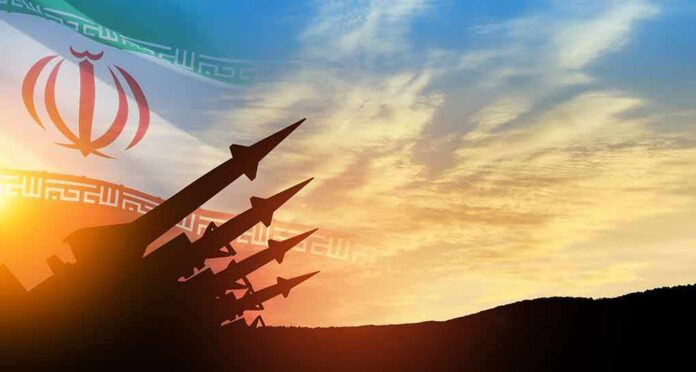
Iran’s latest missile and drone barrage pushed the Gulf closer to a wider war by reaching Kuwait’s skies.
Story Snapshot
- Kuwait says Iranian strikes violated its sovereignty and endangered civilians.
- Iran’s Revolutionary Guard claims it targeted U.S.-linked facilities on Kuwaiti soil.
- Kuwait’s air defenses reported intercepting hostile missiles and drones.
- Independent proof of damage to U.S. assets in Kuwait remains unconfirmed within available reports.
What Kuwait Says Happened
Kuwait’s government condemned Iranian attacks on its territory and airspace. Officials called the strikes a blatant violation of sovereignty and international law. Leaders cited the United Nations Charter and said Kuwait holds a full right to self-defense under Article 51. Statements warned that the attacks threatened civilians and vital sites. These messages came in formal releases and cabinet statements over several dates, signaling an official and united stance.
Kuwait’s framing stresses national security and legal grounds. The emphasis is clear: missiles and drones crossed into Kuwaiti airspace, and that alone is unacceptable. Officials did not center their public case on whether U.S. bases were the intended targets. They focused on sovereignty, safety, and stability. That choice matters because it shapes global response and any future claims for redress under international rules.
What Iran Claims It Targeted
Iran’s Islamic Revolutionary Guard Corps said it carried out retaliatory strikes after U.S. military actions in the region. Iranian and aligned outlets described the targets as U.S. infrastructure in Kuwait and nearby states. Reports named aircraft shelters, satellite systems, and equipment areas used by U.S. forces at or near Kuwaiti bases. These claims point to Ali al-Salem and Ahmad al-Jaber air bases, among others, and frame the strikes as payback against American assets.
These details raise the stakes for Washington and its partners. If proven, attacks on U.S.-linked facilities from inside a third country risk pulling more players into direct conflict. Yet independent battle damage reviews are not in the sources at hand. There is no confirmed U.S. statement in this package that lists damaged assets in Kuwait. That gap keeps parts of Iran’s claims in dispute even as the airspace violation itself is not.
What We Know For Sure Right Now
Kuwait’s army reported that air defenses intercepted hostile missiles and drones. That matches the sounds residents heard, which the military linked to intercepts. This confirms that a real attack wave reached Kuwaiti airspace and triggered active defenses. The confirmed facts do not, by themselves, prove what the exact target set was. They do confirm that Kuwait faced incoming threats and responded to protect its territory.
A strike on Kuwait is a huge claim. Where is the official confirmation from Kuwait or Iran?
— Sofie v. (@sof_d60) September 3, 2026
The bigger pattern is familiar in the Gulf. Iran often frames strikes as retaliation for U.S. actions, and it sometimes aims at U.S.-used sites in partner states. Host nations then stress sovereignty, civilian risk, and international law. That split is on display again. For everyday Americans, this looks like another example of great-power contests playing out on allied soil. People on both left and right see the cost, while leaders argue over narratives.
Why This Matters for Americans
Regional war risk means higher energy prices, market swings, and new demands on U.S. forces. Many citizens already feel squeezed by inflation and rising costs. Missiles over Kuwait threaten oil routes and shipping insurance, which can raise fuel prices at home. The longer this tit-for-tat lasts, the more likely it hits our wallets. It also tests whether Washington’s strategy reduces danger or just shifts it onto allies who host U.S. assets.
There is also a trust gap. Americans across the spectrum think the federal government hides too much and protects insiders first. When claims fly in wartime, people want verifiable facts, not spin. Clear battle damage reports, shared in a timely way, could help. Confirmed data from the United States, Kuwait, and independent imagery would show what was hit, what was stopped, and what comes next. Without that, doubt grows and fear fills the space.
What Evidence Could Settle Open Questions
Three items would clarify the record fast. First, an on-the-record statement from the United States Central Command detailing any damage at named Kuwaiti bases. Second, official Kuwaiti air-defense logs showing trajectories toward specific base coordinates. Third, commercial satellite images before and after the strike window at Ali al-Salem and Ahmad al-Jaber. Each would either back Iran’s claims or undercut them, and help allies plan better defenses.
Until then, stick to what is established. Kuwait says Iran violated its airspace and endangered civilians. Iran says it aimed at U.S.-linked military facilities on Kuwaiti soil. Kuwait’s military says it intercepted incoming threats. The rest needs verified proof. Leaders owe citizens facts they can check. In a tense moment like this, plain truth is not just good policy. It is the best defense against panic, propaganda, and costly mistakes.
Sources:
kuna.net.kw, iranintl.com, aa.com.tr, bbc.com, malaymail.com, wsj.com, tabnak.ir
© truthandliberty.com 2026. All rights reserved.