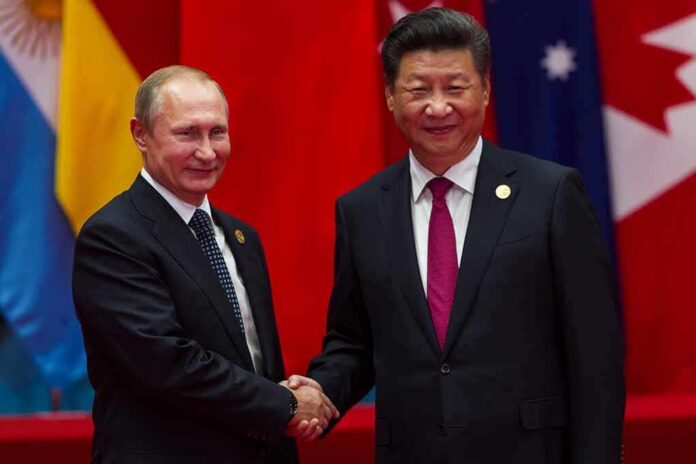
Vladimir Putin and Xi Jinping opened face-to-face talks in Kyrgyzstan as the regional summit began, signaling tighter Russia–China coordination with energy and economics on the table.
Story Snapshot
- Putin and Xi started bilateral talks in Bishkek as the summit opened.
- Both sides called the meeting friendly and constructive, stressing broad cooperation.
- Energy and trade featured, including expected discussion of the Power of Siberia 2 pipeline.
- The meeting was one of several planned bilaterals during the summit.
Leaders Meet As Summit Opens In Bishkek
Russia’s President Vladimir Putin and China’s President Xi Jinping began talks in Bishkek, Kyrgyzstan, as the Shanghai Cooperation Organization summit got underway. Reports said a dozen heads of state gathered for the two-day event, with the Putin–Xi meeting starting as the program opened. Other coverage also placed the meeting on the summit sidelines in Bishkek, confirming the timing and setting. Together, these accounts show a planned, early-session bilateral between the two leaders.
Kremlin planning pointed to a busy schedule for Putin, with about nine bilateral meetings set during the summit, starting with talks with Xi. Russian aides said the agenda covered how to deepen cooperation and address major international issues. This pattern fits past summits, where Russia and China use the gathering to show unity while working specific deals. The format allows public signals and private bargaining inside one venue.
Tone And Messages From Moscow And Beijing
Public comments framed the session as cordial and productive. Kremlin spokesman Dmitry Peskov described the talks as constructive and friendly, saying the leaders handle hard issues based on trust. Xi said China was ready to work with Russia to push reform of global governance and help set the path for the group’s growth. Putin said cooperation is advancing across many areas, including the economy, which underlines a practical agenda alongside the symbolism.
This messaging supports a broader push to show Eurasian coordination at a time of global strain. Prior summits have carried similar themes about a “multipolar” order and new rules for security and trade. Those signals matter because they aim to attract partners and investment across Central and South Asia. They also challenge Western-led groups on standards, finance, and technology. The summit stage helps both leaders rally support while testing what dealmaking is possible.
Energy, Trade, And The Pipeline Question
Energy and trade appear central to the talks. Reports ahead of the meeting said the leaders were expected to discuss the Power of Siberia 2 pipeline, a major gas route that could tie Russian supply to Chinese demand for decades. A senior Russian aide, Yury Ushakov, said the issue would be handled bilaterally, suggesting detailed bargaining on price, timing, and volumes. Such a project could reshape regional energy flows and reduce Moscow’s exposure to European markets.
Chinese President Xi Jinping met with Russian President Vladimir Putin in Bishkek on Monday. The two leaders are in the Kyrgyz capital for the 2026 Shanghai Cooperation Organization (SCO) Summit.#China #Russia #XiJinping #VladimirPutin #SCO #ShanghaiCooperationOrganization… pic.twitter.com/Gxq1zcbkKE
— CGTN Europe (@CGTNEurope) August 31, 2026
Beyond energy, both sides pointed to wider economic links. That includes transport corridors, currency settlement, and technology cooperation. A steady rise in trade has helped both economies blunt outside pressure. Still, not every item will close at a summit. Some reports rely on paraphrase, and there is no public transcript of the full bilateral session. That limits line-item detail on outcomes, but the presence of both leaders and their aides shows real work is underway.
Why This Matters For Americans
Closer Russia–China ties can raise costs and risks for the United States. A tighter energy deal may fund Moscow’s budget and give Beijing cheaper fuel, which can boost their industries. Greater trade in local currencies can weaken the reach of United States sanctions. Stronger coordination inside the group can tilt standards on data, infrastructure, and security away from American preferences. These moves can squeeze American workers, farmers, and small firms if markets shift and costs rise.
Both conservatives and liberals see a common problem here. Washington often talks tough but struggles to deliver clear, steady plans on energy, trade, and supply chains. Families pay the price when fuel spikes, when parts run short, or when exports lose ground abroad. While leaders abroad sign deals, leaders at home argue and posture. Americans need policy clarity: reliable energy, fair trade rules, secure ports and rails, and support for the people who build and grow things here.
What To Watch Next
Watch for an official summit declaration and any readouts from Moscow or Beijing that list concrete steps. Look for signals from energy companies on pipeline timelines and contracts tied to the Power of Siberia 2 route. Track whether more members align on finance tools or transport links that shift trade lanes across Eurasia. These items will show if the friendly words become binding plans. If they do, the impact will reach shipping rates, fuel prices, and export doors that Americans rely on.
Sources:
insiderpaper.com, gulf-times.com, scmp.com, ca.news.yahoo.com, dailysabah.com, apnews.com
© truthandliberty.com 2026. All rights reserved.