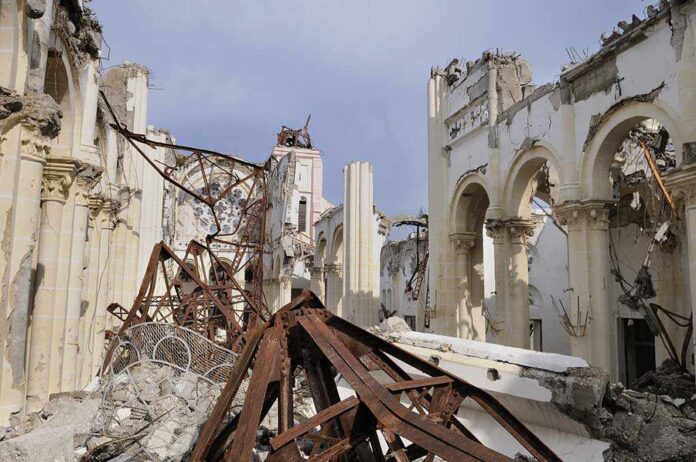
Europe’s main hate-crime monitor says anti-Christian incidents hit churches, cemeteries, and clergy across several countries last year, underscoring how public institutions struggle to protect basic religious freedom.
Story Highlights
- Official reports record widespread attacks on churches, cemeteries, and clergy in multiple European countries.
- France logged a large share of anti-Christian incidents among reported hate crimes, led by vandalism and arson.
- Jehovah’s Witnesses faced threats and assaults, showing the problem spans denominations.
- Totals vary by method, and cross-country comparisons remain difficult, limiting “surge” claims.
What the official monitors actually recorded
Organization for Security and Co-operation in Europe’s Office for Democratic Institutions and Human Rights (OSCE/ODIHR) country files show many anti-Christian incidents in 2024. Reports from France, Italy, Spain, and Austria describe attacks on churches and cemeteries, theft of sacred items, arson, threats, and assaults on clergy. The France page states that more than one third of reported hate incidents were anti-Christian, with most cases tied to church and cemetery vandalism, theft, or arson. These entries reflect named categories and specific targets.
Jehovah’s Witnesses also feature in these records. OSCE/ODIHR notes threats, harassment, physical assaults, and damage to Kingdom Halls and literature carts in France. The material says Jehovah’s Witnesses were often exposed to intimidation and attacks, which pushes back on a narrow, Catholic-only framing. These findings matter because they show the pattern crosses denominations and locations, raising questions about public safety and equal treatment of faith groups across European cities and towns.
How far the numbers can go—and where they cannot
OSCE/ODIHR explains that its hate-crime system blends police submissions with reports from civil-society groups. That mix helps fill gaps but does not capture every case. The office warns that under-reporting by victims and under-recording by authorities make full prevalence estimates hard, and country methods differ, which complicates trends across borders. In simple terms, the data show harm is real and widespread, but do not let us confirm a single Europe-wide surge or a clear cause from the totals alone.
The Vienna-based Observatory on Intolerance and Discrimination against Christians in Europe (OIDAC) contributes data to OSCE/ODIHR in several countries, linking advocacy reporting to the official ecosystem. Yet OIDAC’s own 2026 write-up says its headline figure of 2,465 for 2025 uses the highest available number per country and stands apart from its 528 individually recorded cases, which shows aggregation choices matter for any “surge” claim. Readers should separate documented incidents from broad, rolled-up totals.
Country snapshots highlight vulnerable places and people
France’s 2024 file lists anti-Christian incidents that include church and cemetery damage and arson, and it attributes over one third of reported hate incidents to the anti-Christian category. Italy’s entry includes property damage and serious assaults targeting Catholic priests, showing direct harm to people, not just buildings. Spain’s records include violent threats and intimidation against priests and other targets, even as national categories do not track anti-Christian hate as a stand-alone line in some statistics.
The Vienna-based Observatory on Intolerance and Discrimination against Christians in Europe (OIDAC Europe) identified 2,465 anti-Christian hate crimes and incidents in 2025, up from 2,211 in 2024.
Attacks on property, including churches and religious symbols, accounted for most… https://t.co/TmP9ck8sBi
— St. Testerical Ecilias (@stecilias) November 18, 2026
Austria’s materials also register anti-Christian incidents and note civil-society submissions within OSCE/ODIHR’s process. Together, these country files confirm that the problem does not sit in one place or aim at one denomination. The range runs from graffiti and smashed windows to arson and assaults. That mix warns policy makers not to hide lethal risks behind property-crime averages, and not to inflate vandalism into proof of a coordinated campaign without evidence.
Why this matters to voters who feel the system is failing
Public trust drops when authorities cannot keep churches open and safe or when reporting systems leave major blind spots. Conservatives point to weak policing and a culture that shrugs at attacks on faith. Liberals see unequal protection and fear that hate goes unanswered. OSCE/ODIHR’s warnings about under-reporting and inconsistent methods back a shared concern: people sense that the basic duty to protect peaceful worship and cemeteries is not being met across Europe.
Better data can build better policy. Clear steps include publishing incident-level records for the most serious cases, using one set of definitions across years, and matching civil-society cases with police files to test undercounting. Breaking totals into threats, property damage, arson, and assaults would show where danger is growing fastest. These moves would help leaders focus resources, protect clergy and congregations, and restore faith that government can still do the simple, vital things right.
Sources:
lifesitenews.com, hatecrime.osce.org, odihr.osce.org
© truthandliberty.com 2026. All rights reserved.