Within minutes of a Minneapolis ICE shooting, political operatives turned a local tragedy into a nationwide narrative war designed to push agendas, not uncover truth.
Story Snapshot
- Federal and local officials are offering sharply conflicting accounts of the ICE shooting of Renee Nicole Good in Minneapolis.
- Bystander videos and instant social media spin created “another George Floyd moment” before investigators could review the facts.
- Both left- and right-leaning activists are using the case to fuel broader fights over immigration enforcement and federal power in cities.
- The incident exposes how quickly real tragedies become information “psy-ops” that leave citizens angry, divided, and uninformed.
How A Minneapolis ICE Operation Turned Into A National Flashpoint
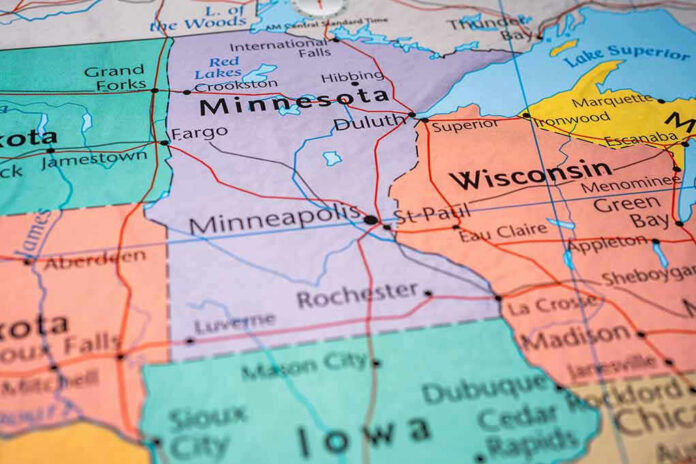
On January 7, 2026, federal immigration agents running an enforcement operation in south Minneapolis encountered 37-year-old Renee Nicole Good sitting in a maroon SUV near East 34th Street and Portland Avenue, less than a mile from where George Floyd was killed. According to reports and video, agents approached the vehicle before one ICE officer fired three shots through the driver’s side window. Good was rushed to a hospital with life-threatening wounds and later pronounced dead.
Federal officials quickly framed the shooting as a matter of self-defense. The Department of Homeland Security and ICE said Good “weaponized” her vehicle and tried to run over officers, insisting the shots were necessary to protect agents’ lives. Minneapolis police initially stressed that Good was found with critical gunshot wounds after reports of shots fired, while firefighters pulled her from the vehicle and medics worked to save her. Within hours, the basic facts were already being filtered through competing agendas.
Competing Narratives: Self-Defense, Unjust Killing, Or “Another George Floyd”?
DHS and ICE maintain that Good used her car as a deadly weapon, claiming the officer had no choice but to fire. They connect the incident to a broader pattern of suspects using vehicles to ram law enforcement, echoing concerns raised after protest-related vehicle attacks in recent years. Supporters of tough immigration enforcement point to those past cases, arguing officers must be allowed to respond decisively when a driver appears to charge at them in close quarters.
Local and state leaders are publicly challenging that account. Minneapolis Mayor Jacob Frey and Minnesota Governor Tim Walz have questioned the federal self-defense narrative, pointing to video evidence and calling the justification “bullshit.” City officials emphasize that there is no indication Good was the target of any investigation. For many in Minneapolis, especially near the George Floyd memorial area, seeing another civilian die at the hands of an officer on their streets feels like history threatening to repeat itself.
From Tragedy To “Psy-Op”: How The Information War Erupted Overnight
Multiple bystander videos from different angles began circulating on social media almost immediately, allowing millions of viewers to form snap judgments before any investigator collected formal statements or forensic evidence. Within hours, partisan commentators and activists were branding the event either as a justified shooting of a “domestic terrorist” or as “another George Floyd moment.” Some right-leaning voices highlighted claims that Good tried to run over agents, while left-leaning activists portrayed the killing as deliberate federal violence in a so‑called sanctuary city.
Commentators like Redacted News seized on the instant spin itself, describing the clash of narratives as a “psy-op from both sides.” In that view, politicians, media outlets, and activist groups rush to weaponize every new tragedy, bending public perception toward pre-set stories about racist cops, lawless rioters, open borders, or militarized feds. For constitutional conservatives, the real concern is that this chaos makes it nearly impossible for citizens to get clear facts, evaluate use of force honestly, and hold anyone accountable.
Federal Power, Local Pushback, And What It Means For Constitutional Governance
Minneapolis officials are demanding answers but have limited direct authority over federal agents operating in their city. The Minnesota Bureau of Criminal Apprehension has opened an independent investigation, tasked with collecting video, interviewing witnesses, and forwarding its findings to prosecutors. Federal agencies, meanwhile, continue defending the officer’s actions and pressing on with immigration operations under broad national-security justifications that frequently test the outer limits of executive power in American cities.
For a Trump-supporting audience that cares deeply about both border security and constitutional limits, this case is a reminder of two hard truths at once. First, serious immigration enforcement is necessary when decades of open-border politics and sanctuary policies have undermined the rule of law. Second, any agency with armed officers—federal, state, or local—must still answer to transparent standards, real investigations, and public scrutiny so that lethal force is reserved for genuinely imminent threats, not split-second narratives crafted for political gain.
Sources:
Minneapolis ICE shooting: Everything we know so far
What to know about Renee Good, 37-year-old woman killed in Minneapolis ICE shooting
ICE shoots two people in Portland, Oregon
City of Minneapolis statement on fatal ICE shooting response
BCA statement regarding investigation into ICE fatal shooting in Minneapolis