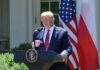
An Iranian drone hitting a fully loaded oil tanker near Dubai is the kind of escalation that can spike your gas bill overnight—and it’s landing right as Trump’s Iran red-line talk gets sharper and MAGA voters get more divided about another Middle East war.
Quick Take
- Iran struck the Kuwaiti VLCC Al Salmi off Dubai Port, sparking a fire but causing no injuries and no reported oil spill after rapid containment.
- The tanker was carrying about 2 million barrels of crude, highlighting how one successful hit could rattle markets and everyday energy costs.
- The strike came amid day 32 of the U.S.–Israel war on Iran and after Trump warned Iran’s energy infrastructure could be targeted if the Strait of Hormuz stays restricted.
- The Strait of Hormuz disruption matters because roughly one-fifth of global oil and LNG flows through it, and traffic remains well below pre-war levels.
Tanker Strike Near Dubai Raises the Stakes for Global Energy
Dubai authorities and Kuwait Petroleum Corporation confirmed that Iran hit the Kuwaiti-flagged very large crude carrier Al Salmi shortly after midnight on March 31, while it was anchored off Dubai Port. The drone strike damaged the hull and triggered a fire, but responders contained the blaze and confirmed all 24 crew members were safe. Officials said there was no oil leakage, an outcome that prevented a serious environmental and economic crisis.
Oil markets still reacted because the vessel was reportedly loaded with roughly 2 million barrels of crude, making it a high-value target and a clear signal to commercial shipping. Crude prices briefly surged above $100 per barrel in the immediate aftermath, reflecting how quickly war risk premiums can hit consumers back home. Even without a spill, the message to insurers, shippers, and traders is the same: Gulf logistics are vulnerable and getting costlier.
Trump’s Hormuz Deadline and Threats Collide With Iran’s Pressure Campaign
President Trump has publicly tied his next steps to the Strait of Hormuz reopening, with the White House setting an April 6 deadline and describing diplomacy through intermediaries even as Iran publicly dismissed proposals as unrealistic. Reporting also described Trump warning that Iran’s power plants, oil wells, and Kharg Island could be targeted if the strait remains closed. Iran, for its part, framed its actions as directed at enemies while urging regional states to push out U.S. forces.
The strategic math is simple but dangerous: closing or constricting Hormuz squeezes a critical artery that carries about 20% of global oil and LNG supplies, and the war has already reduced traffic well below normal levels. The Al Salmi strike is especially notable because it occurred near Dubai rather than in the strait itself, widening the perceived risk zone for merchants. That shift matters because it pressures allies like the UAE and Kuwait while keeping Iran’s leverage over prices and supply fears.
What’s Confirmed—and What Still Isn’t—About the Attack
Multiple outlets converged on the core facts: the strike occurred off Dubai Port, Dubai and Sharjah responders extinguished the fire, and no injuries were reported. One area of uncertainty is attribution at the official level, because reporting indicated Iran had not formally acknowledged the attack even while it was widely described as an Iranian drone strike. Another nuance is the spill question: KPC referenced potential spill risk, while Dubai authorities reported no leak after containment.
Conservative Voters Now Face the Same Old War Test—With Higher Prices
The political bind for the administration is that Americans who backed Trump for border security, inflation control, and an end to globalist adventures are now watching another conflict deepen with direct consequences for household budgets. The immediate consumer-facing pressure point is energy: even brief price spikes can filter into diesel, groceries, and broader inflation. At the same time, the battlefield logic pushes escalation, because shipping attacks and Hormuz disruption create calls for stronger military action.
Reporting also described an expanding regional picture: continued strikes, casualties, and military activity across multiple countries, with troop deployments and allied involvement keeping the conflict on a wartime footing. Netanyahu has said there is no timetable for ending the campaign, while U.S. messaging has mixed public threats with claims that private talks are continuing. That combination leaves voters with uncertainty about duration, costs, and whether objectives are limited and achievable.
For constitutional-minded conservatives, the immediate watch items are mission scope and accountability: how clearly the administration defines U.S. objectives, what authorization and oversight look like as operations expand, and how openly the public is told about risks to shipping and energy security. The Al Salmi incident underscores that the war is not contained to military targets alone, even when civilian crews are spared. The next question is whether deterrence works—or whether tit-for-tat pulls the U.S. deeper into another open-ended fight.
Sources:
US–Israel war on Iran, day 32: Trump escalates Iran threats, Kuwaiti oil tanker hit in Dubai port
Kuwait oil tanker Iran attack Dubai port