President Trump said Vladimir Putin “can” attend the upcoming G20 in Florida, putting engagement over grandstanding and reopening a channel rivals want closed.
Story Snapshot
- Trump said Putin is welcome at the Florida G20, stressing dialogue and leverage.
- Russia was suspended from the G8 in 2014 over Crimea; the G7 framed it as conditional on change.
- Key U.S. allies have pushed to sideline Russia from the G20 since the 2022 invasion.
- Trump’s remark signals U.S. openness to face-to-face diplomacy despite political pressure.
Trump’s Invitation and the Case for Direct Engagement
President Trump told reporters that if Vladimir Putin “wanted to come, he certainly can,” and said he would “like to have them,” arguing the forum was stronger with Russia at the table. Trump linked inclusion to practical diplomacy, suggesting high-level talks can shape behavior and cut through stale talking points. He has often paired tough rhetoric on national interest with a willingness to meet rivals. His comment did not announce a formal invite process; it set a U.S. stance favoring engagement at the summit.
Trump’s framing aligns with a conservative view: use strength and access, not empty lectures. Summits let leaders deliver hard messages in person, test red lines, and trade concrete steps. The Florida setting also matters. Hosting puts the United States in the driver’s seat on agenda and optics. That can translate into leverage on energy stability, prisoner issues, and deconfliction. Critics prefer isolation, but isolation rarely changes facts on the ground. Engagement can expose lies in the open and force answers.
How We Got Here: From G8 Suspension to Today’s G20 Debate
Back in 2014, the other G8 leaders suspended Russia after the Crimea crisis and shifted back to the G7 format. Their joint statement tied Russia’s return to a “meaningful” environment for discussion, making the step conditional rather than irrevocable. That history drives today’s fights over summit seats. Some argue keeping Russia out shows resolve. Others argue contact is the only way to test deals and push de-escalation. The record shows exclusion was a tool, not a permanent rulebook.
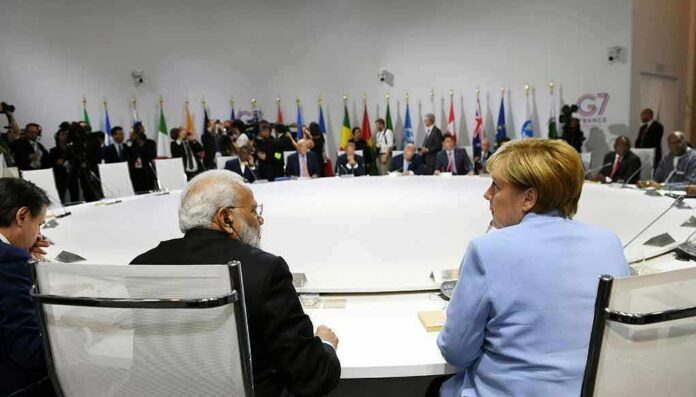
Since 2022, several Group of Seven governments have urged sidelining Russia from G20 events over the war. Reports list France, Germany, Italy, the United Kingdom, and Canada pressing for exclusion or public censure in summit settings. That pressure shapes the optics around any Putin appearance. It can force agenda changes and provoke walkouts or photo snubs. But it does not erase the value of face-to-face talks. Past summits show that even frosty meetings can yield narrow but real progress when leaders trade specifics.
What Trump Did and Did Not Claim
Trump argued the Group of Eight was “more powerful” with Russia and suggested personal slights hardened Moscow’s stance. The factual record supports that Russia’s suspension changed the forum’s makeup and influence. It does not prove that exclusion caused later war decisions. That causal claim lacks documentary backing in the sources available. Trump also did not claim unilateral legal power over attendance. Host mechanics and member politics still matter at the G20, even when the United States signals openness.
US President Donald Trump told reporters on Thursday he did not know if Russian President Vladimir Putin would attend next month’s G20 meeting in Florida, but if it were up to him and he wanted to come, he could.https://t.co/8gda5aaGhc
— businessline (@businessline) November 27, 2026
For readers tracking U.S. interests, the core is simple. Talking does not mean surrender. It means testing terms that serve peace through strength. Conservatives know endless statements do not secure borders, lower gas prices, or protect families. Results do. If Putin shows up, the United States can confront, press, and demand verifiable steps in the open. If he refuses, that failure is clear to all. Either way, America leads from the front, not from the bleachers.
Sources:
youtube.com, business-standard.com, washingtonexaminer.com, govinfo.gov, gov.uk
© truthandliberty.com 2026. All rights reserved.