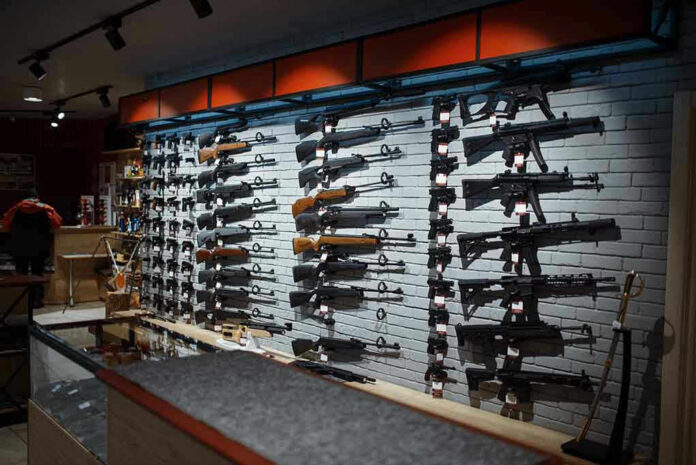
Virginia’s new gun ban is already changing behavior before it changes law, and that is where the real fight begins.
Story Snapshot
- Virginia firearm background checks more than doubled ahead of the July 1 effective date, signaling a rush to buy before the ban starts.[1][2]
- Governor Abigail Spanberger framed the law as a public-safety measure, saying firearms designed to inflict maximum casualties do not belong on the streets.[2][3]
- The statute targets future sales, transfers, imports, and manufacturing, while most current owners face no penalty for mere possession.[2][4]
- At least ten Commonwealth’s attorneys have said they will not enforce the law, raising immediate questions about statewide consistency.[3][4]
The Spike Before the Ban
Virginia’s gun market is behaving like it has seen this movie before: when restrictions are announced, buyers move first and argue later. Reporting from Fox News and WJLA says background checks in Virginia more than doubled year over year as July 1 approached, with stores seeing a sharp rush tied to the coming assault firearms ban.[1][2] That is not a quiet policy transition. It is a deadline that triggered a consumer stampede.
The numbers matter because they reveal immediate public reaction, not long-term policy effects. A sales spike does not prove the law is good or bad; it proves people expect it to bite. That expectation can cut two ways. Supporters can say the law is already shaping behavior. Opponents can say it is merely accelerating purchases before restrictions take effect, which leaves the underlying stock of guns largely untouched.[1][2][4]
What the Law Actually Does
The statute does not read like a confiscation order. It makes it a misdemeanor to buy, sell, transfer, import, or manufacture an “assault firearm,” and WJLA reports that the definition includes semi-automatic rifles or pistols with magazines over 15 rounds, plus certain feature-based configurations such as detachable magazines with a second handgrip or collapsible stock.[2] The law also applies to magazines over 15 rounds.[2]
That structure is the key to understanding the politics. For most people, there is no penalty for merely possessing covered firearms, and the reporting indicates existing owners are generally grandfathered in.[2][4] In other words, the law reaches forward, not backward. That makes it easier to defend as a commercial regulation, but harder to sell as a dramatic public-safety solution unless it meaningfully reduces future access or future use.[2][4]
Why Supporters Think It Will Work
Governor Spanberger’s argument is straightforward: weapons designed for maximum casualties should not be on public streets.[2][3] Supporters also point out that Virginia is not acting alone. WJLA reports that eleven other states and Washington, D.C., already prohibit the sale and manufacture of certain semi-automatic firearms, though details vary.[2][3] That allows backers to frame the law as familiar, not radical, and as part of a broader interstate pattern.
There is also a practical argument that resonates with law-and-order voters. A law focused on sales, transfers, and magazines is easier to police at the retail point than a sweeping possession ban. It narrows the legal pipeline while avoiding a mass surrender fight. That design may look incremental, but incremental laws are often how states test whether they can reduce future circulation without triggering an immediate enforcement crisis.[2][4]
The Weak Point: Enforcement
The biggest weakness is not the statute’s language. It is the atmosphere around it. WJLA and YouTube reporting say at least ten Commonwealth’s attorneys have declared they will not enforce the new law.[3][4] That matters because criminal law depends on local prosecutors as much as it depends on state statutes. A law that exists on paper but meets open resistance in the courthouse can become a patchwork of enforcement, not a uniform rule.[3][4]
Virginia gun sales have surged ahead of a July 1st assault weapons sales ban signed by Gov. Abigail Spanberger, with FBI data showing 75,376 firearm background checks in May, more than double the same month last year. (FOX)
— NTC Armory (@NTC_Armory) June 6, 2026
That same enforcement gap gives critics their strongest argument: a sales ban may change shopping behavior without changing criminal access in the short run. The reporting supplied here does not include Virginia-specific outcome data showing fewer murders, fewer shootings, or fewer mass-casualty events.[1][2][3] So the public debate is still running ahead of the evidence. What is visible now is the political and market reaction; what remains unproven is the law’s actual safety payoff.
The Real Story Is Still Unfolding
Virginia’s experience is becoming a test of two competing instincts in American gun politics. One side believes future sales restrictions can slowly shrink dangerous circulation. The other believes the law mostly burdens lawful owners while leaving the existing stock of firearms in place.[2][4] Both sides have evidence for their reaction. Neither side yet has the decisive public-safety result that would settle the argument for good.
The next chapter will not be written in a hearing room. It will be written in dealer inventories, background-check totals, charging decisions, and the first wave of legal challenges. If the law ends up enforced unevenly, supporters will call that a failure of local resistance. If sales continue to surge, opponents will say the ban merely pulled demand forward. Either way, Virginia has already revealed the central paradox of modern gun bans: the market often moves before the courts do.
Sources:
[1] Web – Virginia gun sales spike ahead of July 1 assault weapons ban signed by …
[2] Web – Virginia sees surge in gun sale background checks ahead of July 1 …
[3] Web – Virginia sees surge in gun sale background checks ahead of July 1 …
[4] YouTube – Virginia assault weapons ban takes effect July 1 as gun …
© truthandliberty.com 2026. All rights reserved.