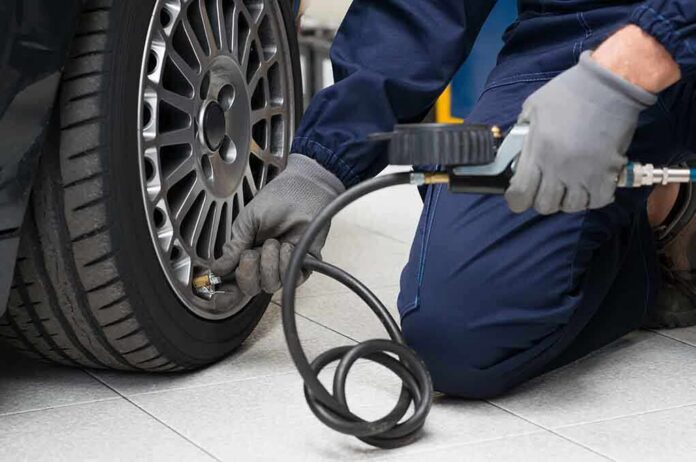
Major automakers tried to lock down your garage, and President Trump just fired back with a memo defending your right to fix your own car.
Story Snapshot
- Trump signed a presidential memo aimed at protecting Americans’ ability to repair their own vehicles.
- Ford and General Motors pushed the White House for limits on owner repairs and control of repair data.[1]
- A 2014 industry agreement on repair information exists but is voluntary and has no real enforcement.[1]
- Trump is framing right to repair as a basic private property right that big corporations should not override.[1]
Trump Draws a Line for Owners Against Auto Giants
President Trump used an Oval Office event to blast auto industry leaders for trying to keep Americans from fixing their own cars.[2] He said Ford and General Motors had asked him to back limits on owners’ right to repair and joked that it was “strange” they do not want people to fix their vehicles.[1] That clash led into a presidential memo designed to shield access to repair and aftermarket parts, putting the White House on the side of drivers instead of corporate lobbyists.[6]
Trump’s comments came after a June meeting that included top figures from Ford, General Motors, Roger Penske, and the Alliance for Automotive Innovation.[2] These companies have fought for years to control the computer systems and data needed for modern repairs. They argue that only authorized shops should touch key software and systems. For regular Americans, that push feels like corporate gatekeeping of their own property, raising costs and limiting choice in the name of “safety.”[10]
Right to Repair Tied to Property and Freedom
Supporters of right to repair say this is about more than cars; it is about basic property rights.[1] The Consumer Access to Repair Coalition points to the founding ideals of equal rights in managing one’s own property, echoing Thomas Jefferson’s view that citizens must control both their person and possessions.[1] If you buy a truck or family car, you should own all of it, including the data and software needed to maintain it. Without that access, ownership becomes a kind of long-term lease under the watch of the manufacturer.[19]
Despite that principle, automakers have kept a tight grip on repair information. A 2014 memorandum of understanding promised that owners and independent shops would get the same diagnostic tools and repair data as dealerships.[1] But the deal is voluntary, leaves out telematics systems, and lets companies shield any “trade secrets,” a loophole big enough to drive a semi through.[1] There is no binding enforcement in that document, and reports say access is still not provided consistently, especially for newer, more connected vehicles.[21]
Corporate Safety Talk Versus Everyday Reality
Ford chief executive officer Jim Farley has tried to soften the company’s image by saying independent repairs are fine but that warranty work needs special tools and skills to stay safe.[10] Automakers claim they must protect drivers from bad repairs and guard sensitive software from hackers.[1] Those arguments sound reasonable on the surface, but they also conveniently protect dealer service profits and keep small shops and do-it-yourself owners locked out of key data channels.[3]
On the ground, most Americans already repair basic parts of their vehicles without trouble.[6] State right to repair laws, starting with Massachusetts in 2012, have worked for years by requiring fair access to diagnostic information.[19] Advocacy groups point out that about seventy percent of vehicles are maintained by independent repair facilities today, showing that non-dealer repairs are both common and largely safe.[24] The real issue is not whether you can change your brakes; it is whether you can access digital codes when a sensor fails so you do not have to pay dealer prices.[21]
Congress, Lobbyists, and the Fight Over Data
In recent years, lawmakers introduced the Right to Equitable and Professional Auto Industry Repair Act to secure nationwide access to repair tools and telematics data.[21] Early versions would have forced automakers to stop designing systems that lock out third-party and enthusiast repairs and backed that up with real Federal Trade Commission enforcement.[22] That promise threatened the comfortable status quo for large manufacturers and their network of dealerships, who profit when owners have no other realistic repair options.[23]
In-town pool report #5
President Trump briefly took questions in the Oval Office after signing a presidential memo on “right to repair” secondary market auto parts. More info on this coming out shortly from White House.
POTUS discussed the housing bill, the SAVE America Act,…
— White House Press Pool Reports (@WHPressPool) June 29, 2026
As the bill moved through Congress, industry lobbying watered it down. Key telematics provisions were stripped and folded into a new House bill, leaving major gaps around wireless data and enforcement.[22] Reports say Ford executives and auto trade leaders visited the White House to push for a bill that would restrict owners’ repair rights rather than expand them.[22] That history explains why Trump’s memo matters: it signals that, at least from the Oval Office, there is resistance to efforts by global automakers to tighten their grip on your driveway and your wallet.
Sources:
[1] YouTube – LIVE: TRUMP SPEAKS FROM OVAL OFFICE
[2] Web – Trump Support – Consumer Access to Repair – CAR Coalition
[3] Web – Trump Learns of Right to Repair Battle and Ford’s CEO Responds
[6] Web – Trump meets with auto industry over right-to-repair debate | Reuters
[10] Web – Trump, Tariffs And Tech: The Right To Repair In 2025 – Legalink
[19] Web – [PDF] Letter to Automakers re Right-to-Repair and Data Sharing
[21] Web – Right to repair | History, Controversies, & Facts | Britannica
[22] Web – A comprehensive primer on the automotive right to repair debate
[23] YouTube – Congress Tried To Pass Right To Repair. Automakers Got It Rewritten
[24] Web – Right to Repair Movement – Repair Act – Old World Industries
© truthandliberty.com 2026. All rights reserved.