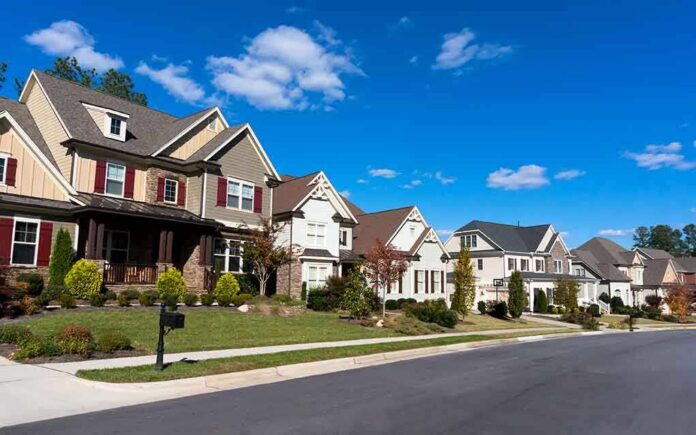
A Federal Reserve study ties Biden-era border chaos to higher home prices and rents—and the numbers are hard to ignore.
Story Highlights
- Dallas Fed links unauthorized immigrant inflows to sharp gains in prices and rents [4][5]
- Study estimates about 30% of 2021–2024 home price growth came from these inflows [5]
- Housing supply did not expand, so more people chased the same homes [4][5]
- Critics say other forces mattered, and flows declined after mid-2024 [6][7]
Dallas Fed Study Finds Immigration Shock Lifted Prices and Rents
The Federal Reserve Bank of Dallas reports that unauthorized immigrant worker inflows boosted local employment about one-for-one, did not cut wages, and raised home prices and rents. The paper uses new administrative microdata to track net flows at national and local levels. Researchers estimate a one percent rise in unauthorized immigrant workers, as a share of local employment, increased house prices by 2.2 percent and rents by 1.4 percent during the boom [4][5]. The data point to a demand shock in markets with tight supply.
The authors calculate that these inflows explain about 30 percent of total house price growth and 20 percent of rent growth from 2021 to 2024 [5]. That period covered the surge at the southern border under President Joe Biden’s watch, when local communities faced rising costs and strained services. The study also finds labor income per person fell due to a shift toward lower-wage jobs, while government transfers declined, suggesting limited fiscal benefits from these inflows [4].
How Tight Supply Turned Demand Into Sticker Shock
The core mechanism is simple: more people need roofs, but homebuilding did not keep pace. The Dallas Fed notes prices and rents rose without a matching rise in housing supply, which is what happens when demand jumps in markets that cannot build fast. Zoning limits, higher financing costs for builders, and shortages in lots and labor already pinched supply. The immigration shock landed on top of those limits, forcing families to bid more for the same homes [4][5].
For homeowners, rising values felt good on paper. For young buyers and renters, higher payments crushed budgets. The study’s local results help explain why many Americans in gateway metros saw faster price and rent spikes than incomes. The authors’ price and rent elasticities are larger than some past studies, which will fuel debate. But the method leans on real administrative records and variation across areas, not broad national averages [4][5].
What the Numbers Mean—and What They Do Not Prove
Critics warn the headline “30 percent of growth” can be misread. One reader analysis claims the average metro’s direct price lift on the median home was nearer three percent, with rents up closer to two percent. That view stresses big roles for low mortgage rates, investor buying, and pandemic moves. Still, it does not refute the Dallas Fed’s core coefficients that link inflows to price and rent gains during the boom [2].
Limits also matter. The paper’s main window ends in early 2024. Dallas Fed economists later reported that net unauthorized immigration turned negative by February 2025 and had declined since mid-2024. That change could ease pressure in some markets, though the study does not test 2025–2026 dynamics. Other Federal Reserve researchers focused on jobs and skipped housing prices, showing that this is not yet a consensus view across the system [6][7].
Policy Stakes for Affordability, Order, and Fairness
Local leaders can act on both sides of the equation. Border security and firm immigration enforcement slow sudden demand shocks that hit working families first. Faster permitting, lower impact fees, and fewer zoning hurdles help builders add supply. The Dallas Fed’s finding that employment rose but labor income per person fell shows why quality of jobs matters, not just job counts. Voters want an orderly system that protects wages and keeps housing within reach [4][5].
A new Federal Reserve study reveals Joe Biden’s open border policies caused a surge in home prices and rent across the U.S.
Researchers at the Dallas Fed found the tidal wave of unauthorized immigration during the Biden administration, between 2021 and 2024, increased demand for… pic.twitter.com/zaJQRPr2Jp
— FOX Business (@FoxBusiness) June 29, 2026
For the Trump administration, the next steps are clear. Secure the border to prevent repeat shocks. Target federal incentives at communities building workforce homes, not at speculators. Demand transparency: the Dallas Fed can release the anonymized microdata so others can replicate and challenge the results. Then extend the analysis through 2026 to confirm whether falling inflows relieve price pressure. Families deserve facts, not spin, and policies that put citizens first [4][5][6].
Sources:
[2] Web – 30% of housing cost increase driven by unauthorized immigration [pdf]
[4] YouTube – Review of Dallas Fed paper on the impacts of Illegal Immigration on …
[5] Web – The Impacts of Unauthorized Immigration on U.S. Labor and …
[6] Web – [PDF] The Impacts of Unauthorized Immigration on U.S. Labor and …
[7] Web – New data show intensifying unauthorized immigration decline, with …
© truthandliberty.com 2026. All rights reserved.