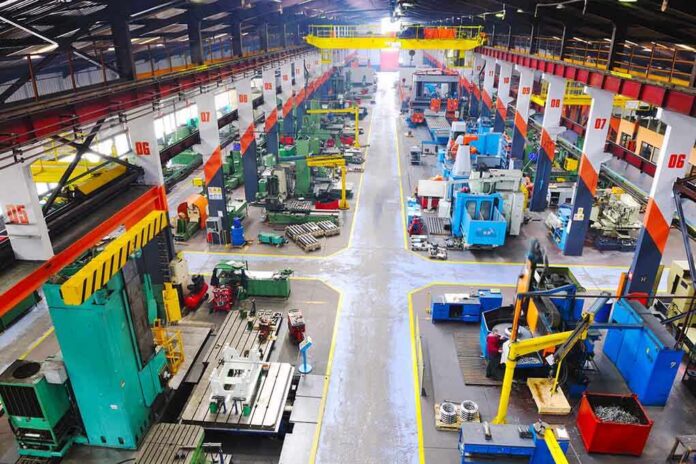
Nearly $500 million bought Texas a “state‑of‑the‑art” artillery plant that, two years later, has not delivered a single usable shell casing to the U.S. Army.
Story Snapshot
- A Pentagon watchdog found the Mesquite, Texas plant produced zero qualifying 155mm metal parts in two years.
- Congressional leaders say the three Universal Artillery Projectile Lines still are not fully operational.
- The Army sent “show cause” and “cure” warnings and even froze work for eight months over poor performance.
- General Dynamics now promises a $200 million reboot, blaming bad foreign equipment and vowing to finally make shells.
How A $500 Million “Game Changer” Ended Up Making Nothing
When the Army cut the ribbon on the Mesquite Universal Artillery Projectile Lines facility in 2024, officials sold it as a backbone of America’s artillery surge. The site cost more than $500 million and was supposed to crank out 30,000 metal parts a month as part of a wider push to reach 100,000 155mm rounds monthly. Instead, by March 2026, a Defense Department inspector general review found the plant had not delivered a single metal projectile part that met contract specs.
Representative Rob Wittman, who chairs the Tactical Air and Land Forces panel, put it bluntly to Army leaders: two years after opening, the facility had yet to produce a single 155mm projectile, or any artillery projectile at all. The lines were supposed to be “universal” and highly automated. Yet they still were not fully operational, and not one shell had been produced under the Army’s agreement with General Dynamics Ordnance and Tactical Systems. For a country trying to backfill stocks drained by aid to Ukraine, that is not a small miss.
Warnings, Work Stops, And A Contractor On The Hot Seat
Pentagon oversight did not sleep through this failure. The inspector general’s report warned that the $469 million spent to establish Mesquite could have gone to other Army or Defense Department needs, given the lack of usable output. Army acquisition officials went further, issuing both a “cure notice” and a formal “show cause” letter to General Dynamics over missed milestones and poor performance at the modular metal parts facility. Those letters made clear termination of the contract was on the table.
Behind the scenes, things were even more serious. The Army’s contracting office ordered a stop-work at the plant in August 2025 while the government tried to figure out if the facility could ever meet its obligations. That work stoppage stretched roughly eight months before the service lifted it on April 3, 2026, without giving the public a clear technical explanation. Bloomberg later reported the factory, which was supposed to run three lines making 30,000 shells a month, had yet to produce a single casing.
Why The Technology Failed And Who Pays To Fix It
The heart of the technical mess appears to be foreign-made machinery that never performed as promised. Reports say key munitions equipment supplied by Turkish firm Repkon did not meet Army requirements. That is not a minor detail. The entire concept in Mesquite rested on highly automated, long-stroke forging and machining lines that could rapidly turn out precision metal parts. When the core hardware falls short, no amount of PowerPoint can turn it into usable shells.
""A Pentagon watchdog report found that in the roughly two years since it was built, an ammunition plant in Mesquite, Texas, has not produced any parts for 155mm artillery rounds"https://t.co/37cyJ6dlyy
— AncloteYakker (@AncloteYakker) July 14, 2026
Here is where incentives collide with common sense. On one hand, the Army spent years telling Congress and allies it would ramp up 155mm production for a long war environment. On the other hand, General Dynamics had every reason to avoid a black eye from a terminated contract. After months of pressure, the company now says it will invest $200 million of its own money, unwind the Repkon partnership, and replace the failed gear with new hardware and management from Deterrence Defense. The Army, for its part, lifted the stop-work and chose to proceed with a $591 million contract, betting on the reboot instead of walking away.
Zero Shells, Confusing Numbers, And What It Says About Our Industrial Base
Some coverage adds confusion by noting that overall Army output has climbed to tens of thousands of shells a month and that “around 56,000” shells are being produced. That broader statistic covers the entire 155mm enterprise, not Mesquite alone. The inspector general and congressional testimony focus on a narrower point: this specific plant, built to be a flagship, has produced zero qualifying projectile metal parts under its own contract. Treating that as anything less than failure ignores the plain record.
From a conservative, taxpayer-focused view, the case is straightforward. Washington spent nearly half a billion dollars on a critical munitions facility that delivered nothing usable in two years while war raged and stockpiles shrank. The contractor missed deadlines, installed equipment that did not meet standards, triggered a work stoppage, and only reached for its own wallet after public heat and the threat of termination. That is the opposite of “prioritizing the warfighter.” It reflects the same defense acquisition patterns experts have warned about for decades: big promises, immature technology, weak accountability, and the quiet hope that, in the end, the government will pay again to fix what it already bought.
Sources:
cbsnews.com, media.defense.gov, breakingdefense.com, insidedefense.com, metaintro.com, thedefensepost.com, nationaltoday.com, ourtime.substack.com, youtube.com
© truthandliberty.com 2026. All rights reserved.