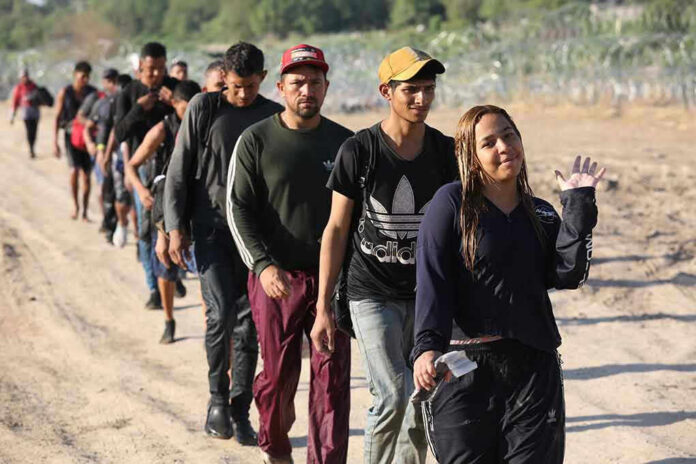
More than a thousand migrants walked out of Tapachula after Democrats’ midterm gains raised hopes the U.S. border might be easier to reach.
At a Glance
- About 1,500 to nearly 2,000 people left Tapachula, Mexico, moving north toward the U.S.
- Some migrants said Democratic wins could mean softer U.S. border policy
- The group included many Central American families and called itself “God Is with Us”
- Caravans draw big attention but are a small slice of overall migration
Caravan Departs Tapachula Days After U.S. Midterms
Reporting placed the caravan in Tapachula, Chiapas, leaving on November 10 and heading toward Huehuetán. Estimates ranged from over 1,000 to close to 2,000 people, which is common for early-stage counts. Reuters tied the timing to the U.S. midterm results and the hopes those results sparked among travelers. Other outlets tracked the same route and headcount band, reinforcing that this was a real, organized march, not a rumor or a one-off clip.
Migrants described a clear plan: move as a group for safety, food, and information. Families with children walked alongside single adults, many from Central America. Organizers used a name—“God Is with Us”—to keep people together and maintain order on the road. Local reporters observed the group’s pace and stops as they advanced along known migration corridors used in past caravans. The scale ensured attention from Mexican authorities and the press, as caravans always do.
Hopes Tied To Democratic Gains, But Reasons Are Mixed
Some migrants voiced a belief that Democratic victories would help their chances at the U.S. border. One Nicaraguan man, identified as Cesar Sandoval, said, “We believe the Democrats will help us… with God’s help,” capturing the mood for part of the group. Reuters reported similar comments about a more “welcoming” policy climate after the vote. Many also cited jobs, safety, and family ties, which remain steady drivers of movement regardless of party control.
Political signals often travel faster than actual policy. Congress controls laws, but border enforcement depends on executive branch rules, court orders, and agreements with Mexico. Migrants on the road rarely parse those layers. Word of mouth, local WhatsApp groups, and televised headlines blend into a simple message: now might be better than later. That story, right or wrong, can pull people off the fence and into a caravan.
Why Caravans Form And Why Cameras Follow
Caravans are a travel strategy and a media magnet. Moving together reduces the risk of robbery, assault, and fraud that lone travelers face. Groups can share maps, buy bulk supplies, and care for children and the sick. But caravans also draw cameras and turn migrants into symbols. Newsrooms know the images resonate with audiences and political actors lean on those images to press their case on border security or asylum reform.
Research shows caravans are only a small share of the total migration flow, yet they command outsize attention and shape debate. That spotlight can trigger quick political responses that do not solve root causes. Border agents see a spike in questions and demands. Lawmakers posture. Viewers pick their preferred frame. Then the camera moves on, while the families keep walking or wait in legal limbo at a port of entry.
What This Episode Signals For U.S. Policy And Politics
This caravan underscores a hard truth in border management: perception is policy’s shadow. When people believe the door could open wider, more try the handle. When they fear it will slam shut, many still come, only with less safety and more dependence on smugglers. Clear, consistent rules, fast decisions, and firm consequences for fraud should be the north star. That aligns with common sense and the rule of law that most Americans support.
Mexico Gives Police Escorts to Migrant Caravan Headed to U.S. Border
Call up the national guard and shoot to kill
— James Swope (@SwopeJls) November 12, 2026
Officials on both sides of the border will watch this group as it advances. Mexico often balances humanitarian support with checkpoints and transport limits. The United States faces capacity tests at legal crossings and along remote stretches. The best deterrent to false hopes is not a slogan after an election, but predictable processing, quick removals for those without legal claims, and lawful paths that work for those who qualify. That mix reduces the pull of rumors and the push of fear.
Sources:
facebook.com, ground.news, mezha.net, dw.com
© truthandliberty.com 2026. All rights reserved.