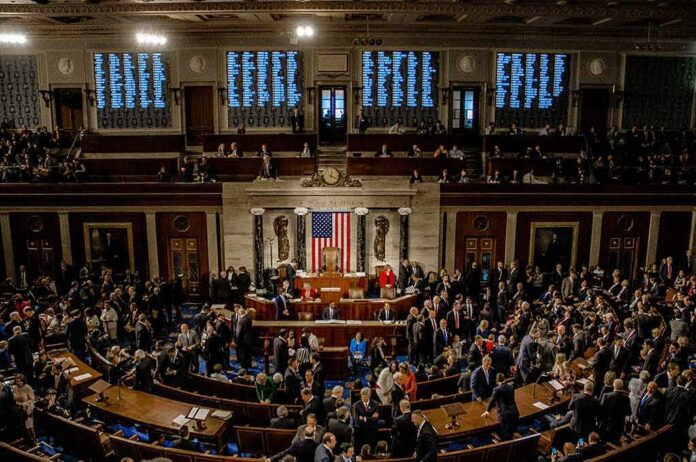
House Speaker Mike Johnson publicly rejected a colleague’s push to impeach Defense Secretary Pete Hegseth even as the House faced a forced vote on eight detailed articles.
Story Snapshot
- Rep. Thomas Massie filed eight impeachment articles against Secretary Pete Hegseth, triggering a House vote.
- The articles center on war powers, citing actions against Iran and Yemen without new congressional authorization.
- Speaker Mike Johnson called the effort political and dangerous during active conflicts.
- Hegseth said the charges are policy disputes, not constitutional offenses.
What Massie Filed and Why It Matters
Rep. Thomas Massie introduced an eight-article impeachment resolution against Defense Secretary Pete Hegseth and forced it to the House floor. The filing spans dozens of pages and lays out several categories of alleged misconduct, including claims tied to Iran and Yemen, rules to prevent civilian harm, strikes on drug boats, speech retaliation, and an operation involving Venezuela’s leader Nicolás Maduro. The resolution states Hegseth should be removed and barred from future office if convicted by the Senate.
The core of Massie’s case is about who authorizes war. He argues the Pentagon waged war against Iran, and took related actions in Yemen, without explicit, new approval from Congress. That strikes at a long-running fight between Congress and the White House over military power. Congress holds the power to declare war, while presidents claim some authority to act under Article II of the Constitution; the exact line remains disputed in modern times.
Johnson’s Rebuttal and the Political Stakes
House Speaker Mike Johnson blasted the impeachment push as a political stunt. He warned that trying to oust the defense chief during ongoing hostilities sends a bad signal to allies and enemies, and said the House should not impeach cabinet officials for “cheap tricks” or political gain. Johnson also praised Hegseth’s public defense of his record. His stance could shape how Republicans handle floor timing, debate, and any procedural moves around the resolution.
Hegseth echoed Johnson’s view from the Pentagon podium. He said the articles reflect policy disagreements, not constitutional “high crimes and misdemeanors” that warrant impeachment. He framed the operations as lawful and focused on national security results, disputing the claim that he broke the law or defied Congress. That puts the question back to lawmakers: is this a policy fight or a constitutional breach? The House must answer that first, before any Senate trial could even be considered.
Evidence Gaps and Why Americans Are Watching
The public filings and reporting establish that Massie forced a vote and summarized the eight allegations. But the record available so far does not include the detailed operational orders, legal memos, casualty data, or incident logs that could prove or disprove each claim. That means the House is weighing serious constitutional questions with partial, public evidence while classified materials likely remain behind closed doors.
Some thoughts on Pete Hegseth’s impeachment and what comes next:
First, make no mistake, Hegseth deserves to be impeached.The reasons are simple, and they come straight from the Constitution and the law.
Only Congress can send this country to war. Congress never approved a…
— Mike Levin (@MikeLevin) November 10, 2026
This episode taps into a shared worry on the right and the left: powerful officials act without clear accountability, and Congress often ducks hard votes on war and peace. Supporters of impeachment see a chance to claw back Congress’s war role. Opponents see a risky, politicized move against a top defense official during conflict. Either way, the stakes are high because impeachment is rare and solemn, and war powers touch life-and-death decisions for troops and civilians.
What Comes Next and What To Watch
Watch four things. First, how House leaders structure floor action, including motions to table or refer. Second, whether any committee reviews or closed briefings surface new records tied to Iran and Yemen actions. Third, whether any Republicans or Democrats break ranks, signaling a constitutional rather than partisan vote. Fourth, if the House advances the case, whether the Senate takes it up or lets it die quietly. Each step will show how serious Washington is about war powers enforcement.
Sources:
youtube.com, abc7news.com, bbc.com, abcnews.com, reason.com, globalnation.inquirer.net, theatlantic.com, mprnews.org, news24.com, congress.gov
© truthandliberty.com 2026. All rights reserved.