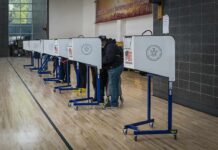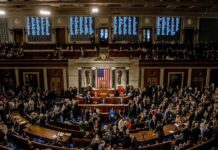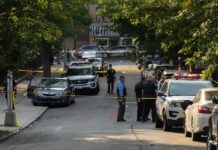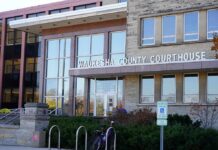
Federal arrests for illegal voting and fraudulent registration have reignited questions about the 2026 midterms and whether every legal vote was protected.
Story Highlights
- Federal agents announced arrests tied to illegal voting and fraudulent registration before and after Election Day.
- President Trump questioned the honesty of the midterms in a pointed social media post.
- Election officials and media reports said machine “vote switching” claims lacked evidence and cited human error explanations.
- Audits and checks are underway to confirm voting equipment performance and results accuracy, officials say.
Trump’s Challenge And What Sparked It
President Trump asked whether the 2026 midterms were honest, pointing to irregularities and illegal voting concerns highlighted in public cases. His post came as federal agencies announced arrests tied to alleged election crimes across several states. The question reaches beyond politics. It goes to trust in the system and whether safeguards worked when it mattered most. Trump’s message pressed that point to millions of voters who want clear answers about rules, enforcement, and machine issues.
The Department of Homeland Security reported a nationwide crackdown that included noncitizens charged with illegally voting. The agency noted arrests in Florida and other actions tied to election crimes. These federal cases do not, by themselves, prove widespread fraud. They do show that some people allegedly broke the law and tried to vote when they were not allowed to do so. That reality fuels calls for stronger checks, better voter roll maintenance, and swift penalties for offenders.
Concrete Cases: What Federal Authorities Are Prosecuting
The Justice Department detailed arrests of foreign nationals in California accused of fraudulent registration and illegal voting. Prosecutors said those charged were lawful permanent residents who are not eligible to vote in United States elections. Officials also rolled out cases involving dozens more people nationwide around Election Day. These filings underline that election crimes do occur and that federal agents are pursuing them as a priority this cycle.
National outlets additionally reported that the Justice Department unveiled charges involving 63 people for various election offenses just before voters cast ballots. The timing drew sharp attention, as voters weighed control of Congress and states ran tight races. Critics say the numbers still appear small relative to total turnout. Supporters argue that even limited illegal voting can swing close contests and erode public faith if ignored.
Machines, Errors, And The Audit Backstop
Fact-checkers and officials pushed back on claims that machines switched votes during the 2026 midterms. Reports said they found no evidence that systems changed votes. Where problems were reported, officials cited likely human error or touchscreen alignment issues. That distinction matters. It separates technical or user errors from a coordinated scheme. It also sets the stage for post-election audits to confirm whether tabulators and procedures worked as designed.
The Associated Press described routine Election Day issues but said there was little proof backing broad conspiracy claims. The outlet also relayed a statement from the Federal Bureau of Investigation’s Houston office that denied an online rumor about a raid that “found fraudulent ballots.” These facts counter some viral narratives and remind readers that official audits and law enforcement statements carry legal weight.
What Audits Can Prove—and What They Can’t
Election administrators conduct post-election audits to check machine performance and result accuracy. These audits compare paper records to reported totals and are designed to find and fix problems. Advocates say this process builds confidence when results are close or when claims fly online. Strong audits cannot stop every rumor. But they can verify outcomes with documented checks that either confirm counts or trigger targeted reviews where needed.
Donald Trump just posted some more BS about election fraud AGAIN. He still hasn’t presented information of any election fraud in six years. Of course, he still claims fraud, without evidence.People believe him so strongly, they attacked the capitol for him on J6. That’s a threat.
— Mark Gerencher (@Detleb) November 9, 2026
The bigger debate is scope, impact, and deterrence. Federal arrests show illegal voting happens, even if at a lower rate. Media and officials argue machine-fraud claims lack evidence. Both statements can be true. The path forward is clear: aggressive prosecution of illegal voting, tighter list maintenance, transparent audits, and swift fixes to any machine or process flaws. Voters deserve a system that blocks unlawful ballots while making every lawful vote count—every time.
Sources:
mediaite.com, gazette.com, justice.gov, newsweek.com, ap.org, democrats-intelligence.house.gov
© truthandliberty.com 2026. All rights reserved.