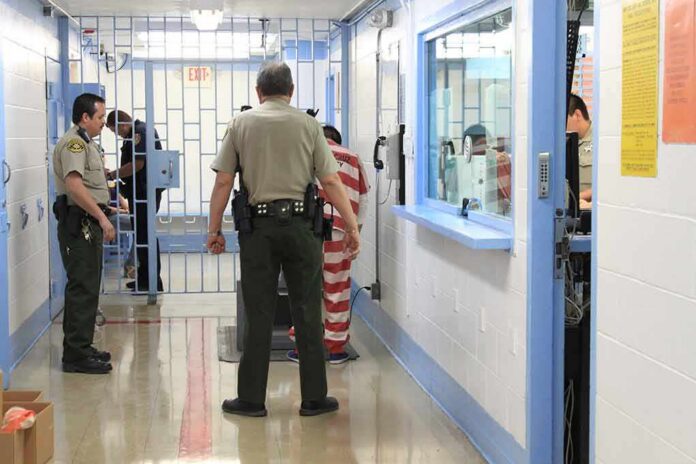
Indiana returned a convicted child killer to prison after a short-lived parole that officials and neighbors say came with poor local notice.
Story Highlights
- Jonathan Richardson, convicted in 2002 for murdering an 11-month-old, was paroled after about 24 years.
- Authorities report Richardson is back in state custody for a parole violation.
- Local prosecutors say they were not properly notified about the December release.
- The case fuels debate over early release rules and notice to communities.
Parole, Violation, and Return to Custody
Evansville authorities said Jonathan Richardson was returned to Indiana state prison for a parole violation, only months after his early release. A local news report shared booking details and confirmed the new custody status. The report did not list the exact violation, which remains unclear at this time. It did confirm the timeline: release in December and a swift return this spring. The quick reversal raised questions about parole oversight and community safety.
The Vanderburgh County Prosecutor’s Office publicly criticized the earlier release and flagged notice gaps. The office said Richardson’s case shows why a pending state bill would require stronger alerts to local officials and the public. That message echoed concerns from residents who felt left in the dark. The prosecutor’s post cited the 55-year sentence and the December parole date as central facts that drove the push for new rules.
What the Conviction Records Show
Indiana Court of Appeals records say an autopsy found the 11-month-old victim died by manual strangulation in 2001. A jury convicted Richardson of murder, and a judge imposed a 55-year sentence in 2002. Those trial facts are not in dispute. They anchor the public’s reaction to the parole and return to custody. The appellate record is the most authoritative source on the cause of death and conviction details. It confirms the severity of the original crime.
Media accounts describe the December parole as years ahead of the full term. Some outlets framed it as nearly three decades early. Those reports also tied the release to confusion over how sentence math works. They pointed to parole eligibility, credit time, and other rules that can shorten physical time served. That gap between the 55-year headline number and time in custody drove outrage among many readers.
Why Notice and Timing Keep Sparking Outrage
Early release fights often mix two issues: strict legal math and public expectations. Sentencing systems count credit time, jail time, and parole rules in ways that feel opaque. People see a 55-year sentence and expect decades behind bars. Agencies then release someone on schedule under the law, but with weak local notice. That mismatch breeds anger across party lines, especially in violent cases involving children. The current case follows that pattern closely.
Local and national coverage amplified the stakes by noting the parole came after roughly 24 years. A Newsmax segment and other outlets reported the release as less than half the sentence served. The exact worksheet behind the parole has not been published. Without that document, the public cannot see the day-by-day credits used. That missing detail leaves room for doubt and fuels demands for transparency reforms.
Policy Questions Facing State Officials
State lawmakers now face two clear tasks. First, fix release-notice rules so prosecutors and local police get timely alerts. Second, publish clear sentence calculations when high-profile inmates leave prison. Those steps would not change court outcomes, but they would show the community why a release happened. Better notice and open math can lower tension. They can also help families and neighbors plan for safety if a parole fails.
I have no words…
A convicted transgender BABY K*LLER who STR*NGLED TO DE*TH AN 11-MONTH-OLD BABY has just been thrown back in prison for a parole violation after he was RELEASED 35 YEARS EARLY…
…FOR M*RDERING A BABY!!!!!
Read that again.
He str*ngled a BABY and he got… pic.twitter.com/tAajZS68Bh
— Matt Van Swol (@mattvanswol) July 27, 2026
For many Americans, this case deepens a larger worry. People on the right and left see a system that talks tough but hides the ball on process. They also see agencies move fast on complex rules but slow on victim notice. That mix makes folks feel the system cares more about paperwork than people. Richardson’s quick return for a parole breach shows supervision can work. But the release, surprise, and scramble still cut public trust.
Sources:
thegatewaypundit.com, townhall.com, foxnews.com, the-sun.com, nypost.com
© truthandliberty.com 2026. All rights reserved.