Colombia’s leftist president handed a major cartel boss to U.S. authorities at dawn—just hours before sitting down with President Trump at the White House.
Story Snapshot
- Colombian authorities extradited Andrés Felipe Marín Silva (“Pipe Tuluá”), alleged leader of the “La Inmaculada” criminal group, to the United States on Feb. 3, 2026.
- The operation used heavy security—more than 70 officers, drones, and a “Halcón” police helicopter—underscoring the case’s sensitivity and risk.
- The extradition came right before President Gustavo Petro’s scheduled White House meeting with President Donald Trump amid a fragile U.S.-Colombia détente.
- U.S.-Colombia relations have been strained by disputes over deportation flights, sanctions, tariffs, and surging cocaine production.
Extradition Timing Signals a Diplomatic Calculation
Colombia extradited Andrés Felipe Marín Silva, known as “Pipe Tuluá,” in the early hours of Feb. 3, 2026, transferring him from a Bogotá police station to an anti-narcotics facility near El Dorado Airport before sending him to the United States. Colombian police described a high-security move involving drones, a helicopter, and more than 70 officers. The extradition followed a Colombian Supreme Court opinion and a final decree signed by President Gustavo Petro.
The tight timing—hours before Petro’s White House meeting with President Donald Trump—makes the extradition difficult to separate from diplomacy. Petro has argued for a “Total Peace” approach that opened exploratory talks with armed groups, but those talks related to “La Inmaculada” stalled and froze. With that track effectively dead, Colombia moved forward with extradition. The practical effect is a tangible deliverable for Washington on the very day Petro needs the relationship to stabilize.
Trump’s Leverage: Drugs, Immigration, and Consequences
President Trump returned to office in 2025 with a harder line on border security and narcotics flows, and Colombia quickly became a point of friction. Reports describe Petro refusing U.S. deportation flights at one stage, triggering threats of escalating economic pressure. The broader dispute expanded into visa suspensions, tariffs, and sanctions tied to disagreements over cooperation. For American voters who watched years of lax enforcement and bureaucratic excuses, the U.S. posture reflects a familiar principle: policies have consequences.
The counternarcotics backdrop is not abstract. Colombia remains the world’s largest cocaine producer, and reporting cited U.N. data showing record production—around 3,000 tons in 2024. Multiple accounts also describe cocaine production rising sharply since Petro took office in 2022. That context matters because extraditions are one of the few tools that reliably remove high-level traffickers from local influence networks and put them into the U.S. judicial system, where witnesses and evidence can be consolidated under federal prosecution.
What “La Inmaculada” Shows About “Total Peace” Limits
One reason this extradition stands out is how it contrasts with other cases reportedly slowed under Petro’s “Total Peace” framework. In some situations, armed actors sought or received statuses that complicated removals, feeding concerns that negotiations can become an off-ramp from accountability. In the “La Inmaculada” case, Marín Silva reportedly sought “peace manager” status, but stalled talks removed that shield. The outcome demonstrates that when negotiations fail, extradition remains a decisive state instrument.
The White House Meeting: Détente, or Another Blowup?
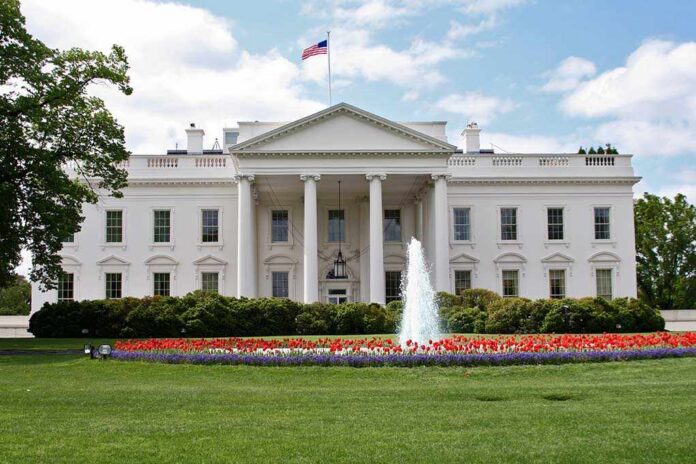
Petro and Trump moved from open hostility toward a more direct, pragmatic channel after a phone call that reportedly lasted close to an hour, followed by a White House invitation. The meeting agenda is expected to touch drugs, immigration, trade, extraditions, and even the scope of U.S. security cooperation. Analysts quoted in reporting have warned the meeting could produce “fireworks,” while others argued direct leader-to-leader communication can reduce miscalculation—even between ideological opponents.
One unresolved issue is credibility and evidence. Reporting noted that Trump previously labeled Petro a “drug leader” without evidence, a claim that has been contested. Even so, the measurable policy problem—record cocaine output and strained cooperation—does not depend on name-calling. For U.S. conservatives who prioritize public safety and sovereignty, the key question is whether Colombia’s government will consistently enforce the law against trafficking networks and accept firm cooperation terms, rather than shifting with political messaging.
What to Watch Next: Extraditions, Sanctions, and Concrete Benchmarks
Marín Silva is expected to face U.S. proceedings in federal court in Texas, putting a spotlight on how aggressively the U.S. will pursue higher-level trafficking structures and financial networks. Diplomatically, the bigger story is whether Petro’s extradition decision becomes a one-off gesture or the start of a sustained policy shift. If cooperation is real, it should show up in repeatable benchmarks: consistent extradition approvals, operational support, and measurable pressure on production and export routes.
For the United States, the strategic posture is straightforward: rewarding concrete enforcement while maintaining leverage where cooperation fails. For Colombia, the stakes include trade stability, visa access, and the ability to avoid deeper isolation before Petro’s term ends in August 2026. The extradition’s timing suggests Petro understands the pressure. Whether that understanding turns into lasting action is what Americans—and especially families hit hardest by narcotics and border disorder—should demand to see.
Sources:
An uneasy detente: Trump and Colombia’s Petro to meet at White House
With good news, we’ll see: Trump-Petro White House clash looms over cartel and cocaine crackdown
Trump invites Colombian president to White House after threatening his country with military strike
Colombia’s ‘La Inmaculada’ Drug Lord Extradited to the US Hours Before Petro-Trump Meeting