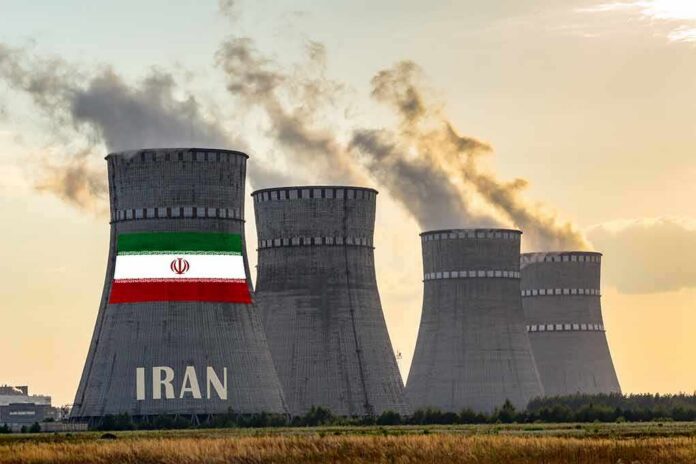
Vice President JD Vance is telling Americans the Iran strikes destroyed the nuclear threat and left Tehran weakened.
Quick Take
- Vance said the United States is not at war with Iran, but with Iran’s nuclear program.
- He claimed the strikes destroyed Iran’s nuclear program and damaged its conventional military.
- Vance argued the United States now has strong leverage in talks with Tehran.
- Published reporting shows he used both hard and softer language about the damage.
Vance Says the Mission Hit Iran’s Nuclear Program
Vice President JD Vance has spent days selling the same core message: the United States hit Iran’s nuclear program, not the Iranian state itself. In an interview on NBC News’ “Meet the Press,” he said the United States was “not at war with Iran” and instead was at war with Iran’s nuclear program. He then said the strikes had “significantly” slowed Tehran’s path to a bomb.
That public line matters because it frames the Trump administration’s case for the strikes as a narrow, targeted move. Vance told reporters and interview hosts that the objective was to destroy enrichment capacity and prevent Iran from rebuilding a weapons program. In later appearances, he went further, saying the program was “functionally destroyed” and that the United States would win “either way,” with or without a final deal.
Damage Claims Extend Beyond the Nuclear Sites
Vance also claimed Iran’s broader military power was badly hurt. Reporting from Scripps News quoted him saying Iran’s nuclear program was “completely destroyed,” while its conventional military was “still destroyed” and its ability to threaten neighbors was “largely gone.” Other coverage said he described Iran’s conventional military as “effectively destroyed,” which shows the scale of the claim he is making to the public.
That language is the kind Washington uses when it wants the public to see strength, not hesitation. For conservative readers who have watched years of weak deterrence, open borders, and endless overseas drift, the message is simple: the Trump team says it acted hard, hit a hostile regime, and kept American forces out of a wider war. Vance has also stressed that the United States has no interest in sending ground troops.
Reporting Shows a Mix of Absolute and Qualified Language
Published accounts also show Vance using a softer version of the same argument when pressed for details. NBC News reported that he would not claim with total certainty that Iran’s facilities were fully erased, and said only that the strikes had “significantly hampered” and “considerably set back” the nuclear effort. ABC News likewise reported that he described the program as set back “substantially,” while avoiding a firm answer on the condition of the Fordow site.
That distinction matters because it separates battlefield damage from final proof. The administration’s public message is that the mission worked and left Iran weaker. At the same time, some later reporting noted that intelligence officials and analysts were still assessing the full effect of the strikes on Iran’s military and industrial base. For now, the public record shows a confident White House line, repeated by Vance, that the strikes bought the United States leverage.
Negotiations Now Rest on Strength, Not Delay
Vance has paired the military claims with a political one: he says negotiations now favor Washington. The Guardian reported him saying the United States would “win either way,” because Iran’s nuclear program was destroyed whether or not a final agreement was reached. Newsweek and other outlets described him as arguing that the administration now holds “great” leverage and can shape the next phase from a position of strength.
General Dan Caine, Chairman of the Joint Chiefs of Staff, has privately urged senior officials including CIA Director John Ratcliffe, Secretary of State Marco Rubio, and VP JD Vance to pursue de escalation with Iran, per a CNN report citing three sources.
Caine reportedly… pic.twitter.com/QPJFi26TJA
— Pak Asia Youth Forum (@payf_official) August 8, 2026
For supporters of a tougher America-first foreign policy, that is the point. Vance is presenting the strikes as a measured use of force that protected U.S. interests without dragging the country into another full-scale war. Critics may still argue over the size of the damage, but the administration’s own case is clear: it says Iran’s nuclear path has been smashed, its military reduced, and its leaders left with fewer options.
Sources:
facebook.com, theguardian.com, republicworld.com, scrippsnews.com, nbcnews.com, youtube.com, washingtonexaminer.com, newsweek.com, nytimes.com, fortune.com
© truthandliberty.com 2026. All rights reserved.