President Trump used his biggest stage to press Congress on a simple question voters have asked for years: why should lawmakers be allowed to trade stocks while writing the rules?
Quick Take
- Trump’s Feb. 24, 2026 State of the Union included an unscripted jab at Nancy Pelosi while he urged a ban on congressional stock trading.
- The push centered on the Stop Insider Trading Act, described as restricting members from trading and requiring a seven-day notice for sales.
- The moment drew bipartisan applause in the chamber, underscoring public pressure for ethics reform after years of frustration with Washington’s self-dealing.
- Pelosi’s family trading history remains a political flashpoint, fueled by disclosure data and a cottage industry of trade-tracking sites and apps.
Trump’s SOTU Ad-Lib Turns an Ethics Pitch Into a Pelosi Spotlight
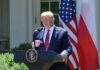
President Donald Trump’s first State of the Union of his second term took an unusual turn when he departed from his prepared text to press a ban on congressional stock trading and then publicly singled out former House Speaker Nancy Pelosi. After lawmakers applauded the reform call, Trump quipped, “Did Nancy Pelosi stand up — if she’s here? Doubt it,” turning a broadly popular ethics message into a pointed reminder of the Pelosi trading controversy that has followed Capitol Hill for years.
The policy ask was tied to the Stop Insider Trading Act, which was presented as barring members of Congress from stock trading and adding a seven-day notice requirement for sales. The key political fact is not the one-liner but the setting: Trump raised the issue in front of both parties and leveraged the optics of a standing ovation. That visual matters because the stock-trading debate has routinely stalled when it leaves the cameras.
Why Congressional Trading Became a Voter Trust Issue After COVID-Era Briefings
Congressional trading scrutiny accelerated during the COVID-19 period, when lawmakers had access to sensitive briefings while also buying and selling shares. The 2012 STOCK Act created disclosure rules, but disclosures alone did not satisfy voters who wanted bright-line restrictions. In the years since, trade-tracking tools and websites have made the issue easier to follow for ordinary Americans, feeding public skepticism that Washington plays by different rules than everyone else.
Nancy Pelosi’s household became a recurring symbol in that debate because her husband, Paul Pelosi, is a venture capitalist who made large, reported trades. Research summarized in coverage cited figures of $56.9 million in reported trades from 2022 to 2025 and another $8.8 million to $38.6 million in January 2026. Defenders have pointed to compliance with existing ethics and disclosure requirements, while critics argue the arrangement still erodes trust.
Bipartisan Applause Signals Political Opportunity, Not Guaranteed Passage
The most striking element inside the chamber was the bipartisan reaction. Reports described lawmakers from both parties applauding the call to end congressional stock trading, a rare moment of agreement in a polarized era. That applause does not automatically translate into votes, committee action, or floor time, but it signals political risk for members who appear to protect the status quo. For conservative voters focused on accountability, the issue is straightforward: rules should limit self-enrichment.
Rep. Bryan Steil of Wisconsin was identified as the sponsor connected to the Stop Insider Trading Act. Even with a named vehicle and a high-profile presidential push, the research available does not detail a post-speech timeline for hearings or a scheduled vote. That limitation is important: Washington often praises popular reforms in public and then buries them in procedure. The practical test will be whether House leadership moves the bill when the headlines fade.
What the Pelosi Moment Says About Messaging, Populism, and Reform Pressure
The ad-lib about Pelosi also shows how ethics reform gets filtered through partisan branding. Trump’s line energized conservatives who see the Pelosi trading saga as emblematic of elite insulation, while some Democrats framed the moment as political theater or deflection amid broader fights over the economy and governance. The underlying facts remain that the speech elevated a concrete reform concept and forced a public, on-camera reaction from lawmakers who usually prefer ambiguity.
Trump Goes Off Script to Slap 'Stock Queen' Nancy Pelosi With Insider Trading Jab https://t.co/98p3zZyzU2
— JoeBooze 🇺🇸 🇮🇹 GO PACK GO!! FSJ J20 (@JoeBooze716) February 25, 2026
For voters still raw from years of inflation, spending fights, and a sense that government serves itself first, the stock-trading debate hits a nerve because it is tangible and easy to measure. A ban would not solve every problem in Washington, but it would address a conflict-of-interest concern that crosses ideological lines. The research here supports one bottom line: Trump put the issue back in the spotlight; Congress now has to decide whether the applause was real.
Sources:
Trump backs Congress stock trading ban
Trump takes shot at Pelosi’s stock trades in State of the Union
Trump takes jab at Pelosi over history of controversial stock trading