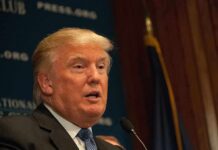
What does it mean to get the economy working for everybody? It’s a question President Trump is answering with bold actions that have the world’s attention.
At a Glance
- Trump administration enacts sweeping tariffs under the “America First Trade Policy.”
- New tariffs cover 71% of U.S. imports, generating significant federal revenue.
- Major trading partners retaliate, affecting $330 billion of U.S. exports.
- Debate continues on the long-term effectiveness and impact of these measures.
An Unprecedented Trade Strategy
President Donald Trump, in his second term, is not mincing words or actions when it comes to reshaping the U.S. economy. On January 20, 2025, he signed the “America First Trade Policy” memorandum, setting the stage for an aggressive stance against foreign trade practices that have long put American industries and workers at a disadvantage. Central to this strategy is the imposition of a universal 10% tariff, with higher rates for countries running large trade deficits with the U.S.
The tariffs, which took effect on April 5, 2025, aim to challenge the status quo, forcing a realignment of global supply chains. By July, these measures covered a staggering 71% of U.S. imports, generating $167.7 billion in new federal revenue. Yet, this bold move has not come without controversy or consequence, as our trading partners have responded with retaliatory tariffs on $330 billion of U.S. exports.
Economic Nationalism in Action
Joe Lavorgna, counselor to Treasury Secretary Scott Bessent, emphasized the administration’s goal of economic inclusivity, stating that Trump’s economic policies aim to ensure the economy works “for everybody.” This populist appeal resonates with many Americans frustrated by decades of deindustrialization and trade deficits that have hollowed out the middle class. For supporters, these tariffs signal a long overdue correction, a move to protect American jobs and industries from unfair international competition.
However, critics argue that these tariffs act as a substantial tax increase on U.S. households, with the Tax Foundation estimating an average impact of $1,300 per household in 2025. Exporters face heightened uncertainty as retaliatory measures restrict access to foreign markets, potentially stifling growth in sectors like agriculture and technology.
A Divided Economic Outlook
The administration touts early signs of a manufacturing revival, yet the broader economic implications remain hotly debated. Official sources claim the tariffs are essential for safeguarding national and economic security, but independent analysts warn that the policy could lead to sustained trade wars, reduced global competitiveness, and inflationary pressures.
The GDP is projected to decline by 0.2% due to these retaliatory actions, and while some U.S. manufacturers and workers might benefit, the overall picture is complex and fraught with risk. The use of emergency powers for economic policy, unprecedented in modern times, may also face legal challenges, adding to the uncertainty.
A Call for Common Sense
As we navigate these turbulent economic waters, it’s crucial to question the long-term viability of such protectionist measures. While they may provide short-term relief to certain industries, the broader impact on America’s economic health, consumer costs, and international relationships cannot be ignored. The administration’s approach may appeal to those yearning for economic nationalism, but it also demands scrutiny and accountability to ensure it truly delivers on its promise of prosperity for all Americans.
In the end, whether President Trump’s aggressive tariffs will achieve their intended goals remains to be seen. The debate continues, and as always, it is the American people who will ultimately decide the fate of this bold economic experiment.
Sources:
Wikipedia on Trump’s Economic Policy