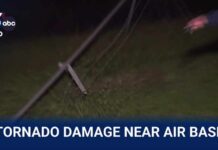
A metallic birthday balloon drifting into a power line just sparked the worst residential wildfire disaster in Georgia’s recorded history, destroying 87 homes in a single inferno while a welding accident miles away ignited a second blaze that leveled 35 more.
Story Snapshot
- Two wildfires in southeast Georgia have destroyed 120 homes and threaten nearly 1,000 more across 39,000 acres, marking the most destructive residential fire event in state history
- The Highway 82 Fire in Brantley County started from a foil balloon contacting a power line, while the Pineland Road Fire ignited from a welding spark, both fueled by extreme drought conditions
- Governor Brian Kemp declared these the most dangerous fires currently burning in America, with containment at only 10-15 percent and evacuations affecting approximately 4,000 homes
- Georgia Forestry Commission officials say 8-10 inches of rain are needed to suppress the fires, but forecasts predict below-average precipitation through July
When Simple Mistakes Become Catastrophic
The twin disasters plaguing southeast Georgia trace back to two utterly mundane human activities that spiraled into historic devastation. On April 20, a metallic foil balloon struck a power line along Highway 82 in Brantley County, creating an electrical arc that ignited bone-dry vegetation below. Two days earlier and miles away in Clinch County, sparks from a welding project landed on parched ground along Pineland Road. Both incidents occurred during Georgia’s worst drought in recent memory, transforming routine occurrences into record-breaking catastrophes that federal authorities now classify as the top wildfire threats in the United States.
The Numbers Behind Georgia’s Worst Fire Season
The Brantley County blaze alone consumed 87 homes across 7,500 acres, establishing a grim benchmark no single Georgia wildfire had previously reached. The Pineland Road Fire added 35 structures to the destruction toll while expanding across 50 square miles, an area twice the size of Manhattan. Combined, these fires forced mandatory evacuations near Nahunta and voluntary departures along U.S. 301, displacing families from approximately 4,000 residences. Meanwhile, 31 additional small fires erupted on Thursday alone, contributing to more than 150 active wildfires burning simultaneously across Georgia and Florida, straining emergency resources to their breaking point.
Why Containment Remains Elusive
Firefighters battling the Highway 82 Fire achieved just 15 percent containment by late April, while the Pineland Road blaze hovered near 10 percent despite Georgia National Guard aircraft joining federal air tankers in dropping fire retardant. The culprit extends beyond the fires’ origins. Shifting winds continually redirect flames toward new fuel sources, forcing crews to abandon containment lines and pivot to structure protection. Bulldozer operators carve firebreaks through rural terrain while first responders work around the clock, but Georgia Forestry Commission Director Johnny Sabo delivered the sobering assessment: nothing short of 8 to 10 inches of rainfall will stop these fires. Weekend forecasts predicted insufficient precipitation.
The Drought Factor Driving Destruction
Southeast Georgia’s prolonged drought created the perfect accelerant for disaster. Vegetation that normally retains moisture became tinder-dry kindling, allowing flames to race across landscapes at unprecedented speeds. The drought’s grip extends well beyond the immediate fire zones, prompting mandatory burn bans across 91 southern Georgia counties and precautionary prohibitions in metro Atlanta and northern regions. Weather forecasts offer little hope, projecting below-average rainfall through July while introducing a new threat: thunderstorms that could spark lightning-ignited fires without delivering enough precipitation to dampen existing blazes. The region needs a meteorological miracle that current atmospheric patterns show no signs of providing.
Political Response and Resource Mobilization
Governor Brian Kemp toured the devastation on Friday, delivering stark assessments that resonated with both practical realism and political urgency. His declaration that authorities have “no way to stop this fire” until weather changes acknowledged the limits of human intervention while highlighting the scale of the emergency. Kemp’s coordination brought Georgia National Guard aviation assets into the fight and secured federal recognition that unlocked additional air tanker support. The response demonstrates appropriate state leadership during crisis, mobilizing resources without overpromising outcomes. Georgia Emergency Management Agency officials issued evacuation orders while the Georgia Forestry Commission managed tactical operations, creating a coordinated response structure that prioritizes citizen safety over property preservation when necessary.
Georgia wildfires that destroyed more than 120 homes continue to threaten residents https://t.co/vdcBPI4yE3
— The Washington Times (@WashTimes) April 25, 2026
The economic toll will require years to calculate fully. Beyond the immediate loss of 120 homes valued collectively in the tens of millions, the fires devastated rural communities with limited tax bases and rebuilding capacity. Displaced families face months in temporary housing while navigating insurance claims and reconstruction timelines. The broader impact touches Georgia’s forestry industry, already struggling with drought-related timber losses, and raises uncomfortable questions about liability for preventable ignition sources. The foil balloon incident particularly highlights how consumer products designed for celebration can become instruments of destruction, potentially inviting regulatory scrutiny of metallic balloon sales in drought-prone regions during high-risk fire seasons.
Lessons From Preventable Ignitions
The human causes behind both fires underscore a troubling pattern: catastrophic wildfires increasingly stem from everyday activities rather than natural phenomena. Metallic balloons causing power line arcs represent a known hazard that utility companies and fire officials have warned against for years, yet enforcement remains minimal and public awareness inadequate. Welding in drought conditions without proper fire watches and suppression equipment nearby violates basic safety protocols that exist precisely to prevent such disasters. These aren’t acts of malice but failures of caution, suggesting that public education campaigns and stricter enforcement of existing burn bans might prevent future tragedies more effectively than post-disaster resource deployment.
Sources:
WSBTV: Georgia wildfires: Gov. Brian Kemp touring damage in south Georgia today
Coast Reporter: Growing Georgia wildfires have destroyed 120 homes, forcing new evacuations
WDRB: Growing Georgia wildfires have destroyed 120 homes, forcing new evacuations