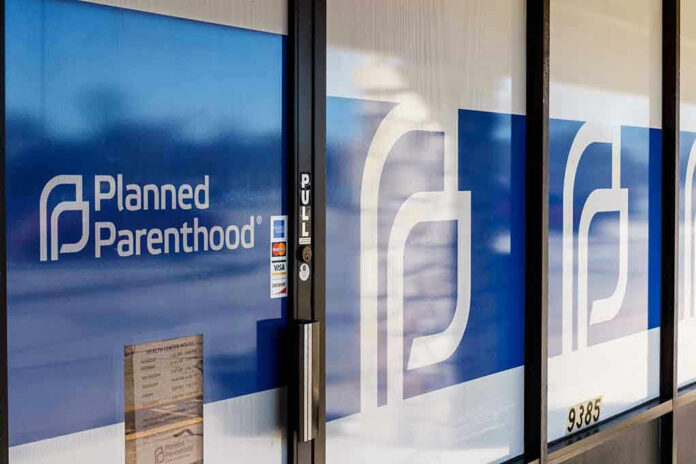
In a bold legal showdown, the Trump administration faces off against a cadre of Democratic attorneys general over the defunding of Planned Parenthood, putting federal authority and healthcare access under intense scrutiny.
At a Glance
- The Trump administration’s move to defund Planned Parenthood through Medicaid has triggered a fierce legal battle.
- 22 Democratic attorneys general, led by Letitia James, have filed a lawsuit challenging this provision.
- A federal judge has temporarily blocked the defunding, allowing Planned Parenthood to continue receiving funds.
- The case raises significant questions about state vs. federal authority and the constitutional implications of Medicaid funding.
Legal Battle Over Medicaid Defunding
The Trump administration, in an assertive push to uphold conservative values, has introduced a federal provision to halt Medicaid reimbursements to Planned Parenthood and similar abortion providers. This measure is part of the broader “One Big Beautiful Bill Act,” enacted in July 2025. However, this attempt to curb funding has sparked outrage among Democratic attorneys general, who argue that such a move is unconstitutional and detrimental to public health. The lawsuit, led by New York’s Attorney General Letitia James, was filed in the U.S. District Court of Massachusetts, signaling a significant political and legal confrontation.
The Trump administration defends the provision as a necessary measure to ensure states have the flexibility to manage Medicaid funds without indirectly supporting abortion services. This aligns with the administration’s consistent stance against abortion, aiming to reduce federal support for providers linked to abortion services. Despite this, critics argue that the move is a direct attack on reproductive healthcare and could significantly limit access to essential health services for low-income individuals relying on Medicaid.
Impact on Healthcare and Constitutional Debate
Planned Parenthood, a major provider of reproductive health services, has already received over $800,000 in Medicaid reimbursements as of 2023. The defunding provision threatens not only this funding but also the broader access to healthcare services for numerous Medicaid recipients. A federal judge recently granted a preliminary injunction that temporarily prevents the defunding, allowing Planned Parenthood to continue its operations without interruption. This court decision underscores the contentious nature of the provision and its potential to disrupt healthcare services for vulnerable populations.
Democratic attorneys general argue that the provision is not only unconstitutional but also ambiguous, potentially causing significant harm to public health by disrupting access to essential healthcare services. They emphasize that Medicaid recipients, especially women and low-income individuals, rely heavily on Planned Parenthood for preventive care. The legal challenge thus highlights a critical intersection between healthcare access and constitutional rights, with implications that could reverberate across the nation.
State vs. Federal Authority
The legal battle over Medicaid funding for Planned Parenthood also raises significant questions about the balance of power between state and federal authorities. Medicaid, a joint federal-state program, requires states to administer the program while complying with federal rules. The Trump administration’s provision asserts federal authority over Medicaid funding, promoting state flexibility in managing these funds. However, the coalition of Democratic attorneys general, representing nearly half the states, views this as federal overreach and a violation of states’ rights.
The lawsuit places federal courts at the center of a fundamental constitutional debate, with judges being tasked to adjudicate on federal spending powers and the legality of the provision. If the provision is upheld, it could set a precedent for federal intervention in state Medicaid administration, potentially affecting other healthcare providers associated with abortion services.
Broader Implications and Public Debate
The controversy surrounding the defunding of Planned Parenthood through Medicaid has intensified the national debate over abortion rights and federalism. Public health experts warn of significant negative health outcomes if Planned Parenthood is defunded, citing its crucial role in providing preventive care. Economic projections suggest that states could face increased healthcare costs due to delayed diagnoses and untreated conditions, with estimates of $30 million in additional costs over five years and $52 million over ten years for Medicaid programs.
This legal and political battle is emblematic of the broader ideological divide in the country, with supporters of the provision arguing it upholds state flexibility and prevents indirect support for abortion providers. Opponents, however, view it as a politically motivated attack on reproductive healthcare access, challenging the constitutional protections of Medicaid recipients. As the legal proceedings continue, the outcome of this case could have far-reaching implications for healthcare policy and state-federal relations in the United States.
Sources:
Illinois Attorney General press release
Massachusetts Attorney General press release
Las Vegas Review-Journal reporting on Nevada AG and federal court actions
Colorado Planned Parenthood lawsuit