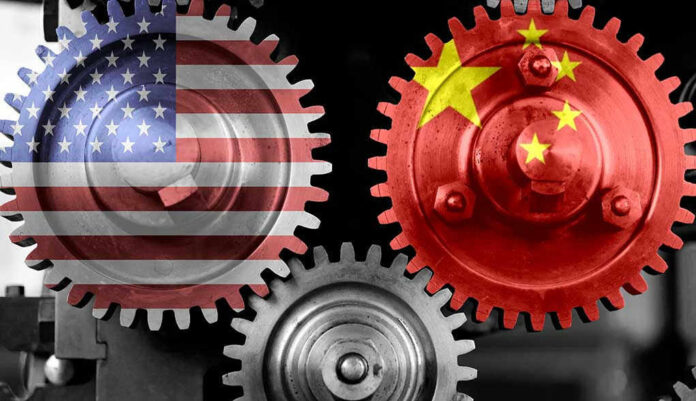
The U.S. Congress is stepping up to counter the Chinese Communist Party’s global repression and bolster Taiwan’s sovereignty, but will these measures be enough to withstand Beijing’s aggressive maneuvers?
At a Glance
- The U.S. is introducing bills to counteract CCP’s transnational repression and support Taiwan.
- These bills aim to protect dissident, ethnic, and religious groups targeted by the CCP.
- U.S.-China relations are tense, with heightened focus on Taiwan’s security.
- Bipartisan support exists, but the legislative process faces hurdles.
U.S. Legislative Efforts Against CCP Repression
U.S. Congress is taking action to confront the Chinese Communist Party’s transnational repression and support Taiwan. In March 2025, Senator Chris Van Hollen introduced the Taiwan Allies Fund Act (S.1216) in the Senate. This move was complemented by Representative Raja Krishnamoorthi introducing the House companion bill (H.R.2559) the following day. These legislative efforts aim to curb the CCP’s coercion against dissidents, ethnic, and religious groups, while reinforcing Taiwan’s international standing.
Bipartisan U.S. lawmakers are introducing bills to target China's human rights violations & transnational repression against dissidents, ethnic, & religious groups. This push comes as U.S.-China trade talks resume.https://t.co/lYXqhO4t4a
Bipartisan Bills Target China’s Human…— Spotlight on China (@spotlightoncn) July 29, 2025
The bills are part of a broader strategy to resist authoritarian influence and support democratic allies. The push comes amid escalating tensions, with the CCP employing diplomatic, economic, and extraterritorial pressure to silence overseas Chinese communities and undermine Taiwan’s global position. The U.S. is leveraging legislative tools to signal its commitment to countering these repressive actions and supporting freedom worldwide.
Historical Context and Current Developments
The CCP’s long-standing efforts to suppress dissent have extended beyond China’s borders, targeting overseas dissidents, Uyghurs, Tibetans, and Hong Kong activists. The U.S. legislative push responds to these transnational repression activities, as well as increased PRC pressure on Taiwan. In recent years, the CCP has intensified its campaign to isolate Taiwan diplomatically, using economic leverage to punish pro-Taiwan policies.
Amid these challenges, the Taiwan Allies Fund Act is under committee review as of July 2025. President Lai Ching-te of Taiwan has pledged increased defense spending, aligning with U.S. calls for greater self-reliance. Meanwhile, the CCP continues to pressure countries and organizations to isolate Taiwan, reiterating its opposition to what it deems “foreign interference.”
Implications and Expert Perspectives
The implications of these legislative efforts are significant. In the short term, diplomatic friction with China is likely to increase, with the potential for retaliatory measures against U.S. interests or Taiwan’s partners. Long-term outcomes may include strengthened international support for Taiwan, deterrence of CCP repression, and possible escalation of U.S.-China tensions.
Experts offer varied perspectives on the situation. Some legal scholars highlight the PRC’s Anti-Secession Law, which could justify military action against Taiwan. Others emphasize the need for robust U.S. support to uphold democratic values and deter CCP coercion. Human rights organizations stress the importance of countering transnational repression to protect vulnerable communities, while analysts warn of potential unintended consequences from escalating tensions.
Future Prospects and Conclusion
The future of these legislative efforts remains uncertain. While there is bipartisan support, the bills face procedural hurdles that could delay or impede their passage. Ongoing diplomatic engagement is crucial to build international support for Taiwan, as the global community navigates the complexities of U.S.-China relations.
As these developments unfold, the stakes are high for Taiwan, dissident groups, and the broader international community. The U.S. legislative push represents a critical component of a larger strategy to counter authoritarian influence and support democratic resilience. The outcome will not only affect U.S.-China relations but also set a precedent for how democratic nations respond to global repression.