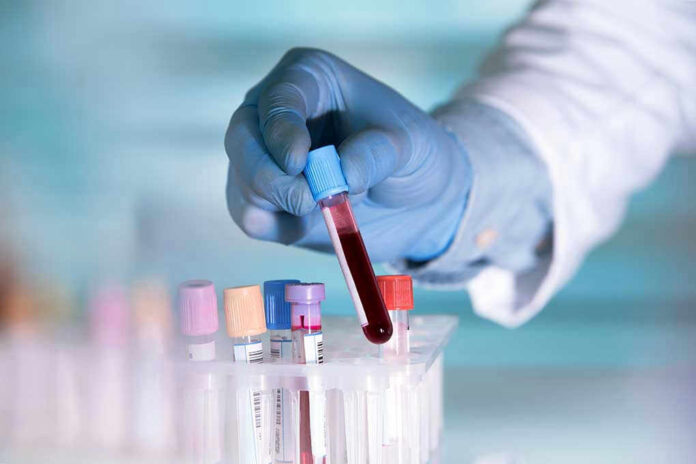
A revolutionary blood test capable of detecting dozens of cancer types before symptoms appear has achieved a major milestone, representing the largest breakthrough in early cancer screening that could save countless American lives while reducing the crushing healthcare costs that have burdened families under previous administrations.
Story Highlights
- PATHFINDER 2 trial enrolled nearly 36,000 participants, proving multi-cancer blood test effectiveness
- Test detected cancer signals in 0.93% of participants, increasing detection rates seven-fold over standard screening
- Single blood draw can simultaneously screen for multiple cancer types unlike traditional methods
- Technology could transform cancer screening from reactive treatment to proactive prevention
Largest Cancer Screening Study Delivers Promising Results
The PATHFINDER 2 trial represents the most comprehensive evaluation of multi-cancer early detection technology to date, enrolling 35,878 participants across 50 clinical sites in the United States and Canada. GRAIL’s Galleri test demonstrated its ability to identify cancer signals in asymptomatic individuals aged 50 and above through liquid biopsy technology that analyzes DNA-methylation markers in blood plasma. The study’s massive scale provides robust evidence that this breakthrough could revolutionize how Americans approach cancer prevention and early detection.
Results from 23,161 participants with complete 12-month follow-up data revealed cancer signals in 216 cases, representing a detection rate of 0.93% or approximately 9.3 cases per 1,000 people tested. This detection occurred alongside participants continuing their normal recommended screening tests like mammograms and colonoscopies, allowing researchers to measure the incremental value of adding multi-cancer detection to existing protocols. The findings were presented at the European Society of Medical Oncology meeting, marking a significant milestone in cancer screening innovation.
Revolutionary Technology Surpasses Traditional Screening Methods
Unlike conventional screening approaches that focus on single cancer types, the Galleri test can simultaneously detect signals from dozens of different cancers using just one blood sample. Traditional screening programs currently cover only five cancer types including breast, cervical, colorectal, lung, and prostate cancers, leaving the majority of cancer types without established early detection methods. This technological advancement addresses a critical gap in preventive healthcare that has left too many Americans vulnerable to late-stage cancer diagnoses when treatment options are limited and outcomes poor.
The multi-cancer early detection approach represents more than a seven-fold increase in cancer detection when added to U.S. Preventive Services Task Force recommended screenings. This dramatic improvement demonstrates how American innovation and medical research can deliver solutions that previous healthcare policies failed to prioritize. The technology assesses circulating tumor DNA fragments that cancer cells shed into the bloodstream, providing molecular signatures that distinguish malignant from normal cells through advanced sequencing and machine learning algorithms.
Clinical Utility Trials Address Real-World Implementation
While the detection capabilities are impressive, researchers recognize that demonstrating improved patient outcomes remains essential for widespread adoption. A new national clinical trial is currently underway to determine whether multi-cancer early detection tests actually improve cancer outcomes by enabling earlier treatment intervention. This critical next step addresses legitimate concerns about overdiagnosis, false positives, and healthcare system burden while ensuring that taxpayers and patients receive genuine value from this medical innovation.
Breakthrough blood test could spot dozens of cancers before symptoms appear —Researchers https://t.co/TbgyrtLShm
— Nigerian Tribune (@nigeriantribune) October 22, 2025
The implementation of multi-cancer detection technology faces challenges related to regulatory approval pathways, insurance reimbursement decisions, and integration into clinical workflows. Healthcare providers must develop appropriate protocols for managing patients who receive positive cancer signals, including diagnostic follow-up procedures and patient counseling approaches. Success in these areas could fundamentally transform cancer screening paradigms, shifting American healthcare toward proactive prevention rather than costly reactive treatment of advanced disease stages.
Sources:
Breakthrough Cancer Research Press Releases
The Largest Study of a Multi-Cancer Early Detection Blood Test
Breakthrough Cancer Therapy Moves to Phase 2 Trials
New Clinical Trial Cancer Screening and Blood Tests