At sunrise on a quiet Costa Rican farm, the country’s most wanted man opened fire on police—and lost.
Story Snapshot
- Costa Rican police captured alleged drug boss Alejandro “Diablo” Arias Monge after a fierce dawn gunfight.
- The United States had posted a $500,000 reward, calling him the head of a violent cross-border trafficking network.
- The raid shows how deep global drug routes run through “peaceful” countries, far from Washington and Wall Street.
- Conflicting injury reports and limited public court records highlight how citizens must still trust official narratives.
Sunrise raid that brought down “Diablo”
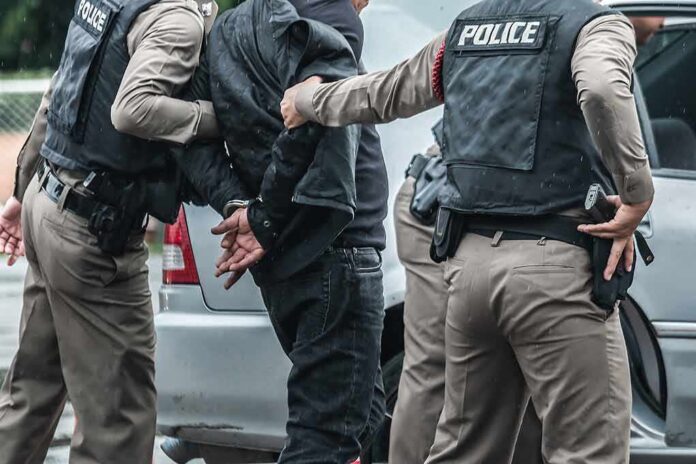
Early Friday morning, Costa Rican police moved in on a farm in Río Frío, a rural area in the northeastern province of Heredia, to capture Alejandro Arias Monge, known as “El Diablo.” Judicial authorities say officers were met with gunfire and a shootout lasted close to an hour before Arias Monge was taken into custody. Reports describe a tense armed standoff in the northern Caribbean region that followed years of tracking his movements.
Officials say the operation came after nearly a decade-long manhunt for Arias Monge, who had been a fugitive since around 2016. Costa Rica’s attorney general, Carlos Díaz, told reporters that police arrested him Friday morning in Río Frío after an operation that left one person dead and several injured. Other accounts mention eight injured people, showing how basic details are still being clarified even in a high-profile case.
The man behind the $500,000 bounty
The United States government had offered up to $500,000 for information leading to the arrest of Alejandro Arias Monge. A public webpage from the U.S. State Department identifies him as the leader of a violent transnational criminal organization accused of moving drugs from Colombia through Central America toward Mexico and the United States. Costa Rican warrants tie him to homicide, money laundering, and drug trafficking, and some local reports link his group to as many as 100 deaths.
Media coverage and official statements paint Arias Monge as Costa Rica’s top criminal figure, with influence reaching across all seven provinces of the country. That picture fits a broader trend: global trafficking networks use small nations with weak borders and strained institutions as key transit points. While Washington talks about border walls and partisan fights, cartels quietly move tons of narcotics through places most Americans rarely think about, such as rural Heredia or the northern Caribbean coast.
A violent operation with unanswered questions
Costa Rican authorities describe the raid as a success that removed a major threat, but even their own numbers do not fully line up yet. One report says six federal agents were injured and one remained in serious condition after the armed struggle. Another outlet, citing official briefings, says the operation left one person dead and eight injured. A Costa Rican television report mentions five wounded officers, highlighting the same confusion listed in critics’ notes about injury counts.
Costa Rica: After over a decade on the run, Alejandro Arias Monge, alias Diablo, identified as Costa Rica’s most wanted drug lord and alleged head of a transnational criminal organization tied to at least 100 murders, was captured during a one-hour operation in Sarapiquí.
The… pic.twitter.com/n3fWOx2Etx
— Crime Intel (@WorldCrimeIntel) July 25, 2026
These gaps may seem small, but they matter for trust. Citizens in Costa Rica, like citizens in the United States, often feel that they only see polished talking points, not full documentation. Analysts reviewing the case point out that public coverage relies mainly on press conferences and repeated news stories, not yet on arrest warrants, evidence logs, or court filings. That pattern, familiar to American readers, feeds a broader sense that powerful institutions control the story, while the public is asked to simply believe it.
What this capture means beyond Costa Rica
For many Americans, the raid on “Diablo” looks like a clear win: one more alleged kingpin off the field, one more blow against the drug trade, and a rare moment when governments appear to work together across borders. The United States embassy in Costa Rica publicly praised the operation and called it a major strike against organized crime. Those messages line up with Washington’s usual claim that aggressive law enforcement is protecting families from imported violence and drugs.
At the same time, this story touches wider frustrations on both the right and the left. Conservatives who back tough policing still watch overdose numbers and ask why, if kingpins keep getting arrested, the drugs keep flowing and the border stays porous. Liberals who worry about state power ask whether raids like this follow proper legal steps and whether communities caught in the crossfire ever see real justice or just more violence. Both sides see a pattern: large headlines, high rewards, and major operations, but little change in everyday safety.
Power, transparency, and the fight against cartels
The “Diablo” case shows how hard it is for regular people to get the full truth once national security and organized crime enter the picture. Officials and major media quickly shape a single narrative: a feared fugitive, a heroic raid, and a clean victory against evil. Questions about evidence handling, legal warrants, or the exact number of wounded officers are pushed to the margins, if they appear at all. That dynamic is familiar to Americans who talk about a “deep state” or distant elites setting the agenda.
For citizens in both countries, the key issue is not whether Arias Monge was captured—every source agrees that he is now in custody. The deeper issue is whether the same institutions that missed his rise, and allowed his network to thrive for years, can be trusted to police themselves. Without strong, public documentation and ongoing scrutiny, even real successes risk feeling like another headline in a long war that ordinary families seem to be losing, whether they live in Costa Rica, Texas, or anywhere in between.
Sources:
pjmedia.com, cbsnews.com, freemalaysiatoday.com, youtube.com
© truthandliberty.com 2026. All rights reserved.