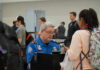
A sitting member of Congress turned the State of the Union into an immigration protest—and her guest ended the night in handcuffs.
Story Snapshot
- Reps. Ilhan Omar and Rashida Tlaib disrupted President Trump’s Feb. 24, 2026 State of the Union during immigration-related remarks.
- Omar’s invited guest, Aliya Rahman, was removed from the gallery and arrested after standing silently, later facing an “Unlawful Conduct” charge.
- Trump publicly blasted the lawmakers afterward, while Democrats and media outlets split over whether it was “protest” or a breach of decorum.
- The clash lands in the middle of a heated national fight over ICE enforcement, sanctuary policies, and the limits of political theater inside Congress.
Disruptions during Trump’s address put immigration front and center
President Donald Trump’s State of the Union on February 24, 2026 drew national attention not only for policy messaging, but for a visible confrontation on the House floor. Reports and video coverage described Reps. Ilhan Omar (D-MN) and Rashida Tlaib (D-MI) shouting during the speech, including accusations tied to immigration enforcement and recent events in Minnesota. The moment underscored how border and ICE policy has become the flashpoint Democrats use to challenge Trump’s agenda in public.
Video clips circulating after the address captured the interruptions and the chamber’s reaction, reinforcing the basic facts that the lawmakers were vocal and that the outbursts occurred during immigration-related segments. Coverage also described Tlaib wearing a provocative anti-ICE pin and engaging in taunting chants, adding to the spectacle. While lawmakers have latitude to signal disagreement, the SOTU remains one of the few ceremonies where Americans expect elected officials to act like adults and let the president speak.
Omar’s guest arrest raises questions about rules, enforcement, and equal treatment
The most concrete enforcement action from the night involved Omar’s guest, Aliya Rahman, described as a software engineer. According to reporting, Rahman stood silently in the gallery and was removed by Capitol Police, then arrested and charged with “Unlawful Conduct.” Omar later claimed her guest was handled aggressively and warned officers that Rahman had shoulder injuries. Capitol Police did not immediately provide detailed public explanations to reporters, leaving key procedural questions unanswered.
Available reporting said the charge could carry up to six months in prison and a $500 fine, though public information about the case’s next steps was limited in the immediate aftermath. The underlying fact pattern matters because it separates two issues conservatives care about: decorum and security inside the Capitol, and the expectation that rules should be clear and evenly enforced. When details are sparse, distrust grows—especially after years of inconsistent standards applied to protesters depending on ideology.
Minnesota ICE-related deaths and “Operation Metro Surge” fueled the confrontation
Omar and allied outlets tied their protest to two U.S. citizens reportedly killed by ICE agents in Minnesota weeks earlier, with references to an enforcement push described as “Operation Metro Surge.” That backdrop explains why the lawmakers framed the SOTU disruption around life-and-death claims rather than ordinary policy disagreement. However, reporting did not include a full, independently detailed public accounting of the Minnesota incidents inside the same coverage that described the SOTU confrontation, limiting what can be verified from the provided sources alone.
What is clear is that immigration enforcement has become the central line of political division: Trump’s coalition largely demands stronger enforcement and an end to sanctuary incentives, while progressive Democrats frame enforcement itself as illegitimate. The immediate problem for institutional credibility is that turning the House chamber into a protest venue reduces Congress to theater. Americans who have watched inflation, crime debates, and border chaos dominate recent years are unlikely to see floor-shouting as governance.
Trump’s response, political fallout, and the constitutional tension point
After the speech, Trump criticized Omar and Tlaib in public comments and online posts, describing them in harsh personal terms and telling them to “go back where they came from,” according to coverage. Those remarks became a second controversy layered on top of the initial disruption. The combined effect was predictable: supporters saw a president confronting what they view as radical anti-border politics, while opponents argued the response was inflammatory and personal rather than policy-based.
Ilhan Omar CRASHES OUT During Trump’s State of The Union Address | Drew Hernandez https://t.co/EoFmlWaPQ8
— The Gateway Pundit (@gatewaypundit) February 26, 2026
The lasting takeaway is less about a single night’s insults and more about institutional behavior. The State of the Union is designed to communicate priorities to the nation, not to normalize heckling that would be thrown out of any serious workplace. At the same time, the arrest of a silent-standing guest—without a fully transparent explanation—invites further scrutiny. In a divided country, restoring trust requires consistent rules, clear enforcement standards, and leaders who can disagree without shredding the norms that hold constitutional government together.
Sources:
Squad member claims State of the Union guest arrested
Trump tells Omar and Tlaib to go back where they came from after SOTU showdown