Doctors are seeing rare brain vessel inflammation after COVID-linked exposures, but the evidence still stops short of proving cause.
Quick Take
- Two peer-reviewed case reports describe cerebral amyloid angiopathy-related inflammation and amyloid beta-related angiitis appearing soon after COVID-19 vaccination [1][2].
- The reports include MRI changes, inflammatory findings, and steroid response, but the authors caution that timing alone does not prove causation [1][2][3].
- One case involved a patient with established cerebral amyloid angiopathy, which weakens any claim that vaccination created the underlying disease [1].
- The current public record is still case-based, not a controlled population study that can measure risk [1][2][3].
What the Case Reports Actually Show
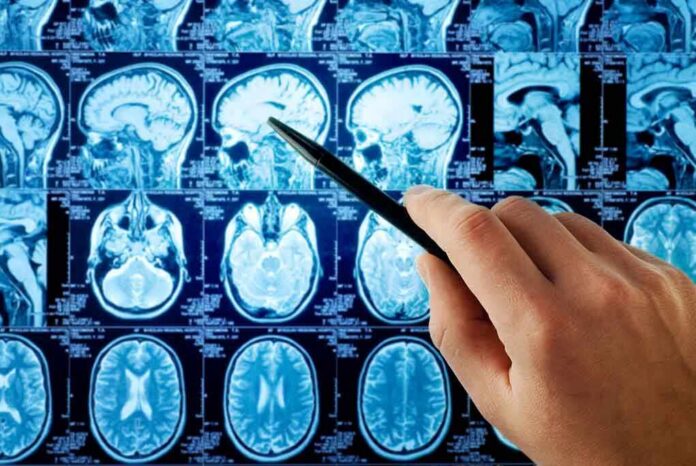
The strongest published report describes a 77-year-old man who had recent brain hemorrhage and established probable cerebral amyloid angiopathy before receiving a first dose of the Pfizer-BioNTech vaccine. He returned 14 days later with MRI findings that included subacute occipital hemorrhage, multiple microbleeds, and vasogenic edema, and the authors reported persistent anti-spike protein antibodies in the cerebrospinal fluid [1].
A second report describes amyloid beta-related angiitis of the central nervous system appearing two weeks after COVID-19 vaccination and confirmed by brain biopsy. The patient improved after steroid pulse therapy, which supports an inflammatory process, but the paper also states that there is no evidence yet showing that the vaccine triggers the disorder [2].
Why the Evidence Remains Limited
Both reports are clinically serious, but they remain individual case studies. That matters because case reports can show temporal proximity, unusual imaging, and treatment response, yet they cannot determine how often the condition occurs, whether vaccinated people face more risk than unvaccinated people, or whether a pre-existing illness was already unfolding [1][2][3].
The literature review tied to these cases says it is difficult to prove causation rather than chronological association after vaccination, and it also notes that cerebral amyloid angiopathy-related inflammation had not previously been described after infection or vaccination [3]. That is a cautious scientific position, not a dismissal. It reflects the hard reality that rare neurological syndromes can look alarming long before researchers have enough data to separate signal from coincidence.
What Patients and Families Should Watch For
For patients with known cerebral amyloid angiopathy, the practical takeaway is not panic but attention to new neurological symptoms. Sudden weakness, confusion, speech trouble, seizures, severe headaches, or a rapid change in thinking should prompt urgent medical evaluation. The case reports suggest that inflammation can be steroid-responsive, which means early recognition may matter even when the trigger remains uncertain [1][2].
About 15% of strokes are hemorrhagic. Hypertension is the leading cause, period.
In older patients, cerebral amyloid angiopathy is likely the second most common. It’s closely related to Alzheimer’s disease. Here, amyloid plaque deposits in the vessel wall weaken it, leading to… pic.twitter.com/Hr1XTuytER
— Whitfield Lewis, MD 🇦🇬🇺🇸 (@whitfieldlewis6) May 19, 2026
For everyone else, the broader lesson is that public debate often outruns the evidence. COVID-19 has already been linked in other research to brain fog, stroke risk, and indirect brain injury through inflammation or reduced oxygen supply [4][5][6][9]. Those established concerns are real, but they should not be stretched into a claim that these rare amyloid-related cases are proven vaccine injuries. The data so far support vigilance, not certainty.
Sources:
[1] Web – Cerebral amyloid angiopathy – Related inflammation after COVID …
[2] Web – Amyloid β-related angiitis of the central nervous system occurring …
[3] Web – A case of cerebral amyloid angiopathy related inflammation after …
[4] YouTube – Factors affecting the efficacy of COVID-19 vaccination in patients …
[5] Web – AMYLOID POST COVID-19 VACCINE – ANY RELATION?
[6] Web – Study Finds COVID-19 Can Cause Build-up of Alzheimer’s-Related …
[9] Web – Researchers pinpoint cause of rare but life-threatening blood clots …