A compact Italian shopping street turned into a triage zone within seconds, and the unanswered question is whether it was carnage by intent or catastrophe by loss of control.
Story Snapshot
- Driver in Modena mounted the sidewalk, striking multiple pedestrians before crashing into a storefront [1][2].
- Reports say the suspect fled and allegedly tried to stab a passer-by who intervened [1][2].
- Police confirmed serious injuries while withholding any conclusion on motive or intent [1].
- Conflicting early counts signal an unsettled record that needs forensics and official filings [1][2].
What Happened On Via Emilia, And Why The Details Matter
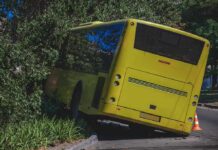
Accounts from Modena describe a compact car jumping the curb on Via Emilia on May 16, striking people on the sidewalk and coming to rest in a shopfront before the driver abandoned the vehicle [1][2]. One outlet reported at least ten struck and seven injured, with four in serious condition and one woman suffering devastating leg injuries [1]. Another report cited seven injured, four seriously [2]. Police detained a suspect for questioning soon after [1]. That core sequence anchors the public’s alarm.
Several reports add that the driver fled on foot and allegedly tried to stab a passer-by who attempted to stop him [1][2]. That allegation, if corroborated, would powerfully reinforce an inference of hostile intent after the crash. Investigators, however, have not released a motive or confirmed intent, saying they are weighing explanations ranging from a traffic accident to deliberate action [1]. The lack of a formal charging narrative keeps the event in a limbo that demands evidence rather than assumption.
How To Read Early Reports Without Getting Played
Early casualty counts often conflict because they blend on-scene chaos, evolving hospital triage, and duplication across republished briefs. Here, one outlet’s “at least ten struck, seven injured” coexists with another’s “seven injured,” a familiar gap when live numbers harden into official tallies later [1][2]. The sidewalk incursion and storefront collision suggest a decisive departure from the roadway, but that alone cannot prove intent without crash reconstruction, vehicle data, or reliable video reviewed by authorities [1]. Precision grows only when forensics speak.
Knife claims particularly require documentary support. Reporters cited an attempted stabbing during the suspect’s flight, yet the current set of public materials does not include a police affidavit, weapons recovery statement, or prosecutor filing to verify that detail [1][2]. If investigators confirm a brandished blade and an attempt to injure, the pattern aligns with a deliberate attack sequence. If they cannot, the narrative loses its most damning post-crash element and reopens alternative explanations such as panic or confusion.
What Investigators Likely Need Before Calling It
Investigators will look for fixed-camera video from municipal systems and store fronts to map the vehicle’s path, speed, and steering inputs frame by frame. They will seek event data from the car’s modules if available, correlating throttle, braking, and airbag timing to the curb strike and the final impact [1]. They will match that record to witness statements gathered under formal process rather than social snippets, and to medical and toxicology results that might reveal intoxication or sudden medical incapacity. Each piece narrows the explanation.
Emergency dispatch audio and first responder logs can reveal what bystanders reported in real time—phrases like “he is aiming at people” versus “he lost control” matter when piecing intent. Hospital triage notes, while focused on care, also record short descriptions that can corroborate sequence and timing. None of this replaces motive, but it can establish purposeful steering or acceleration inconsistent with a mere skid. That is the bridge from spectacle to evidence that holds up in court as well as in the court of public opinion.
Common Sense, Accountability, And Why This Case Hits A Nerve
Public safety demands fast clarity: was this a criminal assault or a catastrophic crash? Police have correctly resisted premature labels while confirming grave injuries and detaining a suspect [1]. That stance aligns with basic American conservative instincts about due process and equal justice: punish proven wrongdoing hard, but do not let headlines substitute for evidence. The sidewalk carnage, if ultimately intentional, merits the strongest charges available under Italian law. If not, truth still matters more than a viral storyline.
Car rams into pedestrians in Modena Italy, injuring 8, and four are in a serious condition.
It has been reported that the driver attempted to flee but was stopped by locals and is now in police custody.
Witnesses also say the man was holding a knife.
https://t.co/Q0AEiBkjeW pic.twitter.com/I3oQXCUL7M— Patriotic 🇬🇧 Nation (@HoodedClaw1974) May 16, 2026
Citizens deserve two outcomes: first, an honest accounting anchored in camera footage, reconstruction, and sworn testimony; second, the practical fixes that reduce the odds of a repeat, from removable bollards on pedestrian corridors to faster suspect interdiction tactics in dense centers. The worst failure after an event like Modena is to learn nothing. The second worst is to learn the wrong lesson because we rushed past the facts. Patience here is not softness; it is how you get justice right.
Sources:
[1] Web – Horror in Modena as car rams into pedestrians on busy Italian street
[2] Web – Video: Man Drives Into Pedestrians, Then Chases People With Knife …