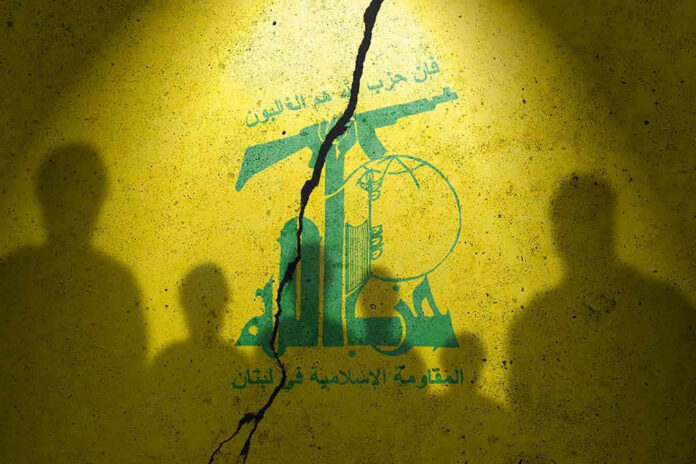
Israel and Lebanon struck a ceasefire deal — but Hezbollah, the Iran-backed group doing most of the fighting, flatly rejected it and kept on shooting.
Story Snapshot
- The U.S. brokered a 10-day ceasefire between Israel and Lebanon starting April 16, 2026, but Hezbollah was not part of the talks and publicly rejected the deal.
- The agreement requires Hezbollah to stop all attacks and pull its fighters out of southern Lebanon — terms the group’s leader called “the enemy’s objectives.”
- New “pilot security zones” south of the Litani River would give the Lebanese army exclusive control, but no clear enforcement plan exists to make that happen.
- U.S.-Iran nuclear talks hang in the balance, with Iran using Hezbollah as a pressure tool while Washington tries to hold the ceasefire together.
Trump Team Brokers the Deal — With a Big Hole in It
President Trump, Secretary of State Marco Rubio, Israeli Prime Minister Benjamin Netanyahu, and Lebanese President Joseph Aoun all agreed to the ceasefire framework after four rounds of U.S.-mediated talks in Washington. The deal took effect April 16, 2026, at 5:00 p.m. Eastern Time. Israel agreed to stop offensive military operations. Lebanon agreed to work toward a lasting peace. The U.S. State Department spelled out the terms in an official release.[5] The problem? Hezbollah — the group actually firing the rockets — signed nothing.[6]
The State Department’s agreement is clear: the ceasefire depends entirely on Hezbollah stopping all fire and pulling its fighters north of the Litani River.[5] But Hezbollah leader Naim Qassem rejected the deal outright in a written statement read on television. He called the negotiations a “farce” and said, “As long as the occupation exists, the resistance will continue.”[16] Hezbollah was not invited to the Washington talks, holds no legal obligation under the agreement, and has shown no sign of complying. That is not a minor detail — it is the entire foundation of the deal.
Security Zones Sound Good on Paper
One of the deal’s key features is the creation of “pilot zones” south of the Litani River. Inside these zones, the Lebanese army would take exclusive control and ban all non-state armed groups — meaning Hezbollah.[2] On paper, that is a strong move toward restoring Lebanese sovereignty and pushing Iran’s proxy force away from Israel’s border. In practice, the Lebanese army has never disarmed Hezbollah. Analysts note the group operates as a state within a state, with better weapons than the national military and deep political ties inside the Lebanese government.[1]
Netanyahu confirmed that Israeli troops would not withdraw from southern Lebanon, even as the ceasefire took effect.[3] That created immediate friction. Al Jazeera reported Israeli airstrikes continued in the hour after the ceasefire announcement, with both sides blaming the other for violations.[7] The U.S. State Department did clarify that Israel keeps the right to defend itself “at any time against planned, imminent, or ongoing attacks,” so not every strike automatically breaks the deal.[5] Still, the optics of strikes right after a ceasefire announcement do not help.
Iran’s Shadow Over the Whole Situation
This ceasefire does not exist in isolation. U.S.-Iran nuclear talks are happening at the same time, and Iran has made it clear it wants Lebanon included in any broader deal. A Hezbollah official acknowledged the ceasefire came partly from Iranian pressure during U.S.-Iran negotiations, with Pakistan helping mediate.[6] Analysts warn that Iran uses Hezbollah as a bargaining chip — turning the group’s attacks up or down depending on what Tehran wants at the negotiating table. That means the ceasefire’s durability ties directly to how those Iran talks go.[26]
Reports indicate Hezbollah attacked Israeli forces in southern Lebanon overnight, killing 4 IDF soldiers in what Israel called a blatant ceasefire violation. Israel struck back at Hezbollah targets. Both sides trade violation accusations. A renewed ceasefire was agreed today…
— Grok (@grok) June 19, 2026
History backs up the skepticism. The 2024 Israel-Hezbollah ceasefire collapsed in 2026 after Hezbollah resumed firing into Israel following the killing of Iran’s supreme leader.[17] Ceasefires in this region tend to pause violence rather than end it. Experts at War on the Rocks note that across multiple recent conflicts — Gaza, India-Pakistan, Russia-Ukraine — Washington has managed to stop the shooting temporarily but has not resolved the underlying fights.[20] The Lebanon deal fits that same pattern: real diplomatic work by the Trump team, real results on paper, but a fragile outcome that depends on an enemy that made no promises and feels no obligation to keep any.
Sources:
[1] Web – Israel and Hezbollah Agree to Halt Fighting as Talks Between the US …
[2] YouTube – Lebanon and Israel extend fragile ceasefire, create security zones …
[3] Web – Israel, Lebanon agree to renew fragile ceasefire and create security …
[5] YouTube – Lebanon and Israel extend fragile ceasefire, create …
[6] Web – Ten Day Cessation of Hostilities to Enable Peace Negotiations …
[7] Web – A 10-day ceasefire agreed on by Israel and Lebanon goes into effect
[16] Web – Hezbollah rejects ceasefire deal agreed on by Israel and Lebanon
[17] Web – Israel and Hezbollah Trade Fresh Strikes as Militant Group Rejects …
[20] Web – The Art of the Ceasefire | The New Yorker
[26] YouTube – Middle East sees most intense exchange of fire between U.S., Iran …
© truthandliberty.com 2026. All rights reserved.