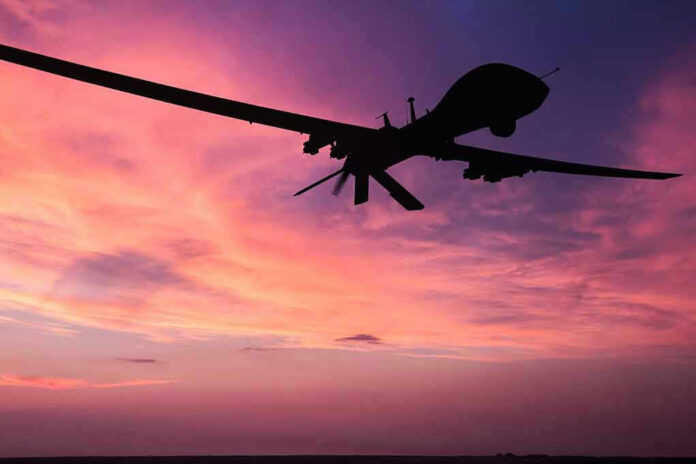
A new Russian defense system threatens to escalate the naval arms race, raising alarms among global military strategists.
Story Highlights
- Russia unveils a new tethered drone system designed to protect warships from Ukrainian sea drones.
- The system uses fiber-optic cables to ensure jam-proof, real-time control.
- This technology marks a significant evolution in naval defense strategies.
Russia’s Advanced Naval Defense Mechanism
In September 2025, Russia’s Murmansk Arctic University patented an innovative shipborne system that deploys multicopter drones tethered by fiber-optic cables from warships. This system directly counters the increasing threat posed by Ukrainian unmanned surface vessels (USVs). The drones, launched from turret-mounted compartments, offer real-time surveillance and command links that are immune to electronic warfare and GPS spoofing. This development represents a significant leap in naval defense, enhancing close-range situational awareness and response capabilities.
The introduction of tethered drones highlights a strategic shift from passive defenses to integrated, autonomous countermeasures. These drones provide the Russian Navy with jam-proof, real-time control, a critical advantage against Ukraine’s evolving USV tactics. The fiber-optic tether ensures reliable communication, crucial for immediate threat detection and response. This breakthrough comes after traditional Russian defenses, such as nets and electronic warfare, proved inadequate against sophisticated Ukrainian attacks.
The Role of Tethered Drones in Modern Warfare
Since 2022, Ukraine’s use of USVs has challenged Russian naval assets in the Black Sea, prompting Russia to seek advanced defensive technologies. The Black Sea has become a testing ground for unmanned naval warfare, with both sides rapidly innovating. Ukrainian USVs have evolved, boasting longer ranges, heavier payloads, and advanced communication systems. Russia’s adoption of tethered drones marks a strategic response to these threats, potentially reshaping naval doctrine worldwide.
The tethered drone system, developed by Murmansk Arctic University, underscores the role of academic institutions in military innovation. Experts believe this development is part of a broader trend towards autonomous, resilient defense systems. While some experts question the system’s scalability and effectiveness in high-intensity conflict, the reliability of control in close-in ship defense is prioritized, offering a layered defense that complements existing measures.
Strategic Implications and Future Outlook
The deployment of tethered drones is expected to enhance Russian ship defenses significantly, potentially forcing Ukraine to adapt its USV strategies. In the long term, this development may accelerate the naval arms race in unmanned and electronic warfare, with broader implications for global naval strategy and ship design. The increased defense spending and technological investment could signal a shift in naval warfare, driving innovation across the drone, sensor, and electronic warfare industries.
As the naval landscape continues to evolve, the impact of these technologies on civilian shipping and international maritime operations remains to be seen. The ongoing adaptation and counter-adaptation between Russia and Ukraine highlight the dynamic nature of modern warfare, where technological resilience and strategic innovation are key to maintaining a competitive edge.