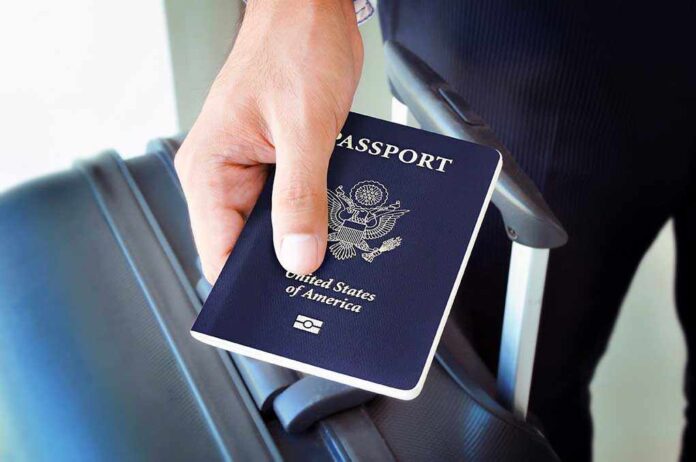
American travelers face a new European surveillance system that will collect their fingerprints and facial images starting October 12, 2025, fundamentally altering decades of traditional passport-stamped border crossings.
Story Highlights
- EU launches automated Entry/Exit System (EES) requiring biometric data from all U.S. travelers
- New digital tracking replaces passport stamps across 29 Schengen Area countries
- System creates permanent database of American citizens’ personal and biometric information
- Longer wait times expected during six-month phased rollout through April 2026
Digital Border Control Takes Effect
The European Union officially launches its Entry/Exit System on October 12, 2025, targeting all non-EU nationals including American citizens. The system requires travelers to provide fingerprints, facial images, passport details, and travel information at every Schengen Area border crossing. This represents the first large-scale automation of European border checks, replacing manual passport stamping that has operated for decades across 29 participating countries.
Biometric Data Collection Expands Government Reach
EES creates a comprehensive digital database containing personal, travel document, and biometric information of millions of American travelers. European authorities will store fingerprint scans and facial recognition data for three years, enabling continuous tracking of entry and exit patterns. The system automatically flags potential overstays and provides law enforcement agencies with unprecedented access to traveler movements. Privacy advocates warn about the permanent retention of biometric data and potential misuse by foreign governments.
Implementation Challenges and Travel Disruptions
The phased rollout acknowledges significant technical and operational risks, with full deployment not expected until April 2026. Border agencies are installing new kiosks and electronic gates while training staff on biometric processing procedures. Airlines, ferry operators, and rail companies must adapt check-in systems to accommodate longer processing times. Industry experts predict substantial delays during the initial months, particularly at high-volume entry points like major airports and the Eurostar terminal.
Foundation for Future Travel Restrictions
EES serves as the technical foundation for the European Travel Information and Authorization System (ETIAS), scheduled to launch in late 2026. This pre-travel authorization requirement will mirror systems like the U.S. ESTA, forcing Americans to apply for permission before visiting Europe. The combined systems represent a fundamental shift toward risk-based border controls and government pre-screening of international travelers. This expansion of bureaucratic oversight undermines the traditional freedom of movement that Americans have long enjoyed when traveling to European destinations.
🚨 U.S. citizens traveling to most European countries should expect new automated border checks and to have their biodata digitally collected upon arrival and departure: State Department
READ: https://t.co/Az6mJNgTbN pic.twitter.com/QnAeZfb7Il
— Twisted Eagle (@twisted_eagle) September 22, 2025
The State Department advises American travelers to expect longer processing times and prepare for mandatory biometric registration. The system targets short-stay visitors up to 90 days within any 180-day period, affecting tourists, business travelers, and family visitors equally.
Sources:
EES – The New EU Entry/Exit System Comes into Force on October 12, 2025
KPMG GMS Flash Alert (July 31, 2025)
KPMG GMS Flash Alert (May 19, 2025)
UK Government Guidance – EU Entry/Exit System