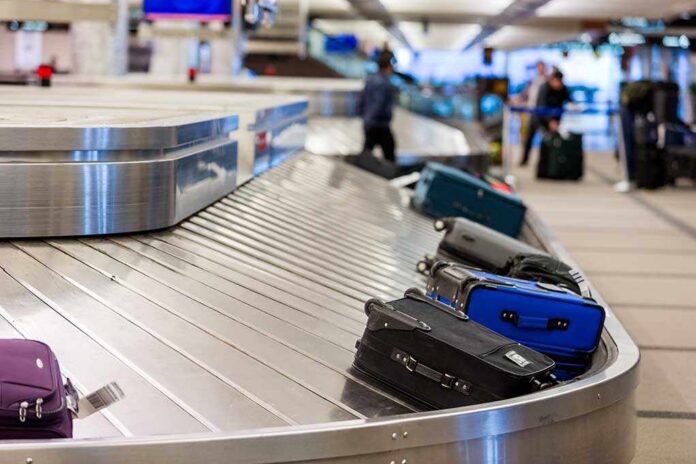
Spring break travelers are unwittingly transforming budget hotels across the South into bed bug breeding grounds, and the insects are following them home in their luggage.
Story Snapshot
- Bed bug infestations surge across Georgia, Florida, Texas, Tennessee, and North Carolina, with Georgia ranking sixth nationally for service requests
- Budget accommodations and youth hostels emerge as primary transmission sites due to frequent guest turnover and crowded conditions
- Spring break travel season correlates directly with increased infestation reports as travelers unknowingly transport bed bugs home
- Pest control experts recommend high-heat dryer treatment for 30-45 minutes after trips to prevent home infestations
Budget Travel’s Unintended Consequences
Terminix data reveals Georgia sits sixth among the 50 most affected American cities for bed bug service requests, part of a broader surge hitting Southern states during spring break season. Travel expert Lee Abbamonte identifies the problem’s epicenter: budget hotels and youth hostels frequented by cost-conscious students. These establishments face a perfect storm of high guest turnover, crowded rooms, and travelers who prioritize price over cleanliness. The demographic driving this spread cares little about accommodation quality, seeking only the cheapest option at their destination.
How America Lost and Regained Its Bed Bug Problem
Bed bugs plagued Ancient Rome, troubled England since the 1500s, and arrived in America aboard European ships during the 18th century. By mid-20th century, systematic pest control and aggressive pesticide applications had virtually eliminated them from American life. The 1990s marked their alarming return to hotels and motels, a resurgence that accelerated into exponential population growth. Three factors converged to create this crisis: increased international travel allowing bed bugs to hitchhike freely in luggage, growing insecticide resistance that rendered traditional treatments ineffective, and the erosion of institutional knowledge as state and local vector control programs declined or disappeared entirely.
The Biology Behind the Surge
Ohio State University research reveals why bed bugs spread so rapidly once established. At temperatures above 72 degrees Fahrenheit, these parasites develop from egg to adult in just 37 days. Each female produces up to 113 eggs during her lifetime, creating exponential population growth in favorable conditions. The insects demonstrate remarkable efficiency in finding hosts, becoming most active between midnight and 5 a.m. when they detect carbon dioxide from human breath and body heat. This biological profile explains why crowded budget accommodations with constant guest turnover provide ideal breeding grounds, and why a single infested traveler can trigger a home infestation.
Travel Patterns Accelerate Geographic Spread
Benjamin Hottel, an Orkin entomologist based in Georgia, explains that bed bugs excel at hitchhiking on personal belongings. Travelers unknowingly carry them onto planes, into hotels, and back home, creating a transportation network that moves infestations across state lines. The spring break travel season intensifies this pattern as millions of students flood into Southern destinations, stay in budget accommodations with high infestation rates, then disperse back to their home states. The Arkansas Department of Health notes that bite reactions may take up to 14 days to develop, meaning travelers often reach home before realizing they’ve been exposed, allowing bed bugs to establish in new locations before detection.
Economic and Social Fallout
The surge creates immediate financial burdens for travelers facing pest control costs and property owners dealing with infestations. Budget accommodation operators confront reputational damage and decreased bookings as word spreads about infestation risks. Healthcare providers report increased consultations for bite-related skin infections and secondary complications from scratching. Beyond immediate costs, the crisis threatens longer-term structural changes including potential regulatory requirements for enhanced cleaning standards, pressure for industry-wide certification programs, and shifts in consumer behavior toward higher-end accommodations with better pest management protocols. The problem disproportionately affects budget-conscious travelers and students who can least afford professional extermination services.
Prevention Strategies That Actually Work
Hottel recommends travelers inspect luggage and clothing thoroughly after trips, particularly following stays in budget accommodations. The most effective home prevention measure involves placing all travel clothes in a dryer on high heat for 30-45 minutes immediately upon return, as sustained high temperatures kill bed bugs at all life stages. Travelers should examine mattress seams, headboards, and furniture in hotel rooms before unpacking, keeping luggage on hard surfaces away from beds. The focus remains on individual vigilance rather than systemic solutions, reflecting the absence of effective institutional responses to replace the public health vector control programs that declined over recent decades.
What This Means for American Travel Culture
The bed bug resurgence confronts American travelers with an uncomfortable reality: the budget travel model that democratized tourism now carries significant health risks. The crisis exposes tensions between affordability and safety, between individual responsibility and institutional oversight. Public health agencies that once maintained systematic pest control programs now lack funding and expertise, leaving travelers to navigate risks individually. The situation demands restoration of institutional capacity, investment in research addressing insecticide resistance, and honest conversations about accommodation standards. Until systemic solutions emerge, spring break travelers and budget tourists face a sobering choice between affordable adventures and the very real possibility of bringing unwanted hitchhikers home.
Sources:
Bedbug nightmare spreading across South as cases surge in multiple states – Fox 13 News
Bedbug nightmare spreading across South as cases surge in multiple states – Fox News
The History of Bed Bugs in the United States – American Pest
Bed Bugs – Ohio State University Extension
Bed Bug Fact Sheet – Arkansas Department of Health
Bed Bugs: Appearance and Life Cycle – U.S. EPA