Federal Air Marshals reportedly watched Eric Swalwell on a transatlantic flight to observe his device use, as an FBI investigation soon escalated into airport seizures and a home search.
Story Snapshot
- Records reportedly show the FBI asked Air Marshals to monitor Eric Swalwell on an August 8 flight.
- Days later, agents seized his devices at San Francisco International Airport and searched his D.C. home.
- Swalwell’s lawyer called the allegations false and a political hit job.
- Air-marshal surveillance echoes past debates about secret programs and mission creep.
What The Atlantic Reported About The In-Flight Monitoring
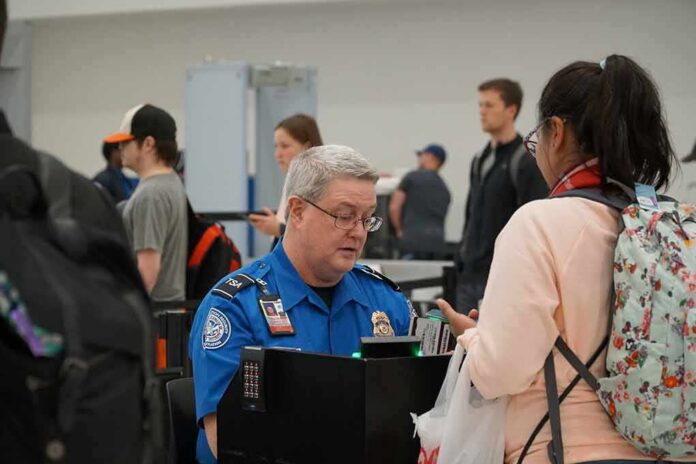
The Atlantic reported that Federal Bureau of Investigation (FBI) officials asked the Federal Air Marshal Service to covertly monitor former Representative Eric Swalwell during an August 8 flight from Frankfurt to Washington. The directive told marshals to watch him use electronic devices and see if they could view passcodes, according to the outlet’s records. The reported request framed Swalwell as the “focus” of a federal investigation tied to security and misconduct concerns.
The report did not describe any attempt to unlock devices or collect data without a warrant. Observing someone’s actions in public, including on an airplane, is generally treated as having a lower privacy bar than seizing data. Still, watching a politician’s in-flight behavior is unusual and raises questions about how often such targeted assignments occur and what oversight applies when law enforcement leverages air-marshal resources.
What Happened Next: Seizures And A Home Search
Within days, federal agents confronted Swalwell at San Francisco International Airport. They served legal paperwork and seized his electronic devices as part of a sexual-misconduct investigation, according to multiple outlets. Agents also searched his Washington, D.C., home. These actions suggest a judge approved warrants, which are required for searches and seizures of personal devices in most cases. Newsrooms cited officials or documents tied to the investigation.
BBC News reported the airport seizure and home search, describing the steps as part of the same federal probe. NBC News also reported that agents searched the home and seized devices, citing a person familiar with the matter. USA Today detailed that agents served a warrant upon landing at the airport and took a phone. The reports align on core facts: a federal investigation, device seizures, and a residential search. They do not assert that charges have been filed.
How Swalwell And His Team Are Responding
Swalwell’s attorney, Sara Azari, called the allegations “false, fabricated, and deeply offensive,” and framed the probe as a political hit job. Her statement rejects the claims but does not engage with the reported surveillance steps or the warrants. At this stage, the investigation remains an allegation, not a conviction. The government has not publicly released an affidavit that would show specific evidence used to secure the warrants.
The Atlantic: The Air Marshals Keeping Watch On Eric Swalwell
On August 8, former Representative Eric Swalwell boarded a United Airlines flight from Frankfurt, Germany, to Washington, D.C. He didn’t know it, but federal agents were watching him throughout the nine-hour trip.…
— Politics & Poll Tracker 📡 (@PollTracker2024) September 2, 2026
That gap fuels broader concerns across the spectrum. Many Americans fear that powerful officials use the justice system to protect allies and punish rivals. Others worry that elite figures often avoid real accountability. Both fears can grow when officials rely on secret tools and do not explain safeguards. Clear timelines, documented warrants, and transparent court filings help build trust. Without them, even lawful steps can look like selective or political targeting.
Why This Matters For Air-Marshal And Surveillance Oversight
The Transportation Security Administration’s past “Quiet Skies” program placed air marshals to track travelers who were not charged with crimes, prompting civil-liberties alarms. Civil-rights groups argued the criteria were vague and the oversight thin. Officials defended the program as risk-based security. That clash revealed a pattern: secret aviation surveillance can expand in scope, and public trust can erode when rules and audits stay hidden from view.
The Swalwell flight watch sits inside that larger debate. When law enforcement borrows aviation-security assets for a criminal probe, the line between security and investigation can blur. People across the political map see risks: conservatives fear weaponized agencies; liberals fear unchecked surveillance and discrimination. Rebuilding trust likely means disclosing which agencies requested the flight monitoring, what standards were used, who approved it, and how often similar requests occur, while protecting sensitive case details.
The Bottom Line: Facts Established And Limits
Based on public reporting, federal officials asked air marshals to watch Swalwell on a specific August 8 flight, then later seized his devices and searched his home under warrants. Those steps indicate a real investigation is underway, not just talk. The content of the warrants and the evidence behind them remain sealed from public view, so key facts are still unknown. Until filings become public or charges emerge, questions about necessity, scope, and fairness will continue.
Americans deserve safety in the air and fairness under the law. Both goals require guardrails that stop mission creep and political abuse. Congress can demand logs of interagency requests, require regular audits, and set bright lines for when aviation tools support criminal probes. Sunlight protects civil liberties and public safety. Quiet rules invite doubt and division. This case shows how fast trust can fray when power moves in the dark.
Sources:
theatlantic.com, bbc.com, nbcnews.com, politico.com, en.wikipedia.org
© truthandliberty.com 2026. All rights reserved.