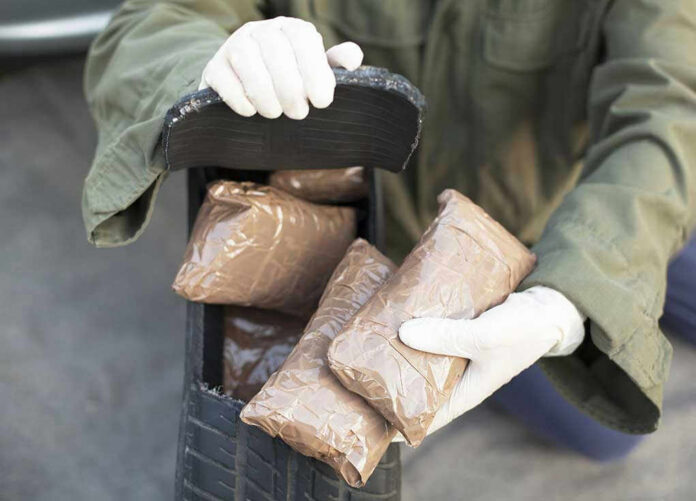
A 23-year-old allegedly tried to walk 75 pounds of marijuana through Miami International Airport like it was ordinary luggage—until federal officers stopped the export run cold.
Story Snapshot
- CBP officers found roughly 75 pounds (about 34 kg) of marijuana vacuum-sealed inside two checked suitcases at Miami International Airport.
- Authorities said the suspect, Harrison O’Neill Tiernan of Austin, Texas, was headed to London on a British Airways flight when the bags were inspected.
- Miami-Dade law enforcement arrested Tiernan on cannabis trafficking charges; reports say he asked for an attorney after the discovery.
- Early court proceedings reportedly set bond at $20,000 with GPS monitoring required if posted, though initial reports reflected timing differences in booking and bond.
CBP Interdiction Stops Alleged Marijuana Export at Miami International Airport
U.S. Customs and Border Protection officers intercepted what authorities described as a major marijuana smuggling attempt at Miami International Airport in early March. Reports say officers examined two checked suitcases linked to Harrison O’Neill Tiernan, 23, of Austin, Texas, and discovered dozens of vacuum-sealed packages containing marijuana. The total weight reported across outlets came in just under 75 pounds, a quantity that moves the case far beyond “personal use” claims.
Law enforcement accounts say Tiernan had checked the bags for an international flight to London’s Heathrow Airport. That detail matters because marijuana remains federally illegal in the United States, and exporting controlled substances adds a serious layer of exposure even as some states have relaxed local rules. Authorities have not publicly identified any accomplices in the reporting available so far, and no violence was described—just a large amount of product packaged for concealment.
What Authorities Say Happened: Packaging, Weight, and the London Destination
Local reporting described the marijuana as being hidden in vacuum-sealed bundles—packaging commonly used to reduce odor and compress bulk. One report cited 65 separate packages, with the net weight listed at 74.98 pounds. The alleged plan—checking the bags and boarding a commercial flight—also underscores how smugglers try to exploit routine travel channels rather than high-risk border crossings, betting that volume and crowds will mask the crime.
Reports also show minor timing differences across outlets, which is typical in fast-moving arrest coverage. The underlying sequence is consistent: the bags were checked, CBP inspected them, the suspected marijuana was identified, and Miami-Dade law enforcement took the suspect into custody. Initial coverage described Tiernan being held at the Metrowest Detention Center, while later reporting indicated a bond amount and GPS-monitor requirement if released.
Florida Trafficking Penalties Highlight Why “Legal Weed” Talking Points Don’t Apply
The case also cuts through a common confusion created by years of mixed messaging from politicians and activists: state-level legalization does not erase federal law, and it does not give anyone a free pass to transport drugs through airports or across international lines. Florida’s trafficking framework treats large quantities as a serious felony matter, and reporting around the case notes that amounts over certain thresholds can carry severe penalties.
Because the suspect was allegedly moving an unusually large load for a single traveler, the case illustrates why “normalization” rhetoric can be risky for communities. When cultural cues suggest marijuana is basically harmless everywhere, some people start treating enforcement as optional or outdated. Airports, however, remain one of the most controlled environments in the country, and CBP’s mission is to interdict contraband. The result is predictable: big shipments attract big charges.
A Clear Law-and-Order Test for 2026: Enforce the Law Consistently
With President Trump back in office in 2026, many voters who felt ignored during the previous era are watching whether federal agencies refocus on core duties: border security, crime deterrence, and public safety. This interdiction—conducted at a major international gateway—fits squarely inside that expectation. The available reporting shows a straightforward enforcement action: inspection, discovery, seizure, and arrest, without political theater or selective enforcement carve-outs.
At the same time, the public should be careful about claims that go beyond the sourced facts. Some online chatter paints the suspect with colorful labels, but the reports available primarily document the quantity, packaging, destination, and procedural steps after arrest. What is clear is the scale: roughly 75 pounds of marijuana likely would have fed an illicit market abroad. Interdicting it at the airport is exactly what a functioning enforcement system is supposed to do.
Smirking stoner, 23, caught at Miami airport with a whopping 75 pounds of marijuana stashed in luggage
https://t.co/xAzeT46d6DAuthorities discovered 65 vacuum-sealed packages containing “green leafy” substances in the two bags Harrison Tiernan had checked for his British Air…
— Lets Go Mets (@NYMetsfan11279) March 12, 2026
The case now moves into the slow, unglamorous part of the justice process—bond conditions, charging decisions, and court dates. Reporting indicates Tiernan requested an attorney after arrest, and no detailed defense narrative has been published in the cited coverage. Until additional filings or hearings add facts, the most responsible takeaway is the simplest one: a major airport interdiction stopped an alleged export attempt, and the suspect faces the legal consequences that come with moving trafficking-level quantities.
Sources:
https://www.aol.com/articles/man-packed-75-pounds-marijuana-230641928.html
https://www.miamiherald.com/news/local/crime/article314986696.html