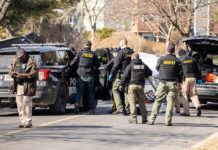
A 12-year-old girl’s brutal 1964 murder in upstate New York went unsolved for over six decades until cutting-edge DNA technology finally identified her killer—a suspect now dead, leaving questions that can never be answered in court.
Story Snapshot
- Mary Theresa Simpson, 12, was abducted and murdered in Elmira, New York, on March 15, 1964, her body discovered four days later in a wooded area
- Forensic genetic genealogy and FBI collaboration identified the deceased suspect after evidence was resubmitted to Othram Labs in 2023
- The case marks one of New York’s oldest cold cases solved through DNA technology and Othram’s 18th successful identification in the state
- A press conference on February 10, 2026, publicly revealed the suspect’s identity, providing closure to the Simpson family after 60 years
The Day Mary Simpson Disappeared
Mary Theresa Simpson left her relatives’ home near East Market and Harriet Streets in Elmira, New York, on March 15, 1964, for what should have been a routine walk home. The 12-year-old never arrived. Her father reported her missing that evening, triggering an intensive search that gripped the small Chemung County community. Four agonizing days later, a hiker and his sons stumbled upon her body in a wooded area near Combs Hill Road in neighboring Southport. The discovery revealed a horrific crime: Mary had been sexually assaulted, strangled, and her mouth grotesquely stuffed with twigs and dirt, her remains partially concealed beneath debris and stones.
Decades of Dead Ends in a Pre-DNA Era
The 1964 investigation was exhaustive by the standards of its time. Elmira Police conducted hundreds of interviews, chasing leads that ultimately evaporated into frustration. The era’s forensic limitations—decades before DNA analysis became available—meant detectives relied on eyewitness accounts, rudimentary autopsies, and old-fashioned legwork. Without the genetic tools that define modern criminal investigations, the case gradually turned cold. The Simpson family and community were left with grief, anger, and unanswered questions that persisted through generations. For nearly 60 years, Mary’s killer walked free or died anonymously, the truth locked away in degraded evidence stored in police archives.
Breakthrough Through Forensic Genetic Genealogy
The case’s resurrection began in 2023 when Elmira Police decided to leverage modern science. In February of that year, investigators sent preserved evidence to Othram Labs in The Woodlands, Texas, a company pioneering Forensic-Grade Genome Sequencing. Othram extracted DNA and built a comprehensive genetic profile, which the FBI’s forensic genetic genealogy team then used to generate investigative leads. This collaboration between local, federal, and private sectors—funded by the nonprofit Season of Justice—represents a new model for solving ancient crimes. The technology reverse-engineers family trees from DNA, identifying potential suspects even when direct matches don’t exist in criminal databases.
Justice Without a Trial
The investigative team confirmed a suspect responsible for Mary’s murder, but the resolution came with a bitter twist: the individual is deceased. No arrest, no trial, no opportunity for the Simpson family to confront the person who stole their daughter’s life. The Chemung County District Attorney’s Office hosted a press conference on February 10, 2026, to publicly name the suspect, offering a measure of closure after six decades of uncertainty. This outcome reflects a growing reality in cold case work—many breakthroughs identify perpetrators who escaped earthly justice, leaving families with answers but no courtroom accountability. The case joins 17 other New York investigations Othram has resolved, underscoring genetic genealogy’s transformative impact.
A New Precedent for Cold Case Resolution
Crime analysts Joseph Scott Morgan and Dave Mack praised the combination of meticulous 1964 police work with Othram’s exceptional science, crediting both for cracking a case many thought permanently unsolvable. The resolution validates persistent investigative efforts and demonstrates that even evidence collected before DNA technology existed can yield results when modern methods are applied. For communities haunted by unsolved crimes, the Simpson case offers hope: justice delayed need not mean justice denied, even when the guilty party no longer lives to face prosecution. The collaboration model—local police, FBI resources, private lab innovation, and nonprofit funding—provides a replicable framework for agencies nationwide wrestling with similar cold cases.
COLD CASE SOLVED! 1964 Murder of Mary Simpson, 12: Killer Named After 60 Years! https://t.co/LBLf3a8zGH via @crimeonlinenews #bodybags
— Crime Online (@crimeonlinenews) February 10, 2026
Mary Theresa Simpson’s story resonates beyond Elmira, symbolizing countless families waiting for answers about loved ones lost to violence. While the suspect’s death prevents traditional justice, the identification itself acknowledges Mary’s life mattered and her case deserved resolution. Forensic genetic genealogy continues advancing, turning biological evidence once deemed useless into powerful investigative tools. As more agencies adopt these technologies, the gap between crime and consequence narrows, even across decades. The Simpson family’s 60-year wait underscores both the cruelty of prolonged uncertainty and the remarkable persistence required to finally learn the truth.
Sources:
COLD CASE SOLVED! 1964 Murder of Mary Simpson, 12: Killer Named After 60 Years!
FS News Week of January 26 2026