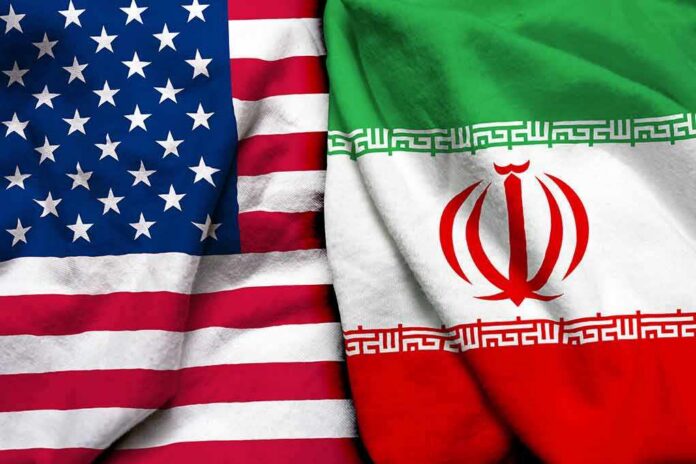
President Trump has halted planned U.S. airstrikes on Iran after announcing a signed peace framework that claims to end the war, reopen the Strait of Hormuz, and block Iran from ever getting a nuclear weapon.
Story Snapshot
- Trump says a signed Memorandum of Understanding with Iran ends the conflict and stops U.S. strikes.
- The framework reopens the Strait of Hormuz and lifts the U.S. naval blockade on Iranian ports.
- The deal sets a 60‑day window to dismantle Iran’s nuclear program and destroy enriched uranium.
- Globalist critics and media brand it “preliminary” and raise doubts, while Trump calls it a historic America First win.
Trump Declares Peace Framework, Orders Airstrikes Halted
President Trump told Americans that the United States and Iran have agreed to a peace framework, and that U.S. airstrikes have been called off as part of that deal. In public remarks and social posts, Trump said the “Deal with the Islamic Republic of Iran is now complete” and described it as signed and binding. According to reporting on his schedule, the administration scrubbed planned military strikes once both sides agreed on the text, shifting the focus from war planning to implementation of the ceasefire.
The agreement takes the form of a Memorandum of Understanding, not yet a full treaty, but framed by the White House as a decisive move to end hostilities. The text was agreed after months of fighting that shook energy markets and raised fears of a wider regional war. Trump’s team argues that using an executive agreement allowed them to move faster than a long Senate ratification fight, and to stop bombing plans before more American lives and dollars were spent in another drawn‑out Middle East conflict.
Strait of Hormuz Reopens, Blockade Lifted and Ceasefire Starts
The framework’s most immediate promise is to reopen the Strait of Hormuz, the narrow channel that carries a huge share of the world’s oil and gas. Draft terms shared by officials say the United States will lift its naval blockade on Iranian ports, while Iran allows commercial ships to move freely through the strait. Pakistani Prime Minister Shehbaz Sharif, a key mediator, said the pact calls for “immediate and permanent termination of military operations on all fronts, including in Lebanon,” underscoring that the ceasefire is meant to cover the wider regional battlefield, not just direct U.S.–Iran exchanges.
Reports from major outlets describe the agreement as preliminary but clear on this maritime piece: shipping lanes reopen now, and sanctions relief or reconstruction money come later, tied to performance. The framework also sketches a massive reconstruction plan for Iran and phased lifting of sanctions, with one version mentioning a $300 billion package and removal of “all types of sanctions” if nuclear terms are met. For American readers who felt the pain of high energy prices, this reopening aims to calm global markets while preserving leverage over Iran’s behavior rather than writing blank checks up front.
Nuclear Program Pushed into a 60‑Day Negotiation Window
The most sensitive part of the deal is Iran’s nuclear program, which Trump has repeatedly highlighted as his core reason for launching the war. According to a senior U.S. official and leaked summaries, the memorandum sets a 60‑day period of talks to work out concrete steps to dismantle Iran’s nuclear infrastructure. Draft language described to Reuters says Iran’s highly enriched uranium stockpiles will be destroyed and removed, and that the program itself will be dismantled under outside monitoring.
The BBC and other outlets say the document states that Iran “reaffirms that it will not procure or develop nuclear weapons,” and calls for its uranium to be “down‑blended” on site under supervision by the International Atomic Energy Agency, a United Nations nuclear watchdog. Trump has pointed to that pledge as proof that his pressure campaign forced Iran off the nuclear weapons path, claiming the deal “ensures Iran will never obtain a nuclear weapon.” At the same time, critics note that these nuclear details are still subject to negotiation during the 60‑day window, meaning strong enforcement and verification will matter as much as the words on paper.
Media, Democrats and Iran Signal Doubts and Disputes
While Trump and his allies call this a peace deal and a historic breakthrough, much of the media and many Democrats quickly tried to water it down. Wire services and public broadcasters described the accord as an “initial agreement,” a “preliminary pact,” and a “memorandum of understanding,” stressing its fragile nature and the need for a later formal signing ceremony in Switzerland. Some coverage framed the ceasefire as shaky and pointed to unresolved issues, including how Israel will handle its own operations in Lebanon once the U.S.–Iran front quiets.
Iranian voices have also sent mixed signals. The Islamic Revolutionary Guard Corps said earlier that a Sunday signing claim was “unfounded” and that a framework had not yet been finalized, even as other Iranian officials later acknowledged an agreed text and described the deal as a victory. This back‑and‑forth lets globalist critics suggest Trump oversold the agreement, even when both sides move to implement core steps such as the ceasefire and reopening the strait. For conservatives, the key test will be whether Iran’s nuclear material is actually destroyed, terrorist funding cut off, and American troops and tax dollars spared another endless war driven by weak, appeasing foreign‑policy elites.
Sources:
thegatewaypundit.com, npr.org, pbs.org, bbc.com, youtube.com, apnews.com, nytimes.com, cbsnews.com, aljazeera.com, cnn.com, washingtonpost.com, nprillinois.org, nbcnews.com
© truthandliberty.com 2026. All rights reserved.