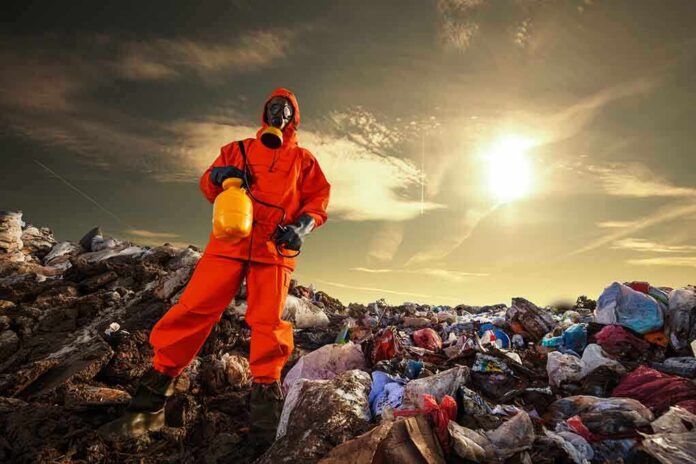
MAHA activists are openly challenging Trump’s own EPA chief, warning that Lee Zeldin’s deregulatory push could betray the movement’s promise to protect American families from toxic exposures.
Story Snapshot
- MAHA organizers who strongly back President Trump say EPA chief Lee Zeldin’s deregulatory agenda clashes with their anti-toxics mission and puts children’s health at risk.
- Trump’s Make America Healthy Again push elevated concerns about pesticides, PFAS, and industrial chemicals, but EPA leadership has focused on faster approvals and weaker rules.
- Grassroots MAHA activists are now pressing Trump directly to remove Zeldin and install an EPA administrator who will prioritize health protections over industry demands.
- The internal fight inside a pro-Trump coalition could reshape how conservatives approach environmental health, corporate power, and federal regulation.
MAHA’s Health Mission Meets EPA Deregulation
President Trump’s Make America Healthy Again initiative grew out of Robert F. Kennedy Jr.’s long-running environmental health activism and framed chronic disease as tightly linked to everyday toxic exposures in food, water, and consumer products. A presidential MAHA Commission highlighted pesticides, PFAS “forever chemicals,” and industrial pollutants as key drivers of childhood illness, giving anti-toxics advocates a rare foothold inside a Republican administration that otherwise champions aggressive deregulation and smaller government. For many conservative families worried about cancer, autism, and autoimmune disorders, this blend of health populism and constitutional skepticism toward big institutions felt like overdue common sense.
At the same time, Trump’s broader second-term agenda has emphasized rolling back what many on the right see as weaponized bureaucracy, especially at agencies that long pushed climate alarmism, heavy-handed environmental rules, and Obama-Biden-era “green” mandates. Lee Zeldin, a former Republican congressman with strong ties to conservative and industry circles, was tapped to run the EPA and quickly moved to accelerate chemical approvals, loosen pollution rules, and strip out so-called “social cost of pollution” calculations that had justified costly regulations. That deregulatory push thrilled many business allies but planted a time bomb inside the MAHA coalition.
Grassroots Conservatives Turn Their Fire on Zeldin
MAHA organizers such as Zen Honeycutt of Moms Across America and Vermont farmer John Klar emerged as outspoken voices demanding tougher scrutiny of pesticides, PFAS, and industrial chemicals that saturate food and farm communities. They argue that American parents trying to raise healthy kids should not be forced to choose between backing Trump and accepting an EPA that looks, in their words, captured by chemical and agribusiness interests. As Zeldin’s EPA advanced rules that weakened risk evaluations under the Toxic Substances Control Act and greenlit controversial pesticide ingredients, these activists increasingly treated the administrator—not Democrats—as their primary obstacle.
Recent reporting describes MAHA-aligned groups organizing call-in campaigns, public letters, and media pressure aimed squarely at Zeldin’s office, demanding bans on chemicals like atrazine and glyphosate and full consideration of cumulative exposures on vulnerable children. Specific flashpoints include proposals to relax mercury and lead standards, to roll back or stall Biden-era restrictions on dangerous pesticides, and to retreat from strong federal action on PFAS contamination. Activists say these moves mock MAHA Commission findings and erode the promise that this administration would finally confront toxic burdens driving America’s chronic disease crisis.
Trump Caught Between Deregulators and Health Populists
Inside this conflict, President Trump retains clear constitutional authority to dismiss Zeldin and redirect EPA policy, making him the ultimate judge between industry-friendly deregulators and pro-Trump health populists. MAHA activists emphasize that they are not Never Trumpers; they see themselves as loyal supporters who mobilized for Trump’s return and now want him to align environmental policy with his own anti-toxics rhetoric.[2][5] Their campaign frames the issue as protecting American children from government-enabled poisoning, not growing Washington’s power or reviving the old climate bureaucracy.
RFK Jr., who helped launch MAHA and is widely regarded as the movement’s moral compass on environmental health, faces rising criticism from activists who feel he has not confronted Zeldin aggressively enough. Pressure is building on him and on the MAHA Commission staff to either publicly side with the grassroots or risk being seen as window dressing for an EPA agenda that continues business as usual. That perception matters for conservatives who embraced MAHA precisely because it promised to put families and small communities ahead of multinational chemical and agribusiness giants.
What Is at Stake for Conservatives and the Country
Environmental and public-health experts quoted in recent coverage argue that scaling back protections on mercury, lead, PFAS, and widely used pesticides will predictably worsen neurological, developmental, and chronic disease outcomes, particularly in poorer and rural communities. These experts say the EPA’s sidelining of climate science and social-cost analysis reflects an ideological project to weaken regulatory science and shift power from health-focused agencies to corporate interests, a pattern that unnerves even many limited-government conservatives who distrust crony capitalism.MAHA activists seize on this split to insist that true America First policy must protect citizens’ health before corporate profit.
In the short term, the standoff injects uncertainty into EPA decision-making and jolts industries that assumed a fully free hand under Trump’s second term, as staff weigh how far deregulation can go without splintering a key part of the president’s base. Over time, this intra-coalition battle could reshape Republican politics around environmental health, empowering a faction that is staunchly pro-life, pro-family, and anti-globalist yet deeply skeptical of chemical lobbies and their influence over federal regulators. Whether Trump fires Zeldin or doubles down on the current approach will signal whose vision truly defines conservative governance on toxics and public health.
Sources:
Mother Jones – RFK Jr., MAHA, and the fight over Trump’s EPA and pesticide regulation
Politico – RFK Jr.’s MAHA movement and its internal contradictions
E&E News – The MAHA faction targeting EPA chemical policies
Time – How the Republican MAHA movement is reshaping health and environmental politics
Dayenu – Climate activists respond to Trump’s EPA direction
EPA – Administrator Lee Zeldin statement on the Make America Healthy Again Commission report