A new military deployment plan threatens local autonomy, igniting a fierce debate over federal power.
Story Highlights
- President Trump plans to deploy thousands of National Guard troops to Chicago.
- Local officials condemn the move as unconstitutional federal overreach.
- The deployment aims to tackle crime, homelessness, and illegal immigration.
- Legal challenges are expected as local leaders explore their options.
- Tensions rise over the balance of power between federal and state governments.
Trump’s Aggressive Approach to Crime and Immigration
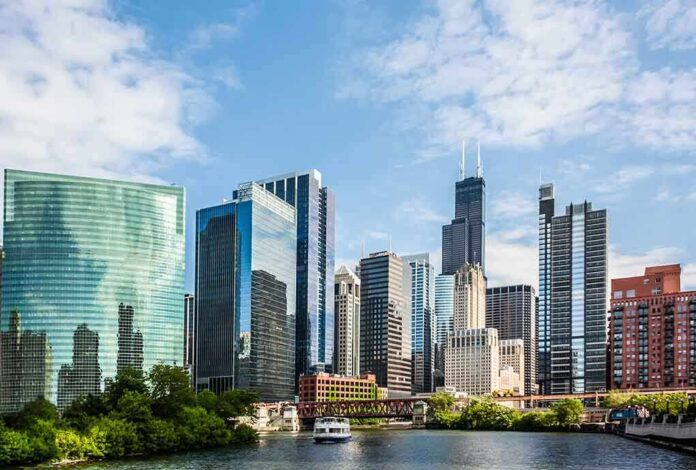
In a bold move, President Donald Trump has directed the Pentagon to prepare for the deployment of National Guard troops to Chicago. The decision aims to address crime, homelessness, and undocumented immigration within the city. While the plan is set for September 2025, it has already sparked controversy, with Illinois Governor JB Pritzker and Chicago Mayor Brandon Johnson opposing it as an unconstitutional federal overreach.
Governor Pritzker and Mayor Johnson argue that this deployment infringes on local governance, especially as Chicago has reported significant reductions in violent crime. Homicides have decreased by 30%, robberies by 35%, and shootings by nearly 40% in 2025. Despite these improvements, the Trump administration’s rhetoric continues to target Democrat-led cities, emphasizing federal intervention as necessary for public safety.
Legal and Political Pushback
The deployment plan has intensified political tensions, revealing deep divides over federal and local authority. Legal experts are quick to point out that the Posse Comitatus Act restricts the use of federal troops for law enforcement, with the Insurrection Act being a rare exception. The courts are expected to play a crucial role in determining the legality of such a deployment.
Local leaders are exploring legal avenues to block the deployment, citing improved crime statistics and concerns over constitutional rights. Mayor Johnson has been vocal, stating, “Chicago does not need a military occupation. We will not bend or cower, and we will never break.” This sentiment underscores the broader fear of federal overreach and its impact on civil liberties.
Potential Implications and Future Precedents
If the deployment proceeds, it could set a precedent for future federal interventions in local law enforcement. This raises concerns over the chilling effect on local governance and civil liberties. The move might also influence Trump’s political standing and the dynamics of the 2026 elections, as partisan divides deepen.
The outcome of this plan holds significant ramifications for Chicago residents, especially marginalized communities. Economically, it could disrupt local businesses and tourism, while socially, it may increase fear or mistrust of government among residents. Politically, the deployment could mobilize opposition and intensify partisan conflicts.
Sources:
Block Club Chicago (August 24, 2025)
ABC7 Chicago (August 24, 2025)