Federal immigration agents were forced to retreat from a Rochester, NY job site after a massive crowd—emboldened by sanctuary city policies—blocked enforcement of immigration law, raising new alarms for Americans concerned about border security and the rule of law.
Story Snapshot
- Over 200 protesters swarmed a federal immigration raid in Rochester, NY, halting federal agents from detaining multiple workers.
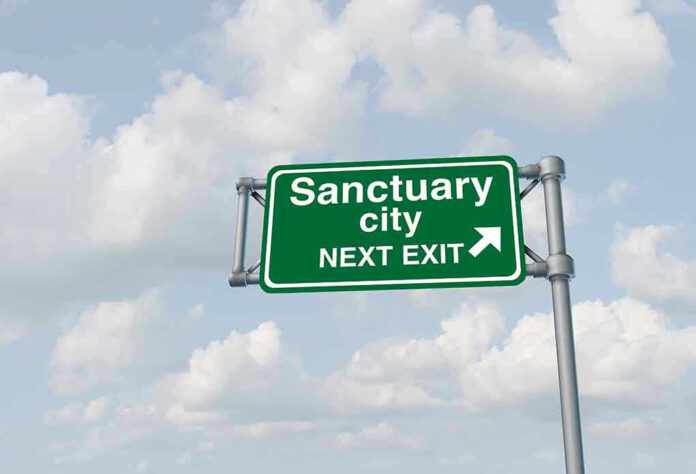
- Rochester’s sanctuary city policies enabled rapid community mobilization, undermining federal law enforcement efforts.
- Agents withdrew after a tense standoff, leaving two targeted workers protected by the crowd, with only one arrest made.
- The incident highlights escalating tensions over immigration enforcement and the dangers of local interference with federal authority.
Sanctuary City Policies Undermine Federal Enforcement
On the morning of September 9, 2025, a team of federal immigration agents arrived at a roofing job site near the George Eastman Museum in Rochester, New York, intent on detaining workers suspected of being in the country illegally. Rochester’s status as a sanctuary city played a central role in what unfolded next. Local activists, clergy, attorneys, and residents—tipped off by a neighbor—rapidly assembled, with the crowd swelling from a few dozen to over 200 within hours. This coordinated response was not random; it was the product of organized networks emboldened by local policies that explicitly oppose cooperation with federal immigration authorities.
Federal agents succeeded in arresting one worker, but two others found refuge atop the roof, refusing to descend as the crowd below blocked access. The protest intensified, with demonstrators forming a physical barrier and legal observers advising workers of their rights. By late morning, under mounting pressure and unable to safely complete their mission, agents were forced to withdraw—leaving the two remaining workers untouched. Reports indicate the agents’ vehicles sustained tire damage, further hampering their exit and highlighting the disruptive power of coordinated local opposition.
Rapid Mobilization and the Erosion of Rule of Law
Rochester’s “rapid response” protocols, honed by advocacy groups and local officials, exemplify how sanctuary city policies create an environment where federal law enforcement is openly resisted. The crowd included not only activists and union members but also local politicians and clergy, lending legitimacy and organizational muscle to the protest. This intervention was not isolated; it followed a series of similar incidents across upstate New York, though rarely have agents been literally forced off the scene by the threat of mob action. Such events send a troubling message: when localities prioritize political agendas over federal law, the constitutional order and public safety are put at risk.
Community leaders who support these interventions argue they are protecting vulnerable residents and standing up for immigrant rights. However, this approach fundamentally undermines the principle of equal enforcement of federal law—potentially creating pockets within the United States where national policy cannot be carried out. The result is a dangerous precedent where the most organized or vocal groups dictate which laws are enforced and which are ignored, eroding faith in the justice system and emboldening further resistance to lawful authority.
National Implications: Trump Administration’s Response and Broader Impact
President Trump’s administration has made restoring border security and the rule of law a central priority, signing executive orders in early 2025 to crack down on illegal immigration, end catch-and-release policies, and strengthen expedited removal for those in the country unlawfully. The Rochester incident illustrates the fierce opposition federal agents now face in so-called sanctuary cities, even as the administration pursues reforms to close loopholes and prevent local interference. The standoff is a stark reminder that, despite new laws and tougher policies, local resistance—fueled by activist networks and sympathetic officials—can still derail federal action, leaving communities vulnerable to the consequences of illegal immigration and eroded authority.
Beyond immediate law enforcement concerns, these events raise profound questions about the balance of power between local and federal governments and the willingness of some communities to openly defy national priorities. For many Americans, especially those who value limited government, personal responsibility, and constitutional order, such incidents are not simply local disputes—they are flashpoints in a national struggle to protect the country’s sovereignty and uphold the rule of law amidst ongoing challenges at the border.
Expert Perspectives: Legal, Social, and Economic Fallout
Immigration law experts note that while community interventions are rare, sanctuary city policies have emboldened local resistance to an unprecedented degree. Labor advocates insist on the importance of protecting vulnerable workers, but legal scholars and law enforcement stress the dangers of undermining federal authority. The economic impact is not limited to law enforcement; local businesses reliant on immigrant labor face uncertainty, while advocacy organizations see increased demand for rapid response and legal services. Politically, the incident fuels calls for stronger federal action and renewed scrutiny of local policies that obstruct lawful enforcement, underscoring the urgent need for clear, consistent immigration policy that respects both national sovereignty and public safety.
Federal agents forced to retreat on slashed tires after immigration raid confrontation in sanctuary city https://t.co/1QbzowdMpf #FoxNews Arrest all the domestic terrorist scum in @thedemocRATS organized crime syndicate Communist Terrorist Racist Pedophile Party!
— CallieBenson (@CallieforTrump) September 10, 2025
As the Trump administration pushes forward with new legislation and executive action to secure the border and enforce immigration laws, confrontations like Rochester’s are likely to become more frequent flashpoints—testing the nation’s commitment to constitutional government and the enduring strength of American conservative values.
Sources:
Rochester Beacon, “ICE raid disrupted by crowd of opposition”
WHEC, “Dozens gather to protest after Border Patrol seen on Westminster”